Search Engine Marketing for Local Businesses That Need Calls
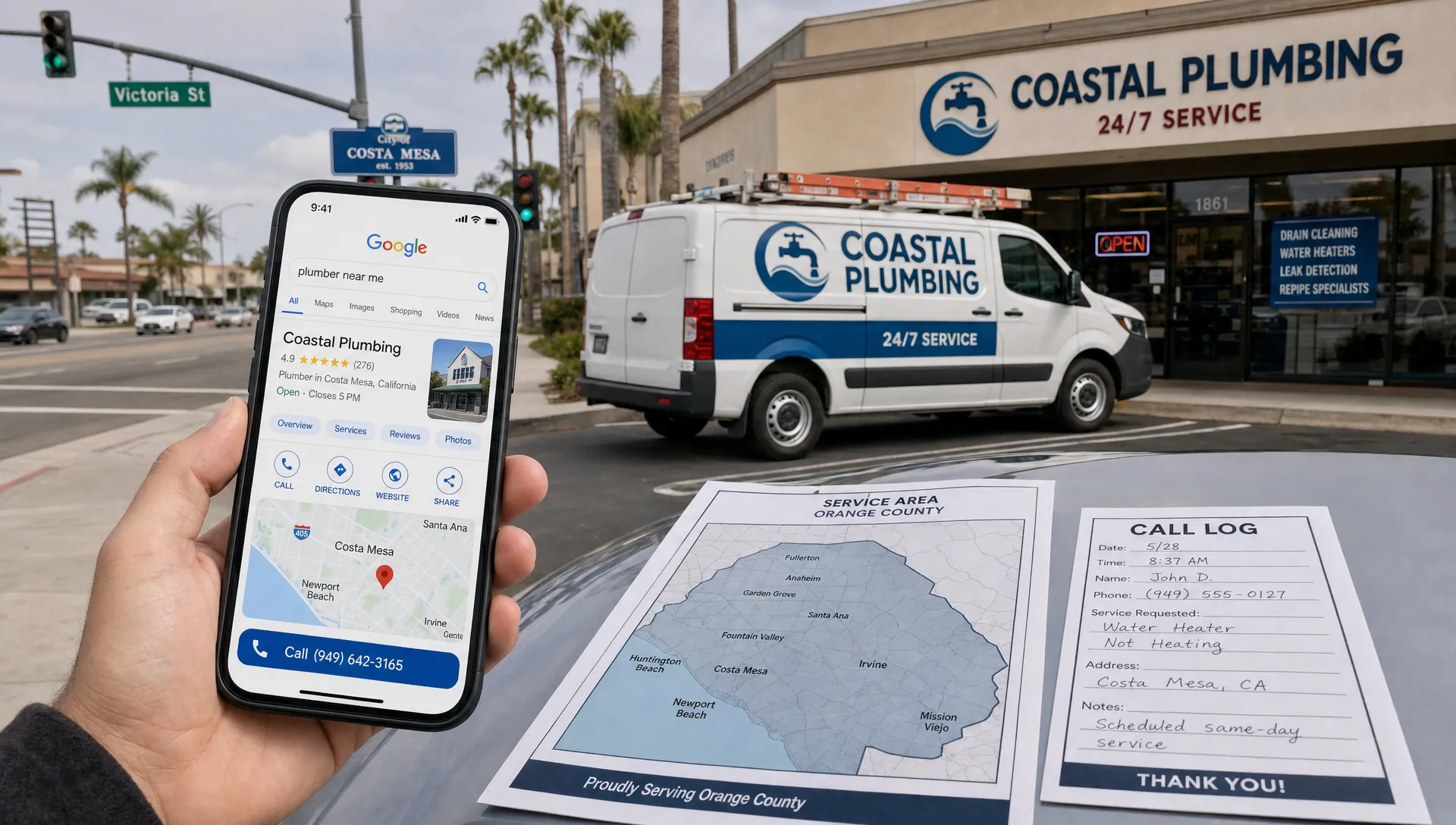
For a local business, a search campaign is only as good as the phone calls it produces. Clicks, impressions, and rankings matter, but they do not pay the crew, fill the dental chair, or book the legal consultation. If your customer needs an HVAC repair in Irvine, a roof estimate in Anaheim, an emergency plumber in Laguna Niguel, or a same-week appointment at a multi-location practice, your marketing has one central job: make your business the obvious next call.
That is why search engine marketing for local businesses should be built around call intent, not just traffic. In 2026, local visibility is spread across Google Ads, Google Maps, organic search, Local Services Ads, AI Overviews, voice assistants, review platforms, and answer engines. A business that only optimizes one channel can look visible in a report while still losing high-value calls to competitors.
The better approach is call-first SEM: every campaign, page, listing, review, and follow-up system is designed to help a nearby buyer trust you quickly and contact you confidently.
Why call-driven SEM is different from click-driven marketing
Traditional search marketing often rewards activity. You launch ads, optimize keywords, improve page rankings, and measure how many people visit the site. That is useful, but it can hide the most important question: did the right people call?
Local service buyers behave differently from casual browsers. They often have a specific problem, a narrow service area, and a short decision window. Someone searching “AC repair near me” in Huntington Beach or “roof leak repair San Diego” is not researching general education for next year. They are trying to solve a problem now.
Call-driven SEM must therefore align four elements:
- Intent: The searcher is ready to act, compare, or schedule.
- Location: The business clearly serves that city, neighborhood, or radius.
- Trust: Reviews, credentials, case examples, and clarity reduce hesitation.
- Response: The business answers, qualifies, and books the opportunity quickly.
If one of those elements fails, the lead can disappear. You can rank well but look untrustworthy. You can run ads but send people to a generic homepage. You can generate calls but miss them during busy hours. The strongest local SEM systems close those gaps before spending more money.
The call-first SEM framework for local businesses
A call-first strategy does not start with platforms. It starts with the buyer’s moment of need.
For home services contractors, that moment may be urgent: a broken heater, a clogged drain, a leaking roof, or a solar issue affecting a power bill. For medical, dental, and legal practices, the search may be more considered, but the decision still depends on proximity, credibility, and speed.
A practical SEM framework includes these five layers:
- High-intent search visibility: Paid search, Maps, local SEO, and service pages should target searches that indicate a buyer is close to calling.
- Hyperlocal authority: Pages, listings, and content should prove that the business serves specific areas, not just a broad county.
- Conversion-focused web experience: The website should make phone calls, appointment requests, and quote requests simple on every device.
- Reputation signals: Reviews, photos, service details, FAQs, and business information should reduce doubt before the call.
- Call handling and follow-up: Marketing performance depends on answer speed, qualification, scheduling, and follow-up with missed or undecided leads.
This is where many local campaigns fall short. They optimize for visibility but ignore conversion. Or they improve the website but fail to build local authority in the cities where revenue is most valuable.
Which search channels actually generate calls?
Local SEM is not one tactic. It is a coordinated mix of channels, each with a different job. The right balance depends on your market, budget, competition, and urgency.
| Channel | Best role in a call-first strategy | Common mistake to avoid |
|---|---|---|
| Google Search Ads | Capturing urgent, high-intent searches quickly | Bidding on broad keywords that attract low-quality clicks |
| Local Services Ads | Generating calls from verified local service categories | Treating every call as equal without tracking booked jobs |
| Google Business Profile and Maps | Winning nearby searches and mobile calls | Neglecting categories, services, photos, reviews, and posts |
| Organic local SEO | Building durable visibility for service and city searches | Publishing generic content with no local proof |
| AI Overviews and answer engines | Becoming a trusted answer when buyers ask conversational questions | Using vague pages that do not clearly explain who you serve |
| Retargeting | Staying visible to visitors who compared you but did not call | Sending reminders without a strong reason to act |
For many local businesses, paid search can create the fastest testing ground. You can learn which services, cities, and messages generate calls. But long-term profitability usually improves when paid campaigns are supported by organic visibility, strong Maps presence, and answer-ready website content.
That is why an HVAC company in Orange County, a dental group in San Jose, or a law firm with offices across Los Angeles cannot afford to treat SEM as “ads only.” The call may begin in an ad, but trust is often built across multiple search surfaces before the phone rings.
Build around “ready to call” intent
Not every search deserves the same investment. A homeowner searching “how often should I service my AC” may become a customer later, but a homeowner searching “AC repair Laguna Niguel open now” has stronger call intent.
The same applies across industries. A remodeling contractor may want educational content for kitchen renovation planning, but the calls usually come from searches like “licensed bathroom remodeler Irvine” or “ADU contractor Orange County.” A dental practice may publish helpful content about implants, but the conversion query may include “near me,” “cost,” “consultation,” or a specific city.
The same call-first logic applies outside California: a consumer comparing personal injury law firms in Tampa is not looking for a vague brochure. They need trust, location confidence, practice-area clarity, and a fast way to speak with someone.
For California local businesses, the key is to map your services to the exact language customers use when they are close to action. This includes city modifiers, neighborhood terms, emergency language, service-specific phrases, and trust-based searches such as “licensed,” “best,” “reviews,” “near me,” and “open now.”
A strong call-intent keyword set often includes:
- Service plus city, such as “roof repair Anaheim” or “emergency plumber Santa Ana.”
- Service plus urgency, such as “same day HVAC repair” or “24 hour electrician.”
- Service plus qualification, such as “licensed solar installer San Diego.”
- Practice area plus location, such as “family dentist Irvine” or “employment lawyer Los Angeles.”
- Problem-based searches, such as “water heater leaking” or “tooth pain appointment near me.”
The goal is not to chase every keyword. The goal is to own the searches most likely to become profitable calls.
Your landing page must answer three questions fast
A call-driven landing page has a different job than a general brand page. It must help a local buyer decide, within seconds, whether your business is relevant, credible, and easy to contact.
Every high-intent SEM landing page should answer three questions clearly.
Do you solve my exact problem?
The page should match the search. If the ad says “emergency AC repair in Irvine,” the page should not open with broad company history. It should confirm emergency AC repair, service area, response expectations, and common problems handled.
Do you serve my location?
Local buyers want to know you are actually nearby or actively serving their area. Mention the city, adjacent service areas, and any relevant neighborhood context. For Orange County, that could mean Laguna Niguel, Laguna Beach, Irvine, Newport Beach, Costa Mesa, Anaheim, Huntington Beach, or Santa Ana. For statewide campaigns, city-specific relevance matters even more in Los Angeles, San Diego, San Jose, Sacramento, Fresno, and Bakersfield.
Can I trust you enough to call?
Trust signals should be visible before the user has to dig. Reviews, licenses where applicable, years in business, service photos, team information, guarantees, insurance details, and clear contact options all reduce friction.
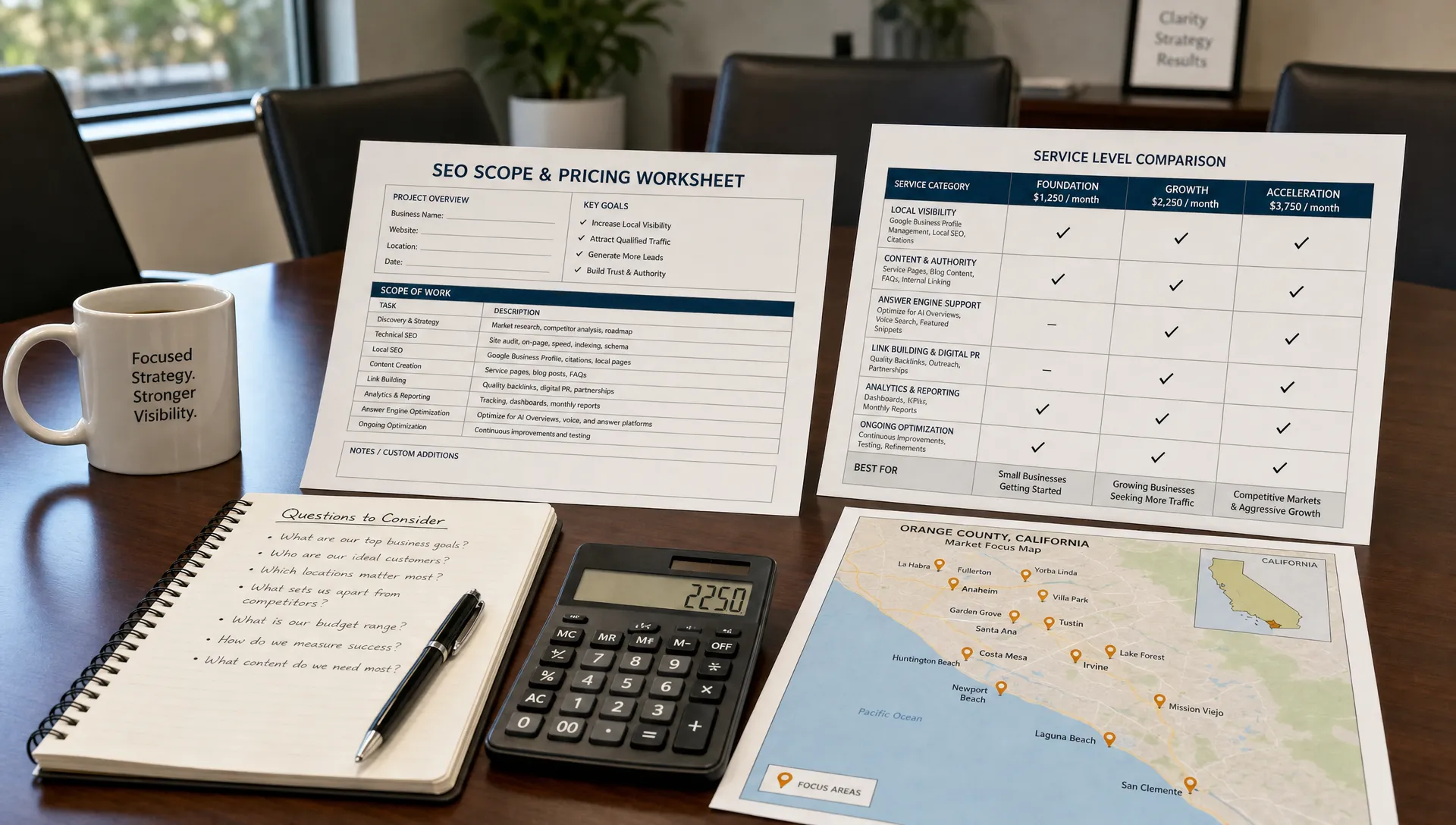
If your website is getting traffic but not calls, the issue may not be the campaign. It may be the page experience. Kell Web Solutions explains this connection in more detail in its guide to web design and search engine optimisation that converts, especially for businesses that rely on phone calls, consultations, and estimate requests.
Hyperlocal coverage matters in California markets
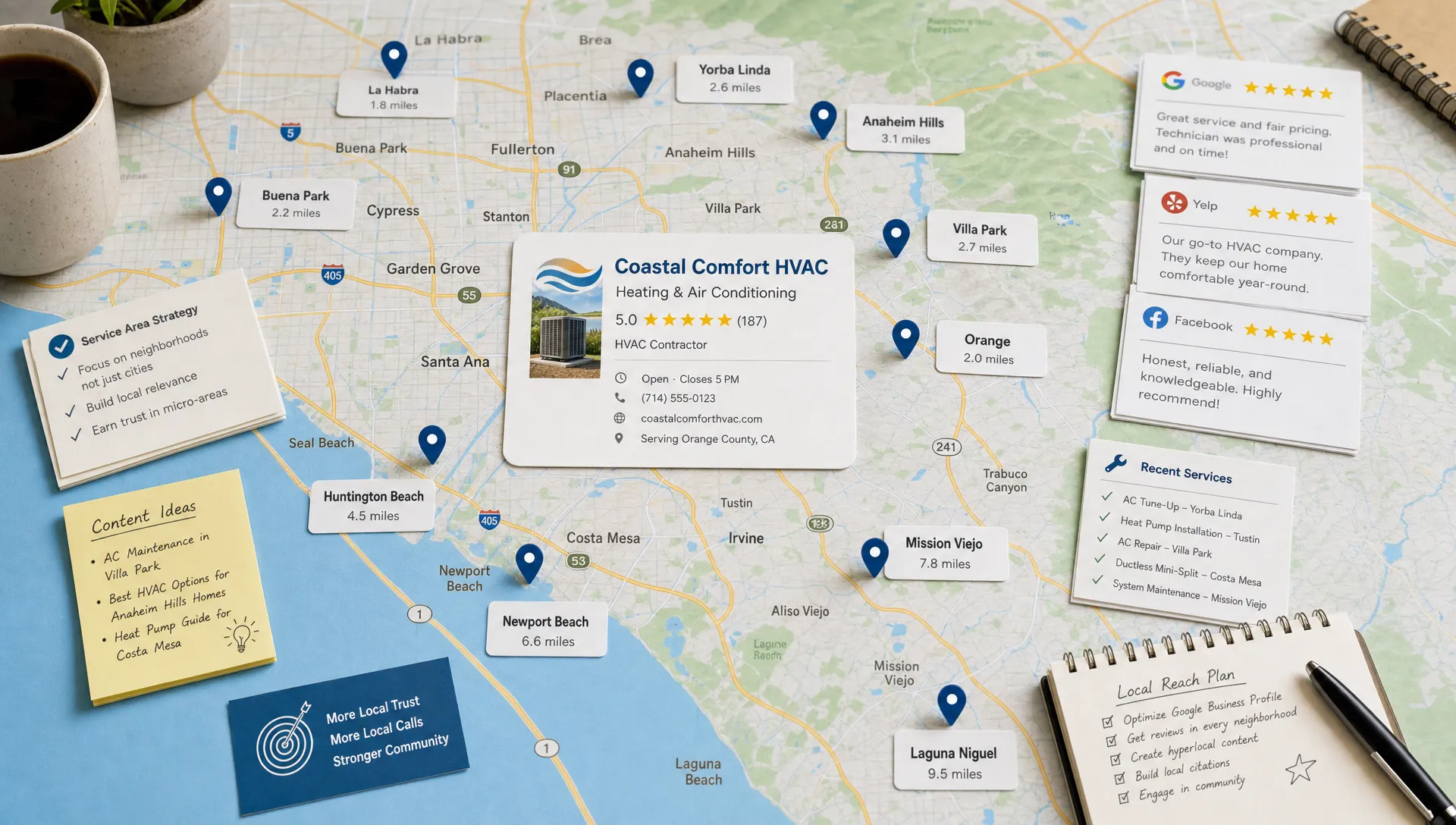
California is not one local market. Orange County behaves differently from Los Angeles. San Diego buyers search differently from San Jose buyers. Inland Empire service areas do not always convert like coastal neighborhoods. Even within Orange County, a customer in Newport Coast may respond to different proof points than a customer in Santa Ana or Garden Grove.
That is why local SEM should be planned by service area, not just by county. A single page saying “serving Southern California” rarely gives search engines, AI systems, or human buyers enough confidence. Specificity wins.
For contractors, this may mean building service pages and supporting content around high-value cities and neighborhoods. For multi-location practices, it may mean creating location pages that reflect each office’s services, providers, hours, parking details, and nearby communities.
This is also where local SEO supports paid SEM. When your Google Business Profile, website, reviews, and local pages all reinforce the same service-area signals, your ads and organic presence work together instead of competing in isolation. For a deeper breakdown of the organic side, see Kell Web Solutions’ guide to local search engine optimization that wins nearby jobs.
Track calls like revenue opportunities, not vanity metrics
If you need calls, your reporting should not stop at clicks. A campaign with a low cost per click can still waste money if callers are outside your service area, looking for the wrong service, or never booking.
Call-first SEM tracking should focus on business outcomes:
| Metric | Why it matters |
|---|---|
| Calls by source | Shows whether calls came from ads, Maps, organic pages, or other channels |
| Qualified call rate | Separates real opportunities from spam, wrong numbers, and poor-fit inquiries |
| Booked appointment rate | Measures whether calls become estimates, consultations, or visits |
| Missed call rate | Reveals revenue lost after marketing did its job |
| Cost per booked call | More useful than cost per click for local service businesses |
| Revenue by campaign or city | Helps shift budget toward the most profitable areas |
This is especially important for businesses with higher-value jobs. A roofing contractor may only need a few strong projects each month to justify a campaign. A dental practice may care more about the lifetime value of a new patient than the cost of the first call. A law firm may need fewer leads, but those leads must match the right practice area and jurisdiction.
Call tracking should be implemented carefully, especially for medical and legal practices where privacy, compliance, and intake quality matter. The goal is not to record everything indiscriminately. The goal is to understand which marketing channels produce qualified conversations and booked opportunities.
AI search changes the rules for local SEM
Search is no longer limited to blue links and paid ads. People ask phones, AI assistants, and search engines complete questions such as “Who is the best HVAC company near Laguna Beach for same-day repair?” or “Which dentist near Irvine offers implant consultations?”
These systems look for clear entities, trustworthy information, consistent local signals, and answer-ready content. That means your SEM strategy must help machines understand your business as clearly as humans do.
In practical terms, that includes:
- Clear business name, address, phone, services, and service areas.
- Structured website content that answers common buyer questions directly.
- Consistent local listings and Google Business Profile details.
- Reviews that mention services, cities, and real customer experiences.
- Service pages that prove expertise instead of repeating generic sales copy.
This does not replace SEO or paid ads. It changes how they work together. A paid ad can create immediate visibility, but AI-driven search may influence which brands buyers recognize, trust, and ask for by name. Kell Web Solutions covers this shift in its article on search optimization for AI Overviews, Maps, and voice.
For local businesses, this is the heart of modern SEM: be visible where buyers search, be understandable to the systems that recommend businesses, and be persuasive enough to earn the call.
Budget where calls can actually be handled
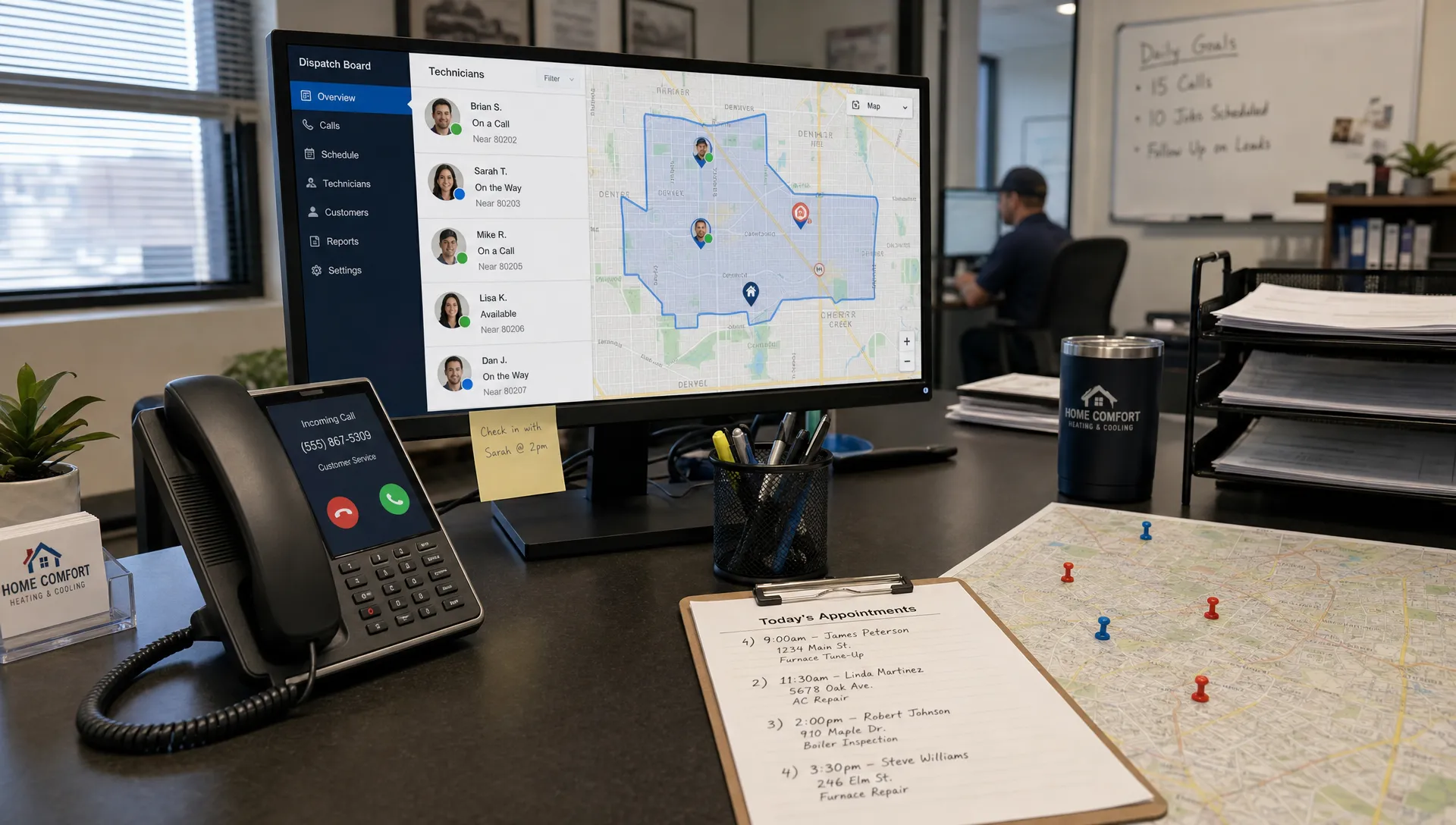
More visibility is not always better. If your team cannot answer calls, schedule appointments, or serve a location profitably, more leads can create waste.
Before expanding spend, local businesses should ask:
- Which services produce the best margins?
- Which cities can we serve quickly and profitably?
- When are calls most likely to be missed?
- Do we have a clear intake process for new leads?
- Are we tracking booked jobs, not just call volume?
For a contractor, it may be smarter to dominate a tight service area before expanding across an entire county. For a dental or legal practice, it may be smarter to strengthen the best-performing office locations before launching broad regional campaigns.
This is particularly true in competitive California markets. Los Angeles, San Diego, Irvine, San Jose, and Sacramento can all support strong search demand, but broad targeting can burn budget quickly. Local SEM should expand from proof, not hope.
A practical 30-day improvement plan
If your current search marketing is producing traffic but not enough calls, start with a focused 30-day reset.
First, review your call sources. Identify which calls came from paid search, Maps, organic pages, direct traffic, and referral sources. Separate qualified calls from wrong-fit calls.
Second, audit your top landing pages on mobile. Confirm that the phone number is visible, the service is clear, the city is obvious, and trust signals appear near the top.
Third, tighten your paid search campaigns. Remove broad, informational, or poor-fit terms. Prioritize high-intent service and city combinations.
Fourth, improve your Google Business Profile. Update services, categories, photos, posts, hours, and review responses. Make sure the profile reflects the calls you actually want.
Finally, strengthen one high-value local page. Choose a city and service that matter, then make the page more specific, more helpful, and more conversion-focused.
Small improvements in these areas can often produce better call quality before increasing ad spend.
Frequently Asked Questions
What is search engine marketing for local businesses? Search engine marketing for local businesses is the use of paid search, local SEO, Maps optimization, website improvements, and answer-engine visibility to help nearby customers find and contact a business. For call-driven companies, the main goal is qualified phone calls, not just website visits.
Should local businesses focus on SEO or paid ads first? It depends on urgency and competition. Paid ads can generate data and calls faster, while local SEO builds durable visibility over time. Many businesses need both, with paid search targeting immediate demand and SEO strengthening long-term authority.
Why am I getting clicks but not calls? Common causes include broad keyword targeting, weak landing pages, unclear service areas, poor mobile design, weak trust signals, or phone calls going unanswered. The campaign may be visible, but the buyer may not feel confident enough to call.
How important is Google Business Profile for local calls? It is critical. Many local calls happen directly from Maps or mobile search results before a visitor reaches your website. Accurate categories, services, photos, reviews, hours, and posts can all influence whether a nearby buyer chooses your business.
How does AI search affect local SEM? AI search rewards clear, trustworthy, well-structured business information. If answer engines cannot understand what you do, where you operate, and why you are credible, your business may be left out of AI-generated recommendations even if you have a traditional website.
Turn local search visibility into better calls
If your business depends on inbound calls, your search marketing should be engineered around that outcome from the start. Rankings, ads, Maps visibility, AI answers, landing pages, reviews, and call handling all need to work together.
Kell Web Solutions helps Orange County and California businesses build search visibility that supports real conversations, booked appointments, and revenue. If you want to understand where calls are being lost and how to become the trusted local answer in your market, schedule a strategy conversation with Kell Web Solutions.