The AI Confidence Signal Strategy

Is your reputation "AI-optimized," or just good? Most Orange County business owners have never asked that question. They check their star rating once a quarter and move on.
That habit made sense five years ago. A high star average was the whole game, and a slow trickle of reviews was fine.
It isn't fine anymore. The judge changed, and nobody sent a memo.
AI Overviews, ChatGPT, and Perplexity don't read a star rating the way a person does. They score it against a pattern instead.
Semrush's analysis of 200,000 keywords found the top organic result showed up in only 46% of desktop AI Overviews. On mobile, that figure drops to 34%.
Ranking well and getting cited by an AI model are no longer the same contest. A business can dominate Google's map pack and still vanish the moment a prospect asks who's best.
That gap is exactly what Kell Web Solutions built its newest service to close. Orange County local service managers feel it especially hard.
The county's home services and professional practice market is dense. Prospects now compare options through a phone screen before ever picking up the phone.
Whoever the model trusts first usually gets the call.
Reputation just became a data feed, not a scoreboard
Kell Web Solutions has watched this shift for two decades from its Laguna Beach home base. The firm calls the underlying change the Retrieval Economy.
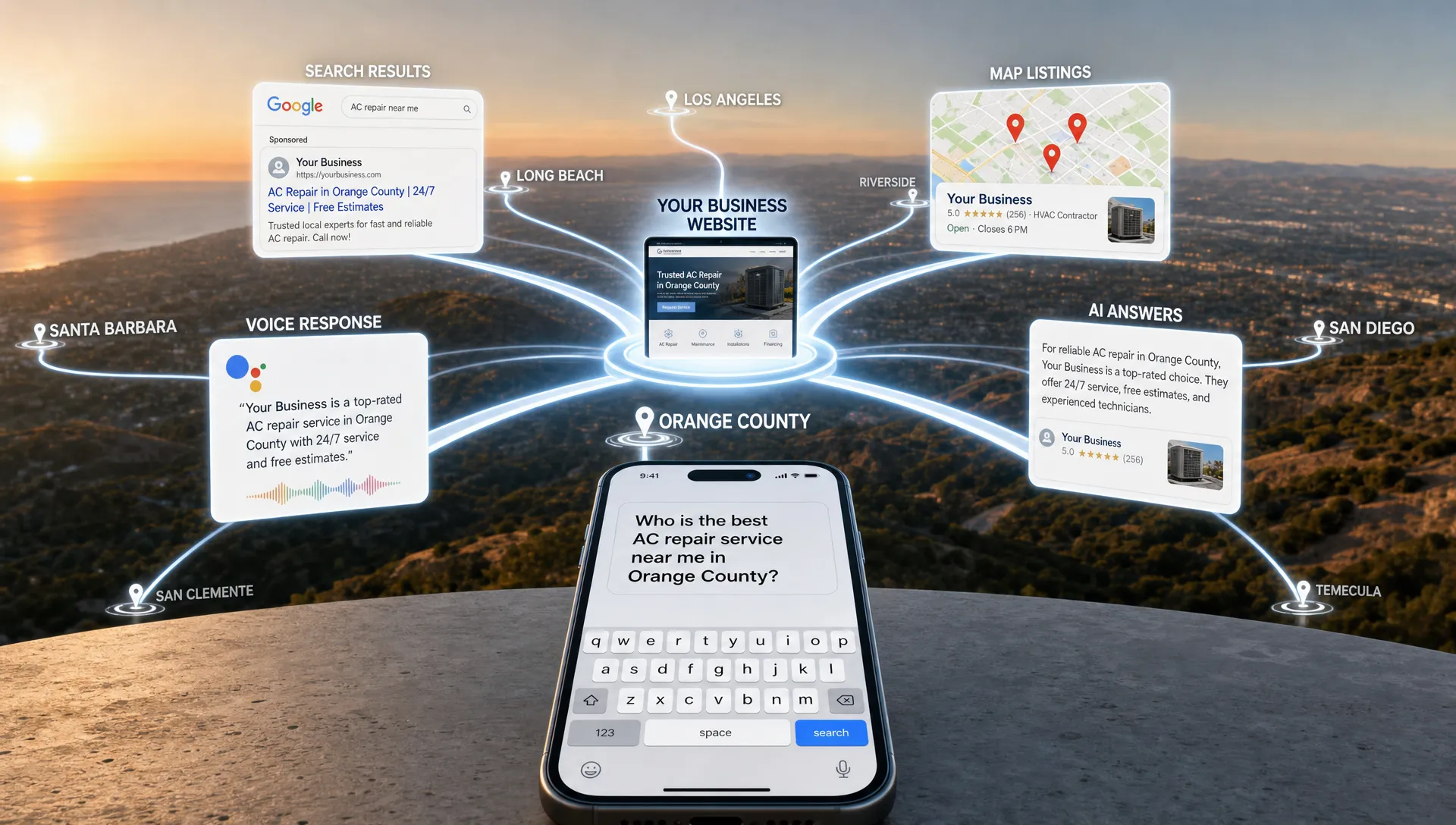
Customers don't browse a list of links anymore. They ask a single question and expect one confident answer back.
Kell's own research points to why that matters right now. Search traffic is down 15% year-over-year across the industries it tracks.
Local Services Ads now cost $60 or more per qualified call. Voice assistants already field most "emergency plumber" and "HVAC repair" queries without a single website visit.
Eighty-five percent of missed calls never get returned by the customer. Every one of those numbers points the same direction.
The businesses an AI model trusts enough to name are capturing calls the rest never even see arrive. Answer engines don't take a star average at face value, either.
They read reviews as a stream of evidence. Then they look for a pattern strong enough to trust before recommending a business by name.
Three patterns carry the most weight in that judgment:
- Recency — how fresh your feedback is
- Sentiment consistency — how uniform the tone reads across platforms
- Resolution speed — how fast complaints get answered
Kell Web Solutions calls these confidence signals. Businesses feeding them deliberately get named first, while businesses collecting reviews sporadically become background noise an AI model quietly discounts.
That framing fits the firm's broader philosophy: durable authority, not a short-term ranking spike. A spike fades the moment an algorithm updates again.
A confidence signal, fed on a schedule, compounds instead of decaying. That's the entire bet behind treating reputation as infrastructure rather than an occasional chore.
The three confidence signals AI models actually weigh
Signal one: recency
Old praise decays fast in an AI model's eyes. BrightLocal's Local Consumer Review Survey found 74% of consumers only consider reviews written in the last three months.
Forty-four percent go further, flagging reviews from the last month alone as critical. A glowing five-star review from 2024 barely registers against that bar today.
That's a real problem for businesses that still run review pushes twice a year. A stale portfolio reads to an AI model like a business that quietly stopped mattering.
Recency isn't about erasing old praise. It's about making sure fresh evidence arrives faster than old evidence fades.
Signal two: sentiment consistency
A single glowing testimonial means very little on its own. The same BrightLocal research found 56% of consumers prioritize reviews "backed up by other reviews with similar sentiment."
Forty-six percent specifically value reviews that describe a positive experience in real detail. AI models apply that same corroboration logic at scale.
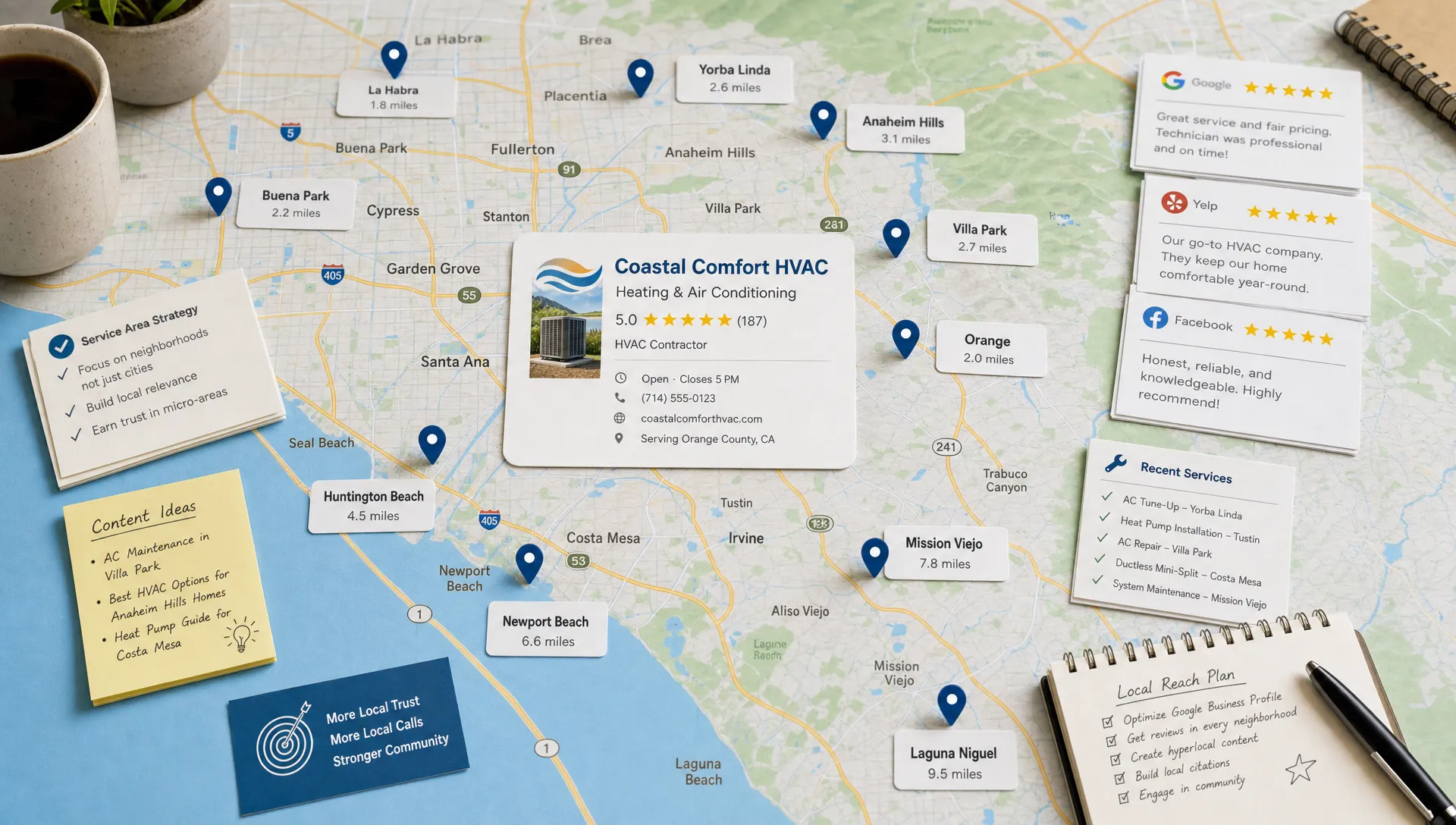
They check Google, Yelp, Facebook, and industry directories for agreement. One five-star review surrounded by mixed feedback elsewhere doesn't build confidence — it builds suspicion.
Consistency across every platform is what actually moves an AI model's judgment. A business reading 4.6 stars everywhere looks more trustworthy than one at 4.9 on Google and 3.5 elsewhere.
Signal three: resolution speed
How fast you respond to a complaint now carries real, measurable weight. BrightLocal found 32% of consumers expect a response within one day, sharply up from 18% a year earlier.
Eighty percent say they're more likely to use a business that responds to every review it gets. Forty-two percent actively avoid businesses that ignore reviews altogether.
Generic, copy-pasted replies don't fully solve this either. Fifty percent of consumers said templated responses put them off, even when a reply technically exists.
Speed and sincerity both get scored here. An AI model reads a fast, specific response as evidence the business is actively managed, not merely reviewed.
Why manual reputation management can't keep pace
Most Orange County businesses still manage reviews the old way. Someone checks Google Business Profile when they remember, replies when there's time, and hopes the average holds.
That approach quietly fails all three confidence signals at once. Sporadic outreach means feedback ages between bursts, so recency scores dip in the gaps.
Inconsistent monitoring means a bad thread on Yelp can sit unanswered for weeks. By the time anyone notices, an AI model has already logged the silence as a data point.
A business owner juggling five directories by hand can't hit a one-day response window. Not consistently, not across every platform, not every week of the year.
The result isn't necessarily a bad reputation. It's often an invisible one instead.
Reviews exist, but no AI model trusts the pattern enough to vouch for the business unprompted.
That distinction matters more than most owners realize. A 4.8-star business with erratic signals can still lose the recommendation.
It can lose it to a lower-rated competitor running a disciplined signal loop instead. Hiring someone in-house to watch five directories daily rarely pencils out for a small business.
The math usually favors a system built to do exactly that on a schedule, without a dedicated headcount.
A quick self-audit before you spend a dollar
Most owners can check their own exposure in about ten minutes. A few patterns show up again and again among Orange County businesses that haven't looked yet.
- You've never asked an AI model directly. Try ChatGPT or Perplexity with your category and city, then see who gets named instead of you.
- Your review dates cluster around a campaign. A burst last spring, then silence, reads as staleness to a model scoring recency.
- Your ratings don't match across platforms. A 4.9 on Google next to a 3.6 on Yelp signals inconsistency, not just a bad week.
- Unanswered reviews sit for weeks. Even one ignored complaint from months ago can undercut an otherwise strong pattern.
- Your replies all read the same. Copy-pasted responses fail the sincerity test just as often as no response at all.
Any single one of these is fixable in an afternoon. Stacked together, they're what quietly keeps a business off an AI model's shortlist.
None of them require expensive tools to spot. They require ten honest minutes and a willingness to see your business the way a machine does.
Inside Kell's AI Confidence Builder
Kell Web Solutions built a service specifically to close that gap: the AI Confidence Builder. Its methodology is described in three words — "Scan. Fix. Prove."
The scan stage establishes a baseline score across five distinct layers. Entity Clarity confirms your business identity through machine-readable data.
That approach mirrors the structured-data method Google's own documentation recommends for local business listings. Machines shouldn't have to guess your name, address, or hours.
Citation Architecture checks whether your content is quotable and answer-focused, not just keyword-heavy. Distribution measures how far your verified presence reaches across AI-crawled platforms and directories.
Earned Media & Trust pursues independent, third-party editorial coverage. That's proof an AI model weighs more heavily than anything a business claims about itself.
Monitoring then tracks all four of those metrics on an ongoing basis, not just once. The fix stage remediates whatever gaps the scan flags, one layer at a time.
The prove stage rescans and validates the improvement afterward. Gains get measured against the original baseline, never simply assumed.
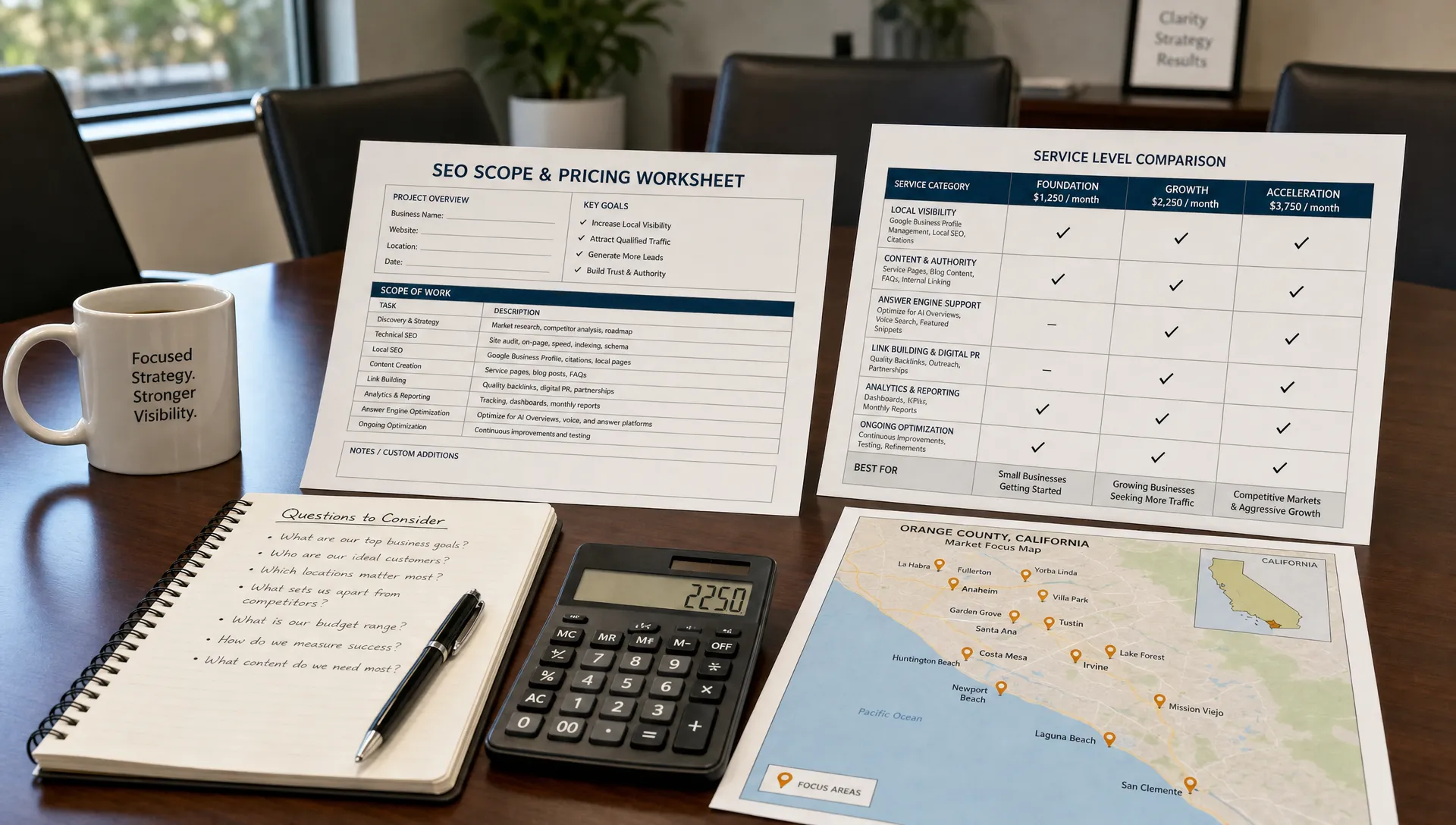
Pricing here is published, not hidden behind a "contact us" form. Confidence Core starts at $1,000, financeable at $497 down plus $197 a month for three months.
Confidence Build runs $2,000, or $897 down plus $397 a month across four months. Confidence Complete tops the range at $5,000, financeable at $1,497 down plus $705 a month for six months.
Every tier includes monitoring across three specific dimensions. Crawl activity verification confirms AI systems are actually reading your updated signals.
Citation testing runs direct prompts against ChatGPT, Gemini, and Perplexity to check whether you're actually named. Referral attribution then measures how much real traffic those citations send back.
That last piece matters most of the three. It turns the question into a tracked number instead of a guess.
Kell's work on AI citation gaps treats visibility the same way — measurable, not assumed.
The signal infrastructure that feeds the score
A scan is only as useful as the evidence available to score. That's where Review Pops fits into the wider strategy.
Review Pops displays verified customer reviews directly on a business's website, refreshed automatically every day. It also collects short video testimonials submitted straight from a customer's phone.
Kell's own data on the product notes video testimonials earn 58% more trust than written reviews alone. That's a meaningful gap for any business relying only on text.
Video and written proof feed all three signals at once, from the inside out. Fresh submissions improve recency automatically, without a seasonal push.
Consistent five-star video and text feedback reinforces sentiment across every platform it reaches. A steady stream of new submissions also gives a business something to answer quickly, every week.
Kell pairs that infrastructure with its Reputation Marketing program. It automates review requests by text and email, so feedback arrives on a predictable schedule.
Staff training rounds out the loop on the human side. Asking for feedback becomes a habit built into daily operations, not an occasional afterthought.
Kell stays deliberately boutique running all of this. Clients work directly with founders Gregg and Debbie Kell, not a rotating account team learning the business from scratch.
That matters more while the confidence-signal playbook is still evolving month to month. A larger agency often bolts AI-search language onto an existing SEO retainer without changing how the work actually gets done.
None of this replaces genuinely good service. It translates that service into a form an AI model can verify.
Then it repeats that verification back to a prospect who's never called before.
Who this matters for most right now
Home services contractors feel this shift first and hardest. HVAC, roofing, solar, plumbing, and electrical companies lose ground the moment voice search routes a call elsewhere.
Multi-location professional practices carry a related risk. Medical, dental, and legal offices competing at the neighborhood level need every location's signals reading consistently.
A flagship office with strong reviews can't quietly cover for a satellite location with none. AI models evaluate each address as its own entity, not as one blended average.
California businesses chasing rapid geographic expansion face a related version of the same math. Establishing trust quickly in a new market now runs through AI confidence signals, not just local ad spend.
The unifying thread across all three groups is simple. Every one of them loses real business the moment they go quiet at the neighborhood level.
That happens whether or not their actual service quality ever changed. Picture a Laguna Niguel roofer with genuinely excellent workmanship and fifteen years of loyal clients.
Its reviews are real and mostly glowing, but arrive in scattered bursts twice a year. A newer competitor two towns over answers every review within hours and posts fresh video testimonials weekly.
When a homeowner asks an AI model who to call after a storm, the newer name gets mentioned first. Reputation quality didn't decide that outcome — signal discipline did.
Frequently asked questions
Is this the same thing as SEO?
No. Traditional SEO targets keyword rankings inside a list of links a person scrolls through. Confidence signals target trust inside an AI model's own judgment about whether to name you unprompted.
How often should reviews come in to satisfy the recency signal?
Aim for a steady weekly trickle rather than a seasonal push twice a year. BrightLocal's research suggests reviews older than three months carry noticeably less weight today.
What happens if my reviews are inconsistent across platforms?
An AI model reads mismatched sentiment as a reason for caution, not confidence in you. Closing gaps between Yelp, Facebook, and industry directories usually matters more than one extra five-star review.
Can a business with mostly good reviews still fail this audit?
Yes, and it happens more often than owners expect. A handful of unanswered complaints from months ago can outweigh dozens of quiet five-star reviews sitting untouched.
Resolution speed gets scored on its own, separate from overall sentiment. A great average doesn't excuse a slow, silent response history.
Do I need video testimonials, or do written reviews still work?
Written reviews still count toward every one of the three signals. Video simply adds an extra trust layer that both AI models and human buyers respond to.
How long does it take to see a measurable shift?
Most engagements show early movement within the first monitoring cycle, once a full scan-fix-prove loop completes. Durable authority compounds from there as fresh signals keep arriving on schedule.
Does this replace traditional AEO work, or sit alongside it?
It sits alongside it. AEO structures your site and entity data so AI models can find and understand you.
Confidence signals give those same models a reason to trust what they find. One without the other leaves half the judgment unanswered.
Which platforms actually get monitored?
Google Business Profile and Yelp carry the most weight for most local categories. Facebook, industry-specific directories, and any site an AI model regularly cites round out the picture.
The exact mix depends on where your customers already leave feedback today.
The bottom line
Being a genuinely good business used to be enough on its own. An AI model now wants proof of that before it recommends you over the next name on its shortlist.
That proof needs to be recent, consistent, and quickly resolved. It doesn't build itself, and it rarely survives a quarterly review push alone.
It has to be fed on a schedule an AI model can actually detect and trust. The businesses building that habit now won't need to catch up later.
Stop leaving your digital perception to chance.
See exactly how confident an AI model already is in your business, and where the real gaps sit. A short strategy call is enough to find out. Schedule your AI Confidence Audit before a competitor closes theirs first.