The AI Citation Authority Gap
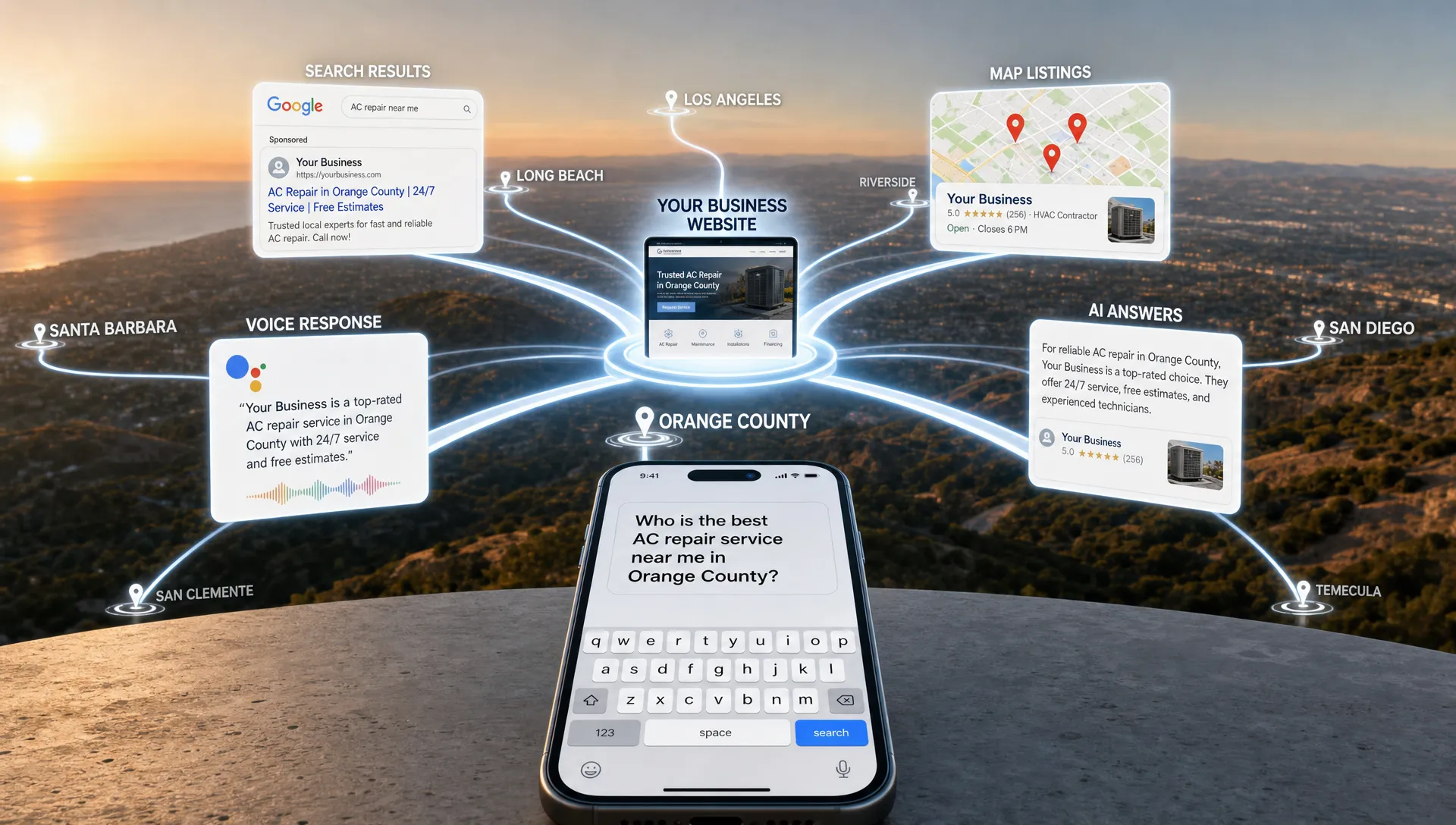
Is your website invisible to the AI your prospective clients are using to vet you? It's a fair question, and most Orange County business owners can't answer it. They've never actually asked ChatGPT or Perplexity what it says about their firm.
Search used to mean links you could rank. Now it's a conversation, and AI decides who gets mentioned. G2's newest B2B buyer research found 51% of B2B buyers now start with AI chatbots, not Google.
That's up from just 29% eleven months earlier — a massive swing in under a year.
This isn't a fringe prediction anymore. Gartner projects that traditional search volume will drop 25% by 2026. That decline comes directly from AI chatbots replacing search queries.
Gartner calls these tools "substitute answer engines."
That shift didn't stay contained to software. Agencies, law firms, and medical practices are now researched by AI before a human ever visits. If you're not part of that conversation, you're not just losing clicks.
You're losing the mention entirely.
Owners in this position usually notice the symptom before they understand the cause. Referral volume looks fine, the website still gets occasional traffic, but new inbound inquiries have quietly slowed. That's often the first sign the AI conversation about your category is already happening — without you in it.
This matters more for B2B and professional service firms than most businesses. Home services companies can still win a call through pure proximity. A law firm or consultancy has no such fallback once an AI shortlist forms without them.
The gap between having a website and being an answer
"Most OC businesses are losing leads because their brand is missing from AI-generated 'best-of' lists and conversational search results. We bridge the gap between their website and the LLM's understanding of their authority." — Gregg Kell, Founder, Kell Web Solutions
There's a specific failure behind that quote, and it deserves a name. Call it the AI citation authority gap. It's the distance between what your website says about your firm and what a model actually believes.
That belief surfaces the moment a prospect actually asks.
A website is a document. An AI answer is a judgment. Google could always be tricked with the right keywords in the right places.
Answer engines don't work that way. They synthesize an opinion from everything they can find about you. Then they decide whether you're worth mentioning by name.
That's a much higher bar than ranking. Most Orange County B2B firms have never been measured against it. Nobody built a scorecard for this until recently.
What AI platforms actually reward
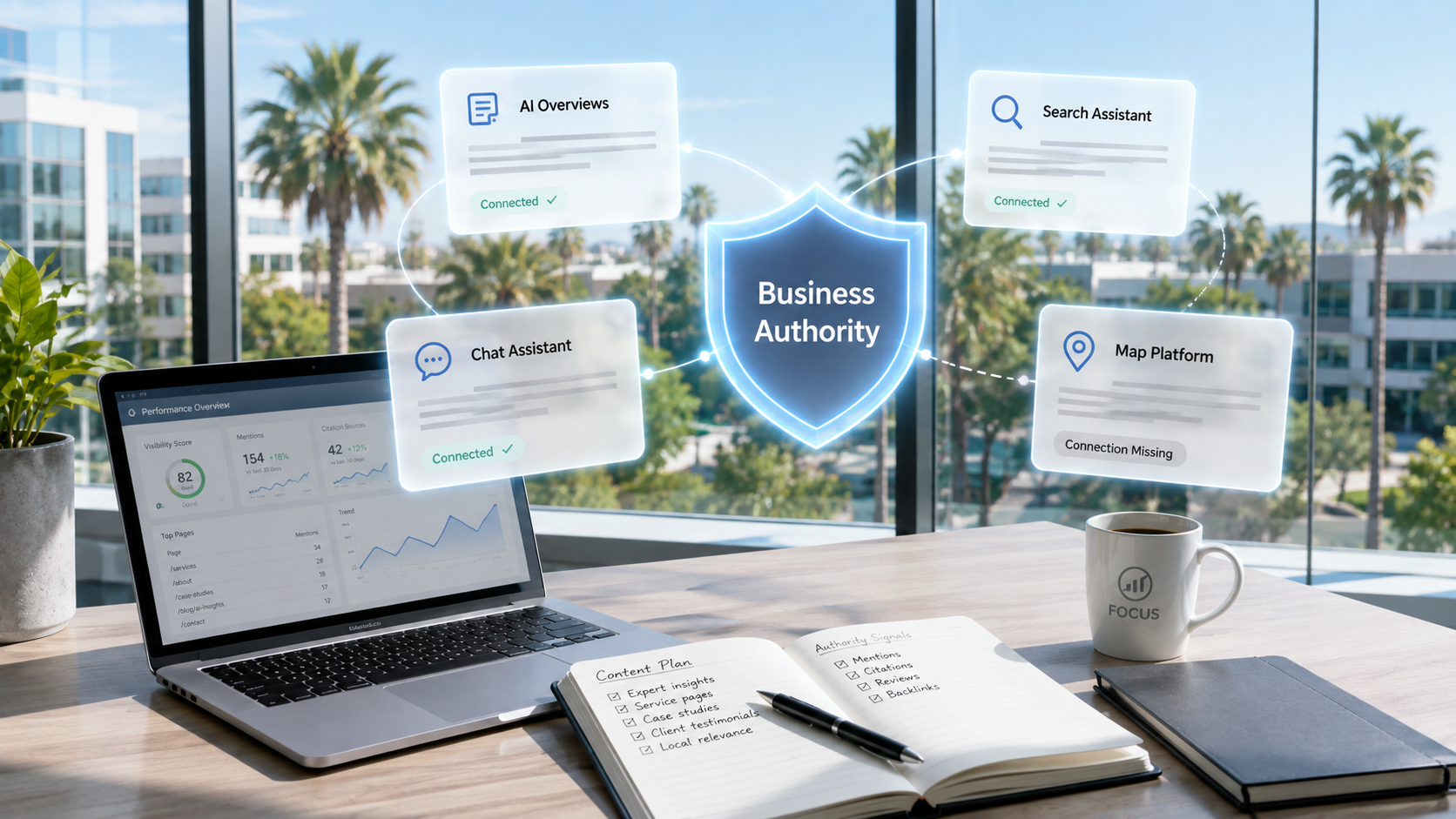
HubSpot's 2026 AEO research frames AI citation as consensus, not ranking. Answer engines don't crawl your site and stop. They cross-reference it against everything else they can find.
That includes directories, review platforms, press mentions, and forums. Then they look for agreement across all of it.
Entity consistency matters most. Does your name, address, pricing, and services match everywhere online? Inconsistent facts across your site and listings suppress citations.
Structured content matters second. Clear headers and schema markup help a model extract facts accurately. Direct, answer-first writing helps too.
Third is agentic readiness. That means machine-readable infrastructure like
llms.txt
and JSON-LD. It tells an AI crawler exactly who you are, instead of making it guess.
Here's the uncomfortable part. A page outside Google's top five can still win the AI answer. That happens whenever it most directly answers what the user asked. Ranking and citation are no longer the same contest.
Firms optimized purely for the old contest are flying blind in the new one.
Prompts to AI look nothing like old search queries. That same research found average ChatGPT prompts run 23 words long. A typical Google search is just 3.37 words.
Five signs your firm already has a citation authority gap
Most owners can self-diagnose this in about ten minutes, before spending a dollar on any agency. A few patterns show up again and again among Orange County B2B and professional service firms that haven't looked yet.
- You've never checked. You've never typed your own category and city into ChatGPT to see who it names instead of you. Most owners assume they'd show up — most haven't checked.
- Your NAP data doesn't match. Name, phone, address, and services should read identically across your site, your GBP, and directories.
- No schema markup. Your site has no structured data, so a model has to guess facts it could otherwise extract with certainty.
- Thin third-party proof. Your only credibility signal is a handful of Google reviews — no press coverage, comparison articles, or industry citations backing you up.
- A competitor got there first. If a rival has invested in AEO and you haven't, the model already picked a side. It will keep recommending that side until your signals catch up.
Any single one of these is fixable in an afternoon. Stacked together, they're what quietly kills a shortlist spot.
None of these five signs require expensive tools. They require ten honest minutes and a willingness to look. See your firm the way a machine sees it, not the way you'd describe it.
Why this hits professional service firms harder
Home services businesses feel this shift through missed emergency calls. B2B and professional service firms feel it earlier — in the shortlist itself. That happens well before a prospect ever picks up the phone.
Orange County agencies are already repositioning around this
This shift isn't hypothetical in Orange County. Costa Mesa-based Intero Digital now sells a named "GEO" service. Irvine's Directive Consulting markets its own "DiscoverabilityOS" platform for exactly this problem.
Neither is warning you the shift is coming. Both are already selling the fix to whoever notices first. That's the real cost of waiting to check your own visibility.
Kell is positioned differently from both of them. AEO isn't a bolted-on service line here — it's the whole business. That focus is a meaningful difference in this comparison.
Forrester's Buyers' Journey research found 92% of B2B buyers start with a vendor already in mind. 41% already have one preferred vendor before formal evaluation even begins. That preference used to form through referrals and conference badges.
Now it increasingly forms through a five-second exchange with a chatbot.
That compression makes the gap dangerous for OC's B2B and professional firms. Legal, accounting, consulting, and marketing firms sell trust before anything else. So do multi-location medical and dental practices.
A prospect might ask an AI model, "Who's the best marketing agency in Orange County?" The model vouches for whichever firm it can verify, not necessarily the one that deserves it most.
Picture a mid-size Irvine consulting firm with twenty years of results. Its website is a static page with no structured data. A three-year-old competitor next door has clean schema and real press mentions.
Today, the newer firm is more likely to get named. Track record stopped being self-evident once AI started making the introductions.
The risk compounds because AI doesn't just fail to mention you. It actively promotes whoever it trusts instead — often a competitor you didn't know was in the running.
A 680-million-citation analysis found 73% of B2B buyers now use AI tools like ChatGPT and Perplexity. Yet only 22% of marketers track how their brand shows up. That 51-point spread is the citation authority gap, measured industry-wide.
Every mention has a winner and a loser
The G2 research above carries a second finding worth sitting with. Sixty-nine percent of B2B buyers switched vendors based on what a chatbot recommended. A third bought from a vendor they'd never heard of before.
Read that again as a business owner, not a marketer. Every AI-driven recommendation is a zero-sum event. When a model can't verify your firm, it doesn't leave the answer blank.
It cites the competitor whose signals were clear enough to trust. You don't just miss a lead — you hand it over. You hand it to whoever closed their own authority gap first.
Trust signals matter here too. In the same G2 survey, 45% of buyers trusted review-site citations most. AEO isn't just a website exercise — it's an off-site reputation audit.
Professional service firms have their own version of this signal. Certifications, bar admissions, and awards belong in structured markup, not just a page footer. A model can't cite credentials it can't parse.
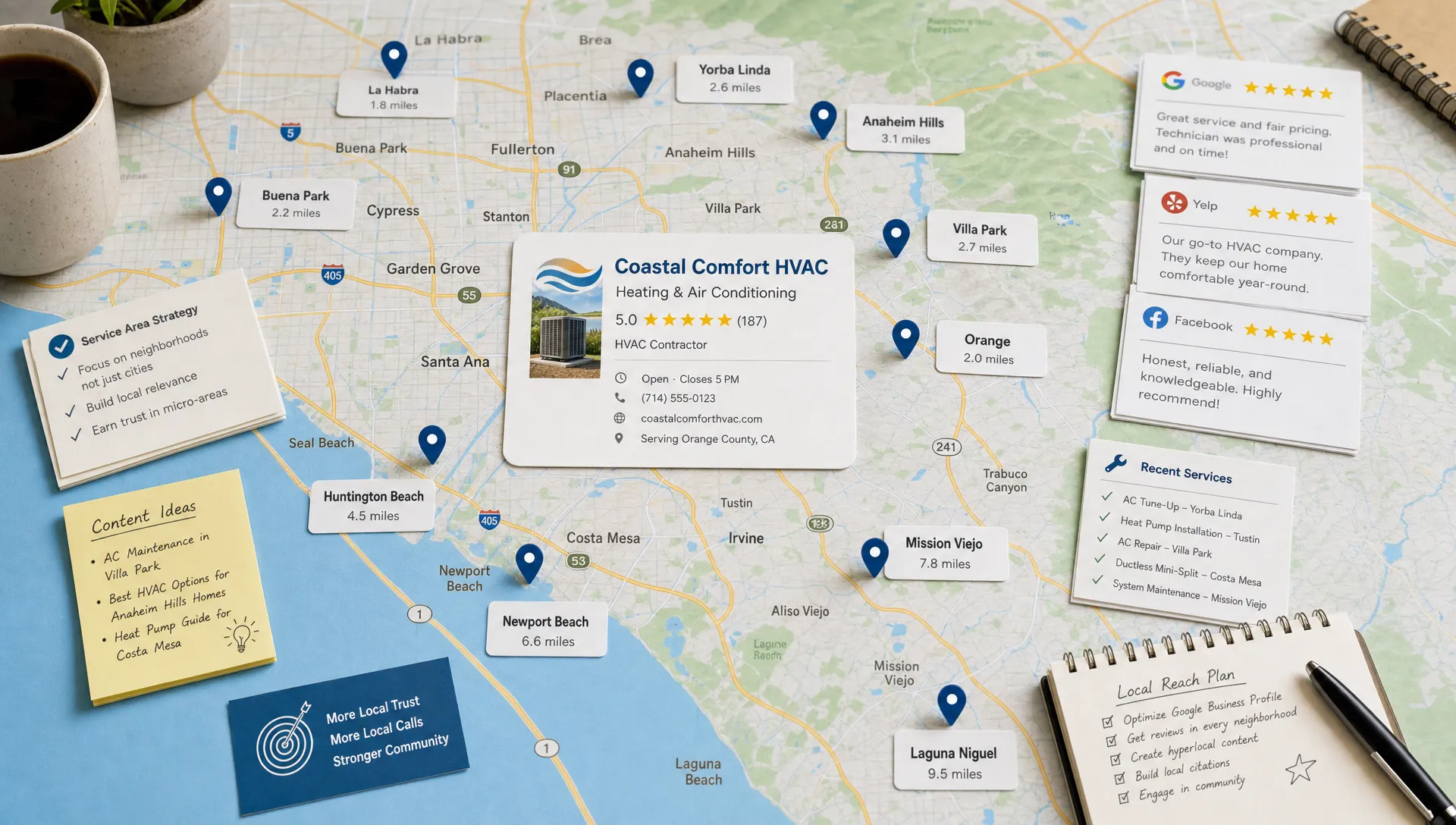
Multi-location medical, dental, and legal practices face an extra layer here. A model asked about a specific neighborhood has to pick one location to name.
Practices with one strong "flagship" listing often lose their satellite offices. Those locations vanish from AI answers even when service quality is identical.
Where to start if you want to check this yourself
Before hiring anyone, run this audit yourself. Open ChatGPT and Perplexity and ask what a prospect would ask. Try your service, your city, and "who's the best."
Read the answer closely. Note whether you appear, how you're described, and who appears instead.
Next, pull up your Google Business Profile and your website's contact page. Add any directory listing you can find. Compare all three, line by line.
From there, HubSpot's schema markup guide is a solid starting point. It adds the structured data most answer engines look for. It won't close the full gap alone, but it's the baseline everything else builds on.
This isn't a one-time fix, either. Entity signals drift as directories update and content ages. Most firms recheck this audit every quarter.
Closing the gap: what becoming an AI-cited authority actually requires
Kell Web Solutions built its AEO service around exactly this problem. It's the same shift founder Gregg Kell has tracked for two decades in Orange County. The goal isn't to chase another ranking algorithm.
It's to become the entity an AI model trusts enough to name.
Kell's philosophy leans into durability on purpose. The goal is compounding authority, not a short-term ranking spike. Spikes fade the moment an algorithm updates — entities don't.
Founder Gregg Kell wrote a book on exactly this problem. It's called "The Invisible Expert," and it's downloadable from Kell's site. That background shapes the whole AEO methodology.
That work breaks into three outcomes worth understanding first.
First, recognition: AI platforms need to identify your firm as an authority. Not a generic entry in a directory.
Second, citation: earning a real mention when a prospect asks a local question. That's the exact moment an AI model is trying to answer.
Third, protection: building signals strong enough that competitors can't quietly displace you. That displacement often happens in a recommendation you never see.
Kell's AEO service runs a five-step process to get there. It maps how customers phrase questions, then audits current AI visibility. From there it restructures the site and builds durable authority signals.
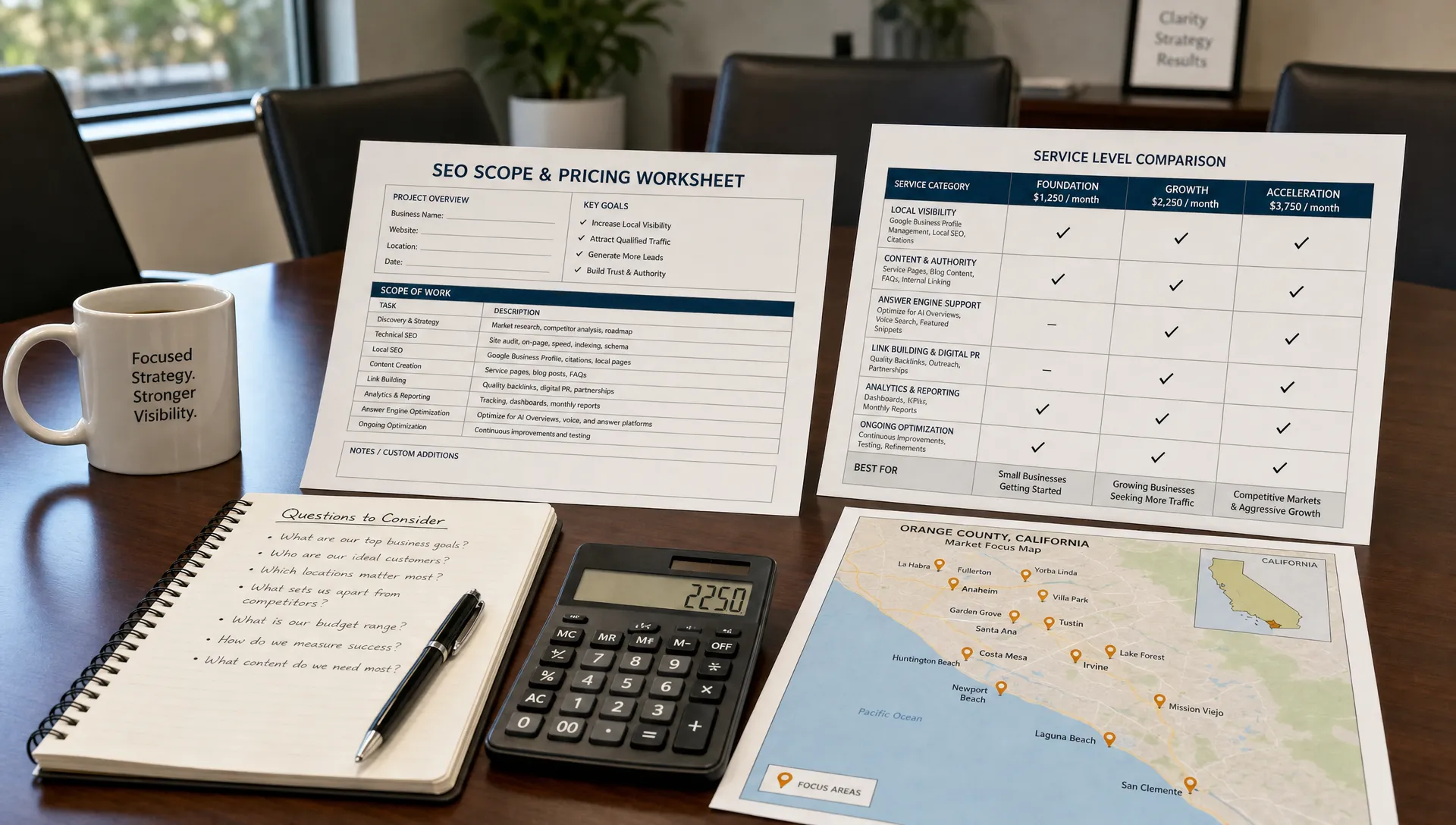
It's sold in three tiers, from AEO Essentials up through AEO Elite. Elite layers in advanced schema and full agentic-readiness infrastructure.
Pricing here is published, not hidden behind a "contact us" form. AEO Essentials starts at $500 setup plus $500 a month. AEO Elite runs $1,000 setup plus $2,500 a month.
Multi-location practices often pair that work with Local SEO Mastery. It keeps every branch's citation data consistent — the exact weak point above. It's smaller and more foundational, and it often comes first.
Scale is deliberately part of the pitch, too. Larger agencies often bolt AI-search language onto existing SEO retainers. They tend to route clients to account teams instead of founders.
Kell stays boutique on purpose. AEO clients work directly with founders Gregg and Debbie Kell. That's a real difference while the strategy is still evolving monthly.
Kell also integrates with GetAiRefs' Share of Answer scoring. That measures how often a client is actually cited across target queries. It turns "are we visible to AI" from a guess into a tracked number.
For more on how the click itself is changing, see Kell's piece on when AI takes the click.
None of this replaces good client work or a strong reputation. It translates that reputation into a form AI platforms can verify. Then it repeats that back to a prospect who's never heard of you.
What it looks like when the gap closes
Closing this gap looks different from a typical SEO win. Rankings might not move at all in the short term. Citations do — inside ChatGPT, inside Perplexity, inside Google's AI Overviews.
A prospect asks the same question they always asked. This time, your firm is part of the answer. That's the entire goal of AEO, stated plainly.
Frequently asked questions
What does it mean to be a "cited entity" rather than just an indexed website?
An indexed website simply exists in a search engine's database. A cited entity is different — it's a business an AI model trusts enough to name. That happens unprompted, without the user searching for you by name.
Can a well-designed website still be invisible to ChatGPT or Perplexity?
Yes, and it happens constantly. Visual design has no bearing on whether a model trusts your entity signals. A beautiful site with inconsistent data and no schema can still be invisible.
How is this different from just ranking low on Google?
Ranking low means you're on page three of a shrinking results list. Being outside the citation set is worse. The AI answer was generated and delivered without your firm ever entering consideration.
How do B2B and professional service firms specifically get displaced by AI recommendations?
A prospect asks an AI model to compare options in your category. The model surfaces whichever firms have the clearest, most corroborated entity signals. That's often a smaller competitor with sharper AEO work, not the more established firm.
What is a "Share of Answer" score?
It's a metric tracking how often your business is cited across defined AI queries. Think of it like share of voice, but for AI answers. Kell Web Solutions tracks this through its GetAiRefs integration.
How long does it take to close an AI citation authority gap?
There's no universal timeline. It depends on how fragmented your current entity signals are across the web. Most engagements show measurable gains within a few months. Authority compounds the longer your signals stay consistent.
The bottom line
The businesses winning the next decade of Orange County search won't necessarily be the ones with the biggest ad budgets. They'll be the ones an AI model trusts enough to recommend without being asked twice.
That's the shift Orange County can't afford to ignore.
That trust doesn't build itself, and it doesn't show up in a standard SEO report. It has to be engineered deliberately, tracked, and defended as competitors start doing the same work. For agency owners and professional practices watching referrals slow with no clear explanation, this gap is very often the reason.
Stop wondering why the leads have gone quiet. Find out exactly how your brand appears to the machines making these decisions. A short strategy call is enough to see where the gap sits. Claim Your AI Visibility Audit before a competitor closes their gap first.