How to Build an Answer-Ready Web Presence for Google and AI
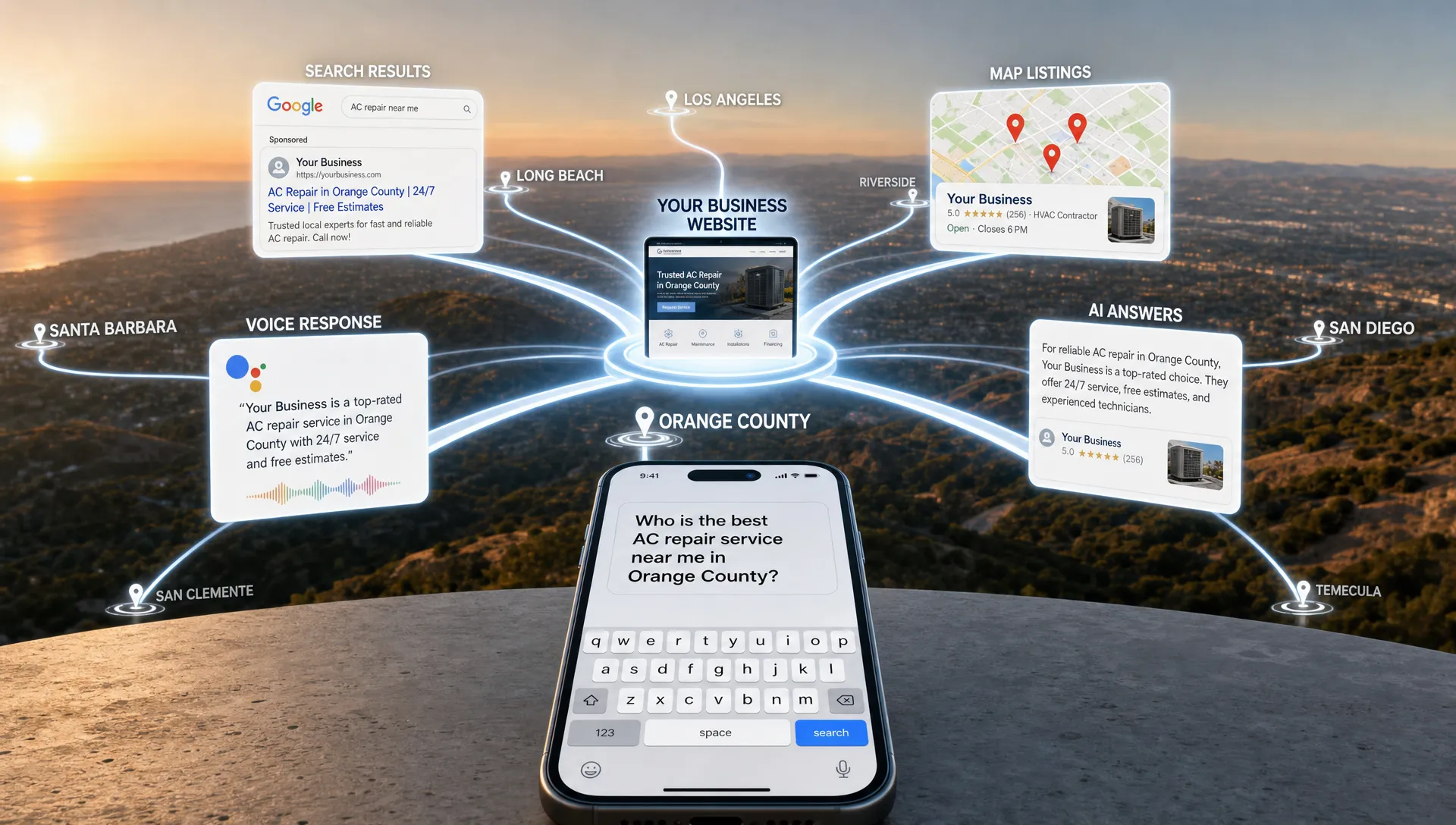
An answer-ready web presence is not just a better website. It is a connected system of pages, profiles, reviews, structured data, local proof, and clear business information that helps Google, AI Overviews, ChatGPT, Perplexity, and voice assistants understand one thing fast: who you are, what you do, where you do it, and why you should be trusted.
For Orange County contractors, multi-location practices, and service businesses across California, that shift matters. A homeowner in Irvine may ask Google, Which HVAC company can fix my AC today? A patient in San Jose may ask ChatGPT to compare nearby dental implant specialists. A property manager in Sacramento may use voice search to find an emergency plumber. In each case, the winner is not always the company with the prettiest homepage. It is the company whose digital presence is easiest for machines to verify and recommend.
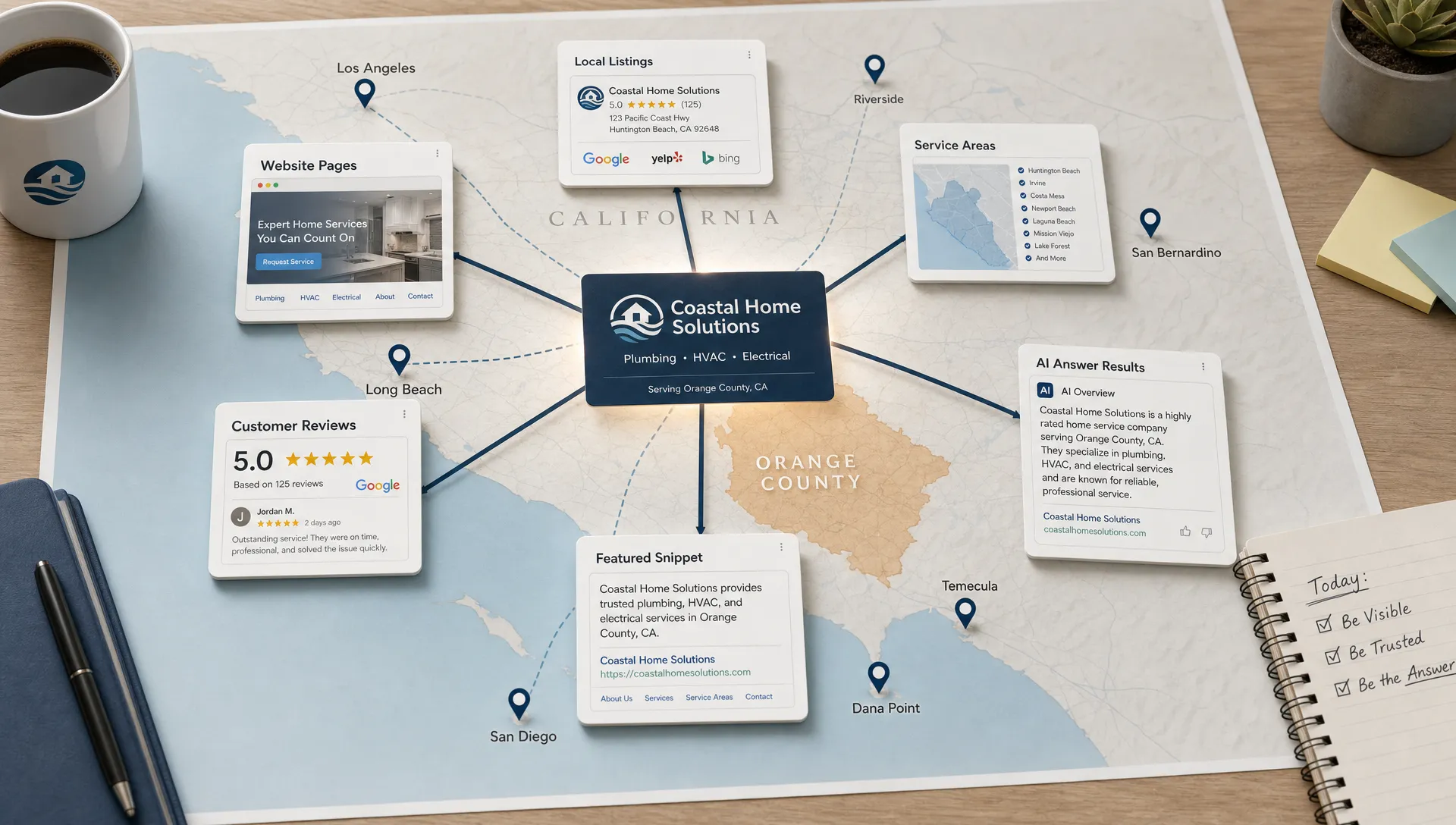
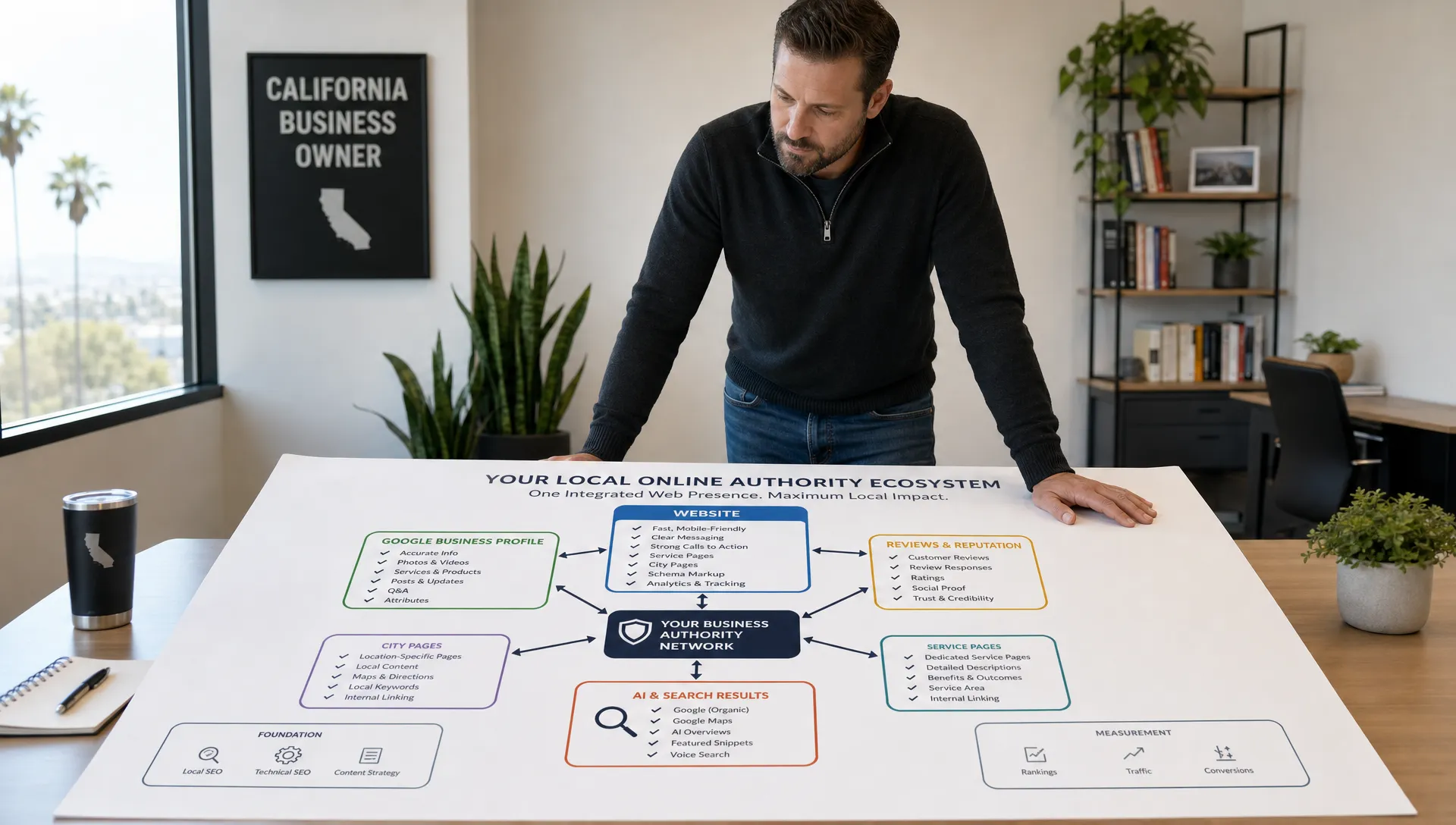
Think of this as building an answer web around your business. Your website remains the hub, but every supporting asset should reinforce the same facts, expertise, services, locations, and trust signals.
What an answer-ready web presence means
An answer-ready web presence is designed for both human buyers and machine interpretation. It gives people confidence while giving AI systems enough structure and corroboration to cite, summarize, or recommend your business.
Traditional SEO often focused on ranking a page for a keyword. Answer readiness goes further. It asks whether your entire digital footprint can answer buyer questions clearly, consistently, and with evidence.
For example, a roofing contractor in Huntington Beach should not only have a service page for roof repair. The business should also make it obvious which roof types it repairs, whether it offers emergency service, which cities it serves, what licensing or insurance information applies, what recent customers say, and how someone can contact the company without friction.
That same principle applies outside home services. A multi-location dental group in Los Angeles, a law firm in San Diego, or a medical practice in Fresno needs location-specific proof, practitioner expertise, service clarity, and consistent entity data across the web.
Why Google and AI need stronger signals now
Search engines have always interpreted websites, but AI-driven search raises the standard. When Google generates an AI Overview or an assistant answers a question directly, it must decide which sources are reliable enough to summarize. That makes clarity, structure, and corroboration more important than ever.
Google’s own documentation emphasizes that structured data helps Google understand page content and qualify pages for enhanced search features. It is not a magic ranking button, but it is a practical way to make important details easier for systems to process. You can review the baseline principles in Google Search Central’s structured data documentation.
The biggest local visibility risk is ambiguity. If AI systems cannot tell whether you serve Laguna Niguel, whether your electrical company handles commercial work, whether your medical practice accepts new patients, or whether your business is still active, they may choose a clearer competitor instead.
If you want a broader view of this shift, Kell Web Solutions explains the strategic foundation in its guide on how to become the AI answer in your local market.
Step 1: Define your business entity with zero confusion
Before you optimize content, define the business entity. AI systems need a stable understanding of your company across your website, Google Business Profile, directories, social profiles, review platforms, and local mentions.
Start with the basics, then make them consistent everywhere:
- Legal or commonly used business name
- Primary phone number and email
- Physical address or service area
- Core services and specialties
- Primary city and surrounding service areas
- Team members, credentials, certifications, and licenses where relevant
- Business hours, emergency availability, and appointment options
For local service businesses, the service area is especially important. Do not rely on vague phrases like serving Southern California if revenue depends on specific cities. Spell out the areas that matter, such as Laguna Beach, Laguna Niguel, Irvine, Anaheim, Santa Ana, Huntington Beach, San Diego, Los Angeles, San Jose, Sacramento, Fresno, and the neighborhoods or suburbs you realistically serve.
Consistency matters because answer engines compare signals. If your website says you are based in Orange County, your Google Business Profile lists a different service focus, and directory profiles use outdated phone numbers, trust drops.
Step 2: Build pages around real buyer questions
Answer-ready pages are built around intent, not just keywords. A homeowner, patient, or business buyer rarely thinks in exact keyword phrases. They ask questions, compare options, look for proof, and want next steps.
For a home services contractor, strong answer-ready content might include pages that address questions like:
- How quickly can an HVAC company repair an AC unit in Irvine?
- What does emergency plumbing service cost in Orange County?
- Do I need a permit for a roof replacement in Anaheim?
- Which solar options make sense for a coastal home in Laguna Beach?
For a professional practice, the same approach applies:
- Who is the best dentist for implants near Newport Beach?
- What should I bring to a first consultation with a family law attorney in San Diego?
- How do I compare medical clinics in San Jose for a specific treatment?
Each page should answer the question directly near the top, then support the answer with detail, examples, location context, credentials, reviews, and a clear call to action.
Here is a simple way to map content to intent:
| Buyer Question Type | Page or Asset to Create | What AI Should Understand |
|---|---|---|
| Who can help me nearby? | City or neighborhood service page | Your service, location, availability, and contact path |
| Can I trust this company? | Reviews, case studies, team pages | Proof, experience, credentials, and reputation |
| What will this cost or involve? | Educational guide or FAQ page | Process, variables, expectations, and next steps |
| Is this company active now? | Google Business Profile posts, recent content, fresh reviews | Recency, responsiveness, and operational status |
This approach is also why a single generic service page is rarely enough in competitive California markets. A plumber trying to reach Irvine, Anaheim, and Santa Ana customers needs content that reflects the differences in local demand, customer language, and service expectations.
Step 3: Make every important page easy for machines to read
Human-friendly design still matters, but answer-ready pages must also be machine-readable. That means the structure of the page should make the answer obvious.
Use descriptive headings. Keep paragraphs focused. Add concise summaries. Include FAQ sections where they genuinely help. Use schema markup for organization details, local business information, reviews, services, FAQs, articles, and professionals when appropriate.
A well-structured page should make these facts easy to extract:
- What the page is about
- Which business provides the service
- Where the service is available
- Who the service is for
- What proof supports the claim
- How someone takes action
Avoid hiding essential information inside images, sliders, PDFs, or vague marketing copy. AI systems can process many formats, but the clearest text and structured data usually win.
This is where Answer Engine Optimization becomes practical. Kell Web Solutions’ Answer Engine Optimization services focus on helping businesses structure their digital presence so AI-driven platforms can understand, trust, and recommend them.
Step 4: Add proof that can be corroborated
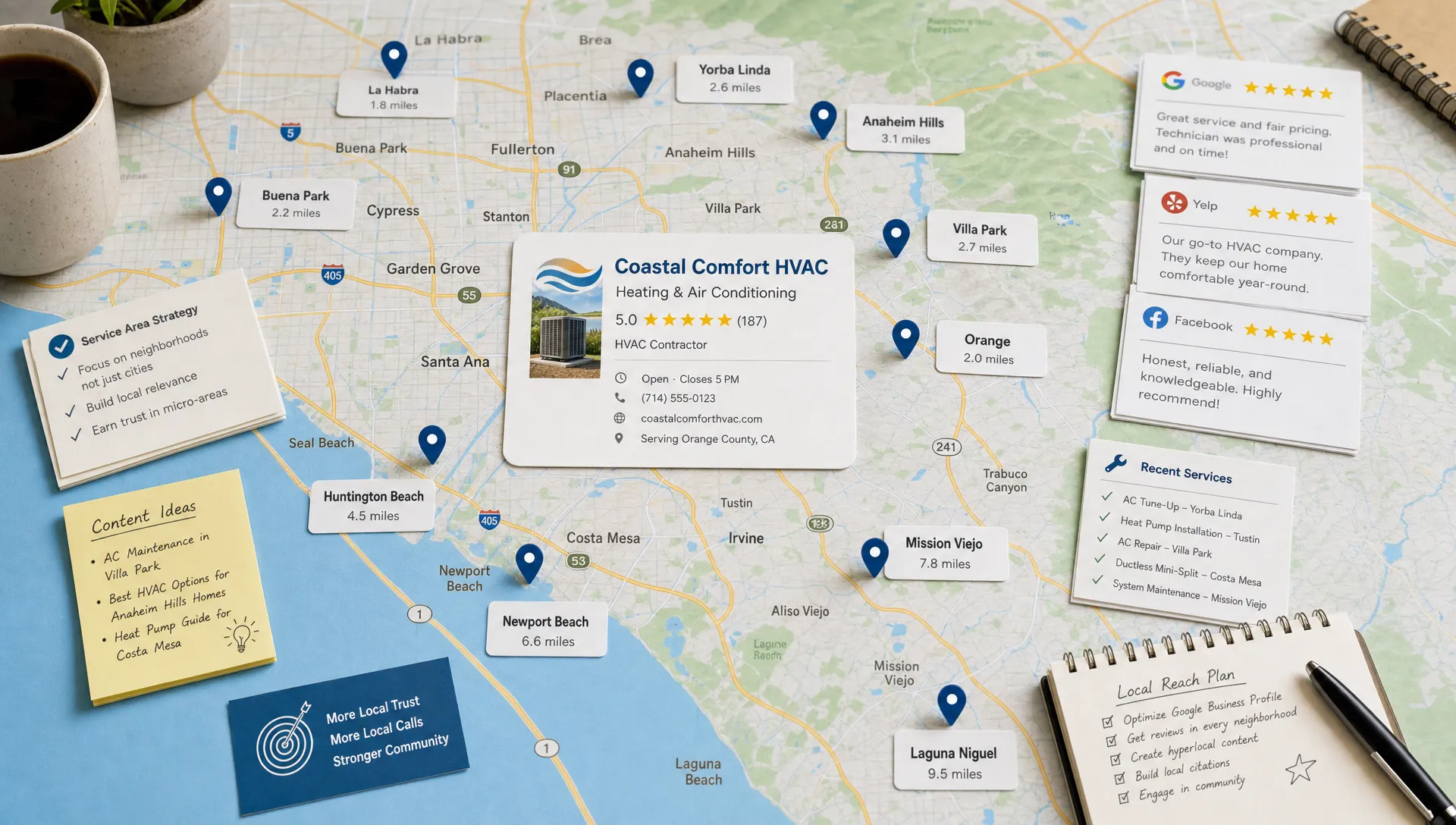
AI systems do not evaluate your website in isolation. They look for corroboration across the web. Your claims become more believable when reviews, local citations, business profiles, articles, and third-party mentions reinforce the same story.
For local businesses, the most useful proof often includes:
- Detailed customer reviews that mention services and locations
- Project pages with real city context
- Staff bios with credentials and experience
- Before and after examples when appropriate
- Local partnerships, sponsorships, and community involvement
- Consistent listings on reputable directories
- Recent content that shows the business is active
The principle applies across industries. A contractor, medical practice, or niche retailer should make its offer clear enough that a person and an AI system can understand it in seconds. For instance, a company offering premium shipping containers for sale can strengthen answer readiness by clearly documenting product types, delivery areas, inspection standards, pricing transparency, FAQs, and contact options in one coherent digital footprint.
The more specific and verifiable your proof is, the easier it becomes for AI systems to distinguish your business from a generic competitor.
Step 5: Build local authority by geography
California is not one market. Orange County behaves differently from Los Angeles, San Diego, San Jose, Fresno, Sacramento, Bakersfield, and Stockton. Even within Orange County, the search behavior of a Laguna Beach homeowner may differ from an Irvine property manager or a Santa Ana small business owner.
An answer-ready web presence should reflect those local differences without creating thin, duplicated city pages. Each important market needs useful local context.
For a contractor, that could mean explaining coastal corrosion issues in Laguna Beach, older home electrical upgrades in Santa Ana, large suburban HVAC needs in Irvine, or wildfire-related roofing concerns in parts of Southern California. For a medical or legal practice, it might mean location-specific appointment access, parking, practitioner availability, local regulations, or community-specific service needs.
A useful local authority page should include:
- A clear city or neighborhood focus
- Services genuinely offered in that area
- Local problems or buyer concerns
- Proof from nearby customers or projects
- Driving, scheduling, or service availability details
- Internal links to related services and nearby areas
This is the difference between a page that merely says HVAC repair Irvine and a page that actually helps an Irvine homeowner decide whom to call.
Step 6: Connect your website, profiles, and content into one answer web
Answer readiness improves when your digital assets reinforce each other. Your website, Google Business Profile, social profiles, review pages, citations, blog articles, local landing pages, and press mentions should all tell the same story.
That does not mean copying the same paragraph everywhere. It means aligning the facts.
If your website says your roofing company specializes in tile roof repair in Orange County, your Google Business Profile categories, service descriptions, photos, reviews, and posts should support that. If your law firm has offices in Los Angeles and San Diego, each location should have accurate contact data, practitioner details, and service information.
Internal linking is also part of the answer web. Pages should guide both users and crawlers from broad topics to specific services and locations. A page about emergency plumbing should naturally connect to water heater repair, drain cleaning, service area pages, financing information if applicable, and contact options.
For businesses preparing for the next phase of search, Kell’s article on ranking search in 2026 explains why visibility now spans Google Maps, AI Overviews, voice assistants, reviews, and answer engines.
Step 7: Track answer visibility, not just rankings
Traditional ranking reports still have value, but they no longer tell the whole story. If a customer asks an AI assistant for the best roofer near Laguna Niguel and your company is not mentioned, a number three organic ranking may not matter as much as it used to.
Track visibility in the places where buyers now make decisions:
- Google organic results
- Google Maps and local pack results
- AI Overviews for service and comparison queries
- ChatGPT, Perplexity, Gemini, and other answer engines
- Voice search responses where relevant
- Review platform visibility
- Branded search accuracy
You should also test real buyer questions regularly. Ask how customers would phrase the problem, then see which companies are cited or recommended. Repeat this by city, service, and urgency level.
For example, an Orange County HVAC company might test questions such as best emergency AC repair in Irvine, who fixes heat pumps near Laguna Niguel, and what HVAC company serves coastal homes in Huntington Beach. A dental group may test dental implants near San Jose, emergency dentist in Anaheim, or family dentist accepting new patients in Sacramento.
The goal is not to manipulate AI answers. The goal is to become the clearest, most trustworthy, most corroborated answer.
Common mistakes that keep businesses out of AI answers
Many local businesses already have enough experience to be recommended, but their web presence does not prove it clearly. These mistakes are especially common among long-established contractors and professional practices.
| Mistake | Why It Hurts Answer Readiness | Better Approach |
|---|---|---|
| Generic service pages | AI cannot match services to specific buyer needs. | Create focused pages for core services and real questions. |
| Thin city pages | Low-value pages look repetitive and unhelpful. | Add local examples, proof, FAQs, and service details. |
| Inconsistent NAP data | Conflicting facts reduce trust. | Standardize name, address, phone, and service areas. |
| Weak review strategy | AI lacks recent third-party proof. | Encourage detailed, location-specific customer reviews. |
| No structured data | Page facts are harder to interpret. | Add appropriate schema markup and clean page hierarchy. |
| Outdated content | Business may appear inactive. | Publish recent updates, FAQs, project notes, and GBP posts. |
The businesses that win in AI search are usually not the ones that shout the loudest. They are the ones that make the strongest case with clarity and evidence.
A practical answer-ready checklist
Use this checklist to evaluate your current web presence before investing in more ads or more content.
- Can a first-time visitor understand your main service, location, and next step within five seconds?
- Do your top service pages answer real customer questions directly?
- Are your Google Business Profile, website, and directory listings consistent?
- Do you have recent reviews that mention services, cities, and outcomes?
- Do your location pages contain useful local details rather than duplicated copy?
- Is your content structured with clear headings, summaries, FAQs, and schema?
- Can AI tools accurately describe your business when asked?
- Do your pages explain why your company is qualified, experienced, and trustworthy?
- Are you tracking visibility in AI answers, not just blue-link rankings?
If you cannot answer yes to most of these, your business may be visible to humans who already know you, but unclear to the answer engines shaping new demand.
Frequently Asked Questions
What is an answer-ready web presence? An answer-ready web presence is a digital footprint structured so Google, AI Overviews, voice assistants, and AI tools can clearly understand, verify, and recommend a business for relevant questions.
Is answer readiness the same as SEO? No. SEO helps pages rank in search results, while answer readiness focuses on making your business clear, trusted, and citable when AI systems generate direct answers.
Do local contractors need Answer Engine Optimization? Yes, especially in competitive service areas like Orange County, Los Angeles, San Diego, San Jose, and Sacramento. Contractors depend on urgent local intent, and AI-driven search can influence which company gets the call.
How long does it take to build an answer-ready presence? The timeline depends on the condition of your website, content, reviews, citations, and local authority. Foundational improvements can happen quickly, but durable authority usually compounds over months.
What should I fix first? Start with entity clarity, service page quality, Google Business Profile accuracy, reviews, and structured data. Those elements give both people and AI systems a stronger basis for trusting your business.
Build a web presence that AI can understand and customers can trust
The future of local visibility belongs to businesses that can be understood quickly, verified easily, and recommended confidently. For Orange County contractors, California home service companies, and multi-location practices, that means moving beyond a brochure website and building an answer-ready web presence.
Kell Web Solutions helps local businesses adapt to the Retrieval Economy with strategy, structure, local authority, and Answer Engine Optimization built around how real customers ask for help. If your website is not being cited, summarized, or recommended the way it should be, now is the time to fix the foundation.
Schedule a strategy conversation with Kell Web Solutions and start turning your digital presence into the answer customers and AI systems can trust.