How to Become the AI Answer in Your Local Market
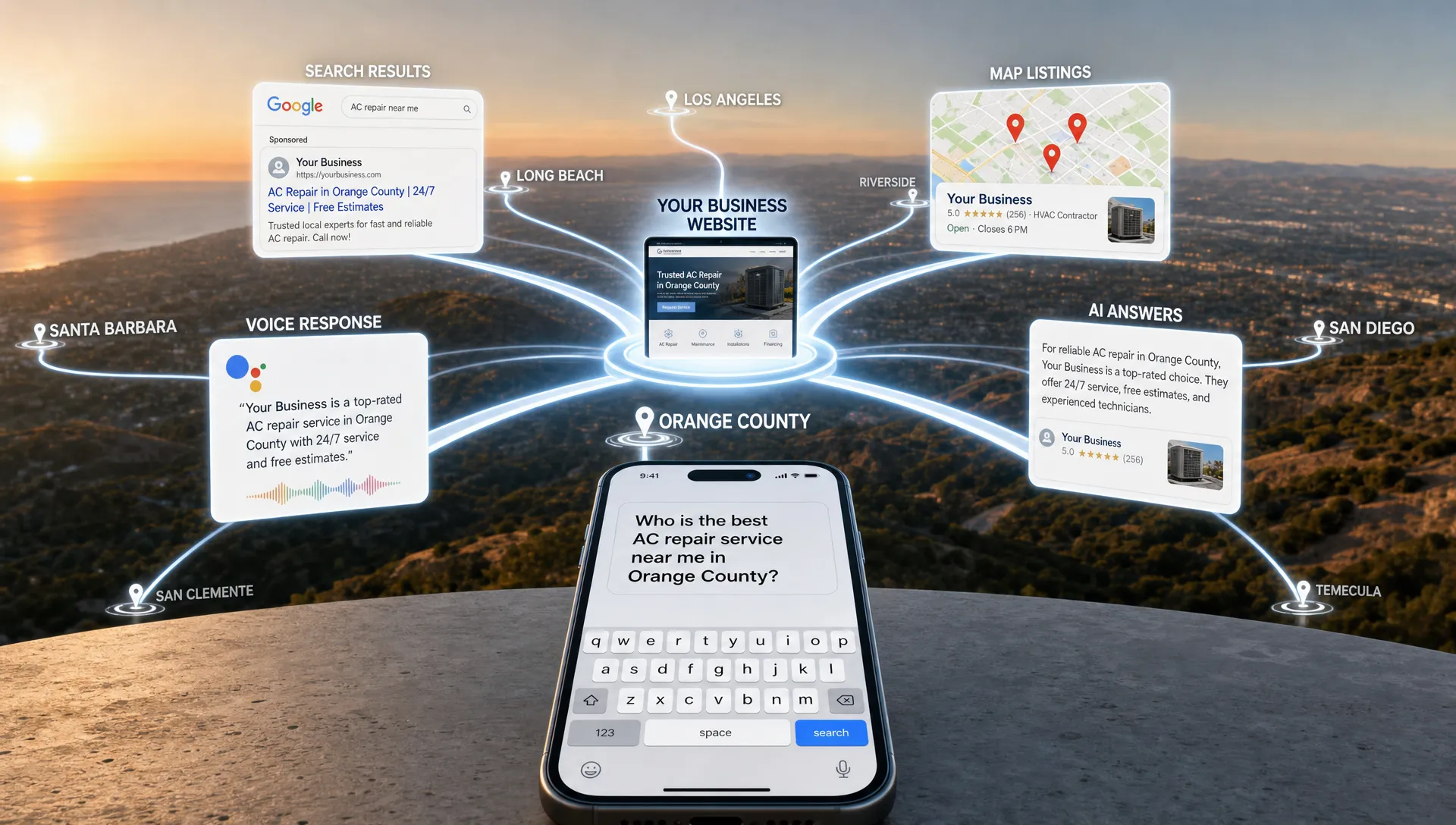
In 2026, the most valuable local search result is not always the top blue link. It is the answer an AI assistant gives when a homeowner asks, Who should I call for emergency AC repair in Irvine? or a patient asks, Which dental office near San Jose offers same-week appointments?
If that AI answer names your competitor, the lead may never visit your website, compare your ads, or see your carefully written service page. The decision path has already been shortened.
For local contractors and multi-location professional practices, becoming the AI answer means making your business the easiest, clearest, and most trustworthy option for answer engines to understand and recommend. That includes Google AI results, voice assistants, ChatGPT-style tools, map results, and the local knowledge sources these systems use to validate businesses.
This is where Answer Engine Optimization, or AEO, builds on traditional SEO. SEO helps you rank. AEO helps you become the selected answer.
What it means to become the AI answer locally
An AI answer is a synthesized recommendation. Instead of showing users a long list of pages, answer engines try to interpret the question, identify relevant businesses, compare trust signals, and present a direct response.
For a home services company, that might mean being recommended for 24-hour water heater replacement in Anaheim or roof leak repair after storms in Huntington Beach. For a professional practice, it might mean being cited for family law consultation in Newport Beach, pediatric dentist near Fremont, or urgent care clinic in Sacramento open weekends.
The local AI answer is usually influenced by a combination of signals:
- What your business is and how clearly it is described
- Where you operate and whether that geography is consistently supported
- Which services you are known for
- Whether third-party sources confirm your legitimacy
- Whether reviews, content, structured data, and local citations reinforce the same story
- Whether your website answers the exact questions customers ask before calling
That last point matters. AI systems are built to retrieve useful answers. A vague home page that says you offer quality service is weaker than a clear page that explains when a homeowner should replace a heat pump, which cities you serve, what credentials matter, and how to request help.
| Traditional local SEO | AI answer readiness |
|---|---|
| Focuses on rankings, traffic, and keyword positions | Focuses on being understood, cited, and recommended |
| Optimizes pages around keywords | Structures pages around questions, entities, and proof |
| Measures clicks and impressions | Measures calls, bookings, citations, and share of answer |
| Often relies on one main website | Builds a wider footprint of trusted local signals |
| Writes for search crawlers and humans | Writes for humans, search crawlers, and AI retrieval systems |
Step 1: Define your local entity with absolute clarity
Before AI can recommend you, it has to understand you.
Your business entity is the structured identity of your company online. It includes your name, address, phone number, service categories, leadership, credentials, service areas, reviews, social profiles, and website content. If these signals conflict, answer engines have less confidence.
For example, an HVAC company based in Laguna Niguel should not describe itself one way on its website, another way on its Google Business Profile, and a third way in directory listings. Its core identity should be consistent across all major locations where customers and machines encounter the brand.
At minimum, your entity foundation should make these facts obvious:
- Legal or public-facing business name
- Primary location or service-area base
- Phone number and contact method
- Core services and specialties
- Cities, neighborhoods, and counties served
- Founder, leadership, or practitioner information when relevant
- Licenses, certifications, professional associations, or other trust markers
- Clear proof that the business actually serves the local market
The same principle applies in professional services. A firm that clearly packages services, consultation options, industry focus, and client support, such as expert tax and accounting services, gives both people and answer systems a cleaner understanding of what it does and who it serves.
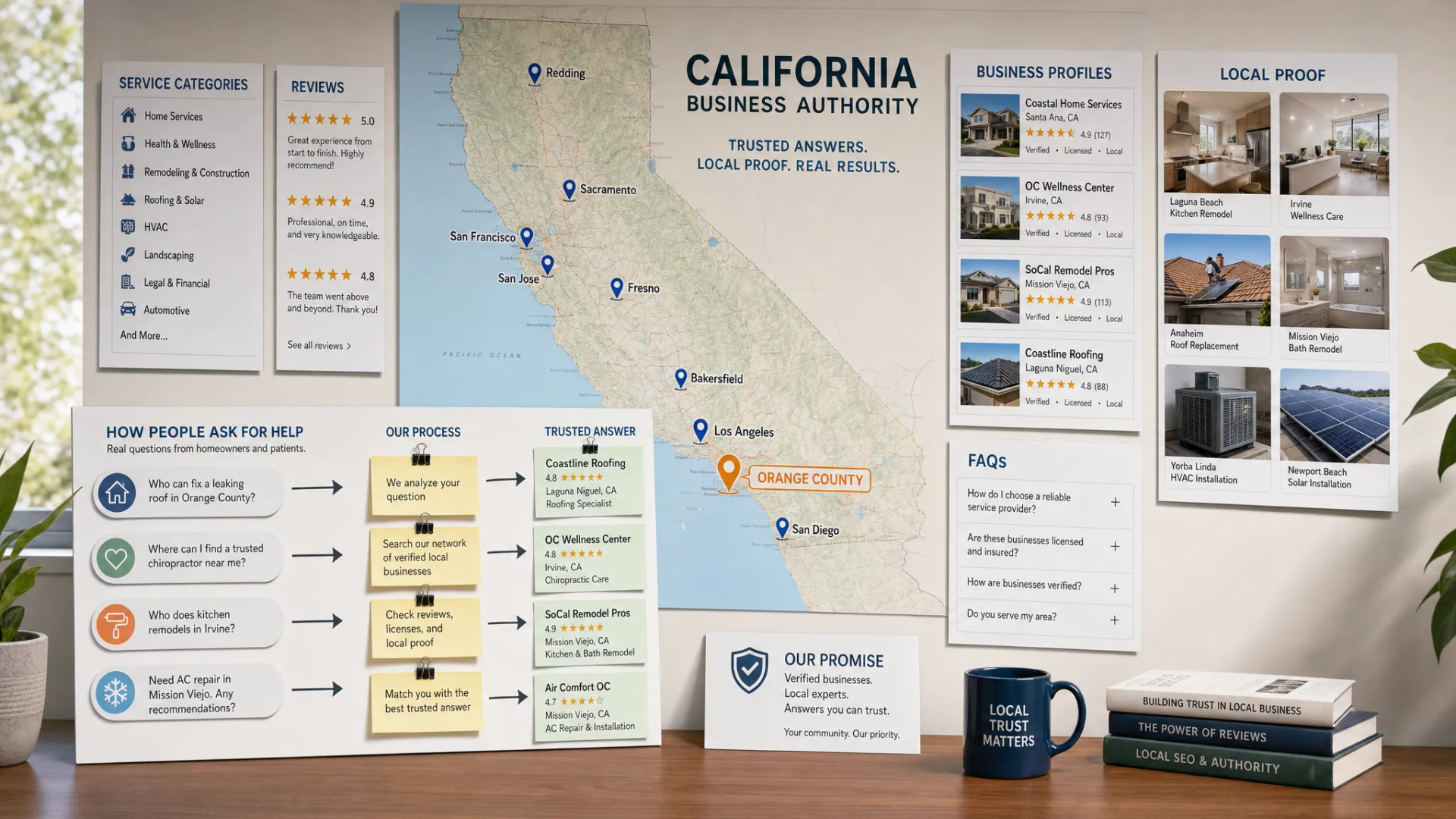
For California local businesses, this entity work becomes even more important in crowded markets like Orange County, Los Angeles, San Diego, San Jose, and Sacramento. If ten competitors provide the same service, the business with the clearest and most corroborated identity has an advantage.
Step 2: Map the real questions customers ask before they call
AI search is conversational. People no longer type only plumber Irvine. They ask full questions, compare options, describe symptoms, and expect local recommendations.
A homeowner might ask whether a roof leak can wait until morning. A dental patient might ask which office accepts emergency appointments near Santa Ana. A legal client might ask how to choose a personal injury attorney in Long Beach after a rideshare accident.
Your content should be built around these real moments of intent. Start by grouping customer questions into practical categories.
Urgent questions come from people ready to act now, such as emergency repair, same-day appointment, no heat, no cooling, broken pipe, roof leak, or urgent consultation.
Evaluation questions come from people comparing providers, such as best HVAC company in Irvine, what to look for in a roofer, how to choose a dentist, or whether a local attorney handles a specific case type.
Education questions come from people still diagnosing the issue, such as why the AC is blowing warm air, how long a dental crown lasts, or when to replace an electrical panel.
Local-fit questions include neighborhood, city, and service-area modifiers, such as Laguna Beach, Anaheim Hills, Newport Coast, San Francisco, Fresno, Oakland, or Bakersfield.
Once you understand the questions, you can build pages that answer them directly. This is more useful than publishing generic blog posts that could apply to any business in any state.
Step 3: Build answer-ready pages, not just keyword pages
To become the AI answer, your website needs pages that are easy to parse, easy to quote, and easy to trust. This does not mean writing robotic content. It means organizing helpful information in a way that both humans and answer engines can understand quickly.
A strong local service page should identify the service, explain the problem it solves, define the local service area, show proof, answer common questions, and make the next step obvious.
For an Orange County plumbing company, a page about water heater replacement should not simply repeat water heater replacement Orange County over and over. It should explain signs a water heater is failing, common replacement timelines, city-specific service availability, permit considerations when appropriate, customer review themes, and what happens when someone calls.
For a multi-location dental practice, each location page should be genuinely useful. The Irvine page, San Diego page, and San Jose page should not be duplicates with city names swapped. Each should reflect the local office, providers, services, parking or access details, appointment flow, reviews, and patient questions specific to that location.
The most AI-ready pages usually include:
- A direct answer near the top of the page
- Clear headings written around real customer questions
- Short explanatory sections that can stand alone
- Local proof, such as service areas, project examples, office details, or review themes
- Specific next steps, such as call, request estimate, schedule consultation, or book appointment
- Internal links to related services and nearby locations
Kell Web Solutions’ Answer Engine Optimization service is built around this shift, helping businesses move from keyword-only pages to authority assets that answer engines can understand and trust.
Step 4: Strengthen proof signals that AI can verify
AI systems do not rely only on what you say about yourself. They look for corroboration. That makes proof one of the most important parts of local AEO.
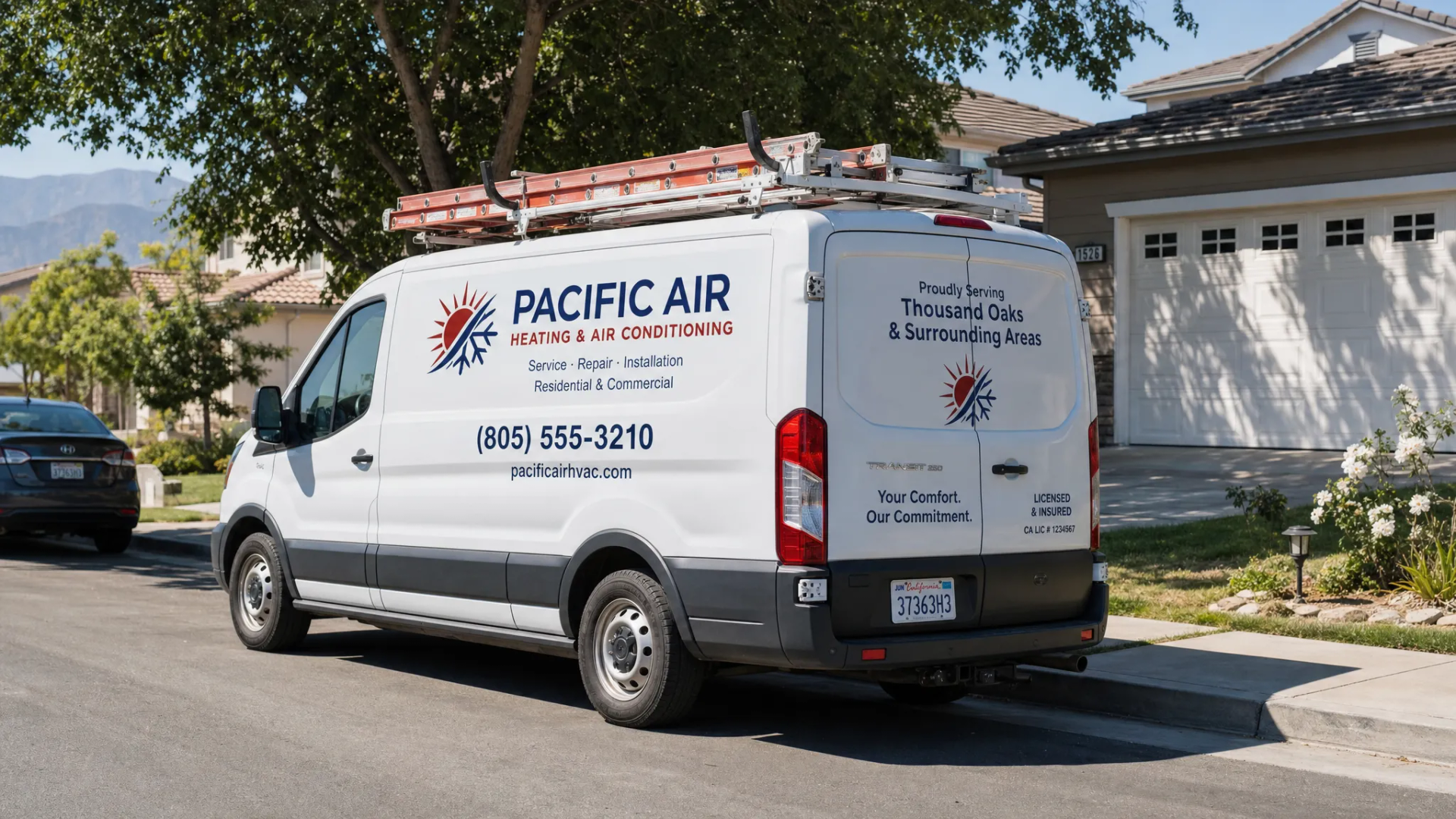
For contractors, proof may include reviews, project photos, before-and-after examples, service-area pages, licenses, team bios, associations, and detailed explanations of your process. For medical, dental, and legal practices, proof may include provider credentials, practice areas, patient or client review themes, office locations, professional memberships, and clear compliance-conscious explanations of services.
Reviews are especially important because they connect customer language to your service categories. A roofing company may say it handles storm damage, but reviews mentioning roof leak repair in Anaheim or tile roof replacement in Laguna Beach reinforce that message in a way that feels independent.
The key is to earn reviews ethically. Do not buy reviews, pressure customers, or filter only happy clients into public review requests. A healthy review strategy should be repeatable, compliant, and integrated into operations. Kell has a practical guide on how to get more Google reviews without risky tactics if your review process needs a safer structure.
Proof also needs to be visible on your site. If you have served Orange County for 15 years, say where and how. If your practice has multiple offices, show the real locations. If your company has specialized experience in solar, HVAC, roofing, electrical, remodeling, dentistry, or law, explain it in plain language.
Step 5: Make your site machine-readable
Your website should not force AI systems to guess what each page means. Technical clarity helps search engines and answer engines interpret your content more accurately.
Structured data is part of that foundation. According to Google Search Central’s structured data documentation, structured data can help Google understand the content of a page and enable richer search features when eligible.
For local businesses, useful structured data may include LocalBusiness, Organization, Service, FAQPage, BreadcrumbList, and location-specific markup where appropriate. The goal is not to spam schema. The goal is to reinforce facts already visible on the page.
Machine-readable local websites also tend to have:
- Consistent name, address, and phone information
- Fast-loading mobile pages
- Clear navigation and crawlable internal links
- Descriptive title tags and meta descriptions
- Clean service and location page architecture
- Accurate image alt text when images explain services or locations
- No hidden text, doorway pages, or misleading claims
Advanced AEO strategies may also include AI-facing files and structured reference layers, such as llms.txt, but these should support a strong website rather than replace one. If your visible content is thin or confusing, technical files will not fix the authority problem.
Step 6: Build hyperlocal authority beyond your main website
One website is often not enough in competitive California markets. A single domain may struggle to prove deep relevance across dozens of neighborhoods, especially when competitors are active in maps, directories, reviews, local content, and media mentions.
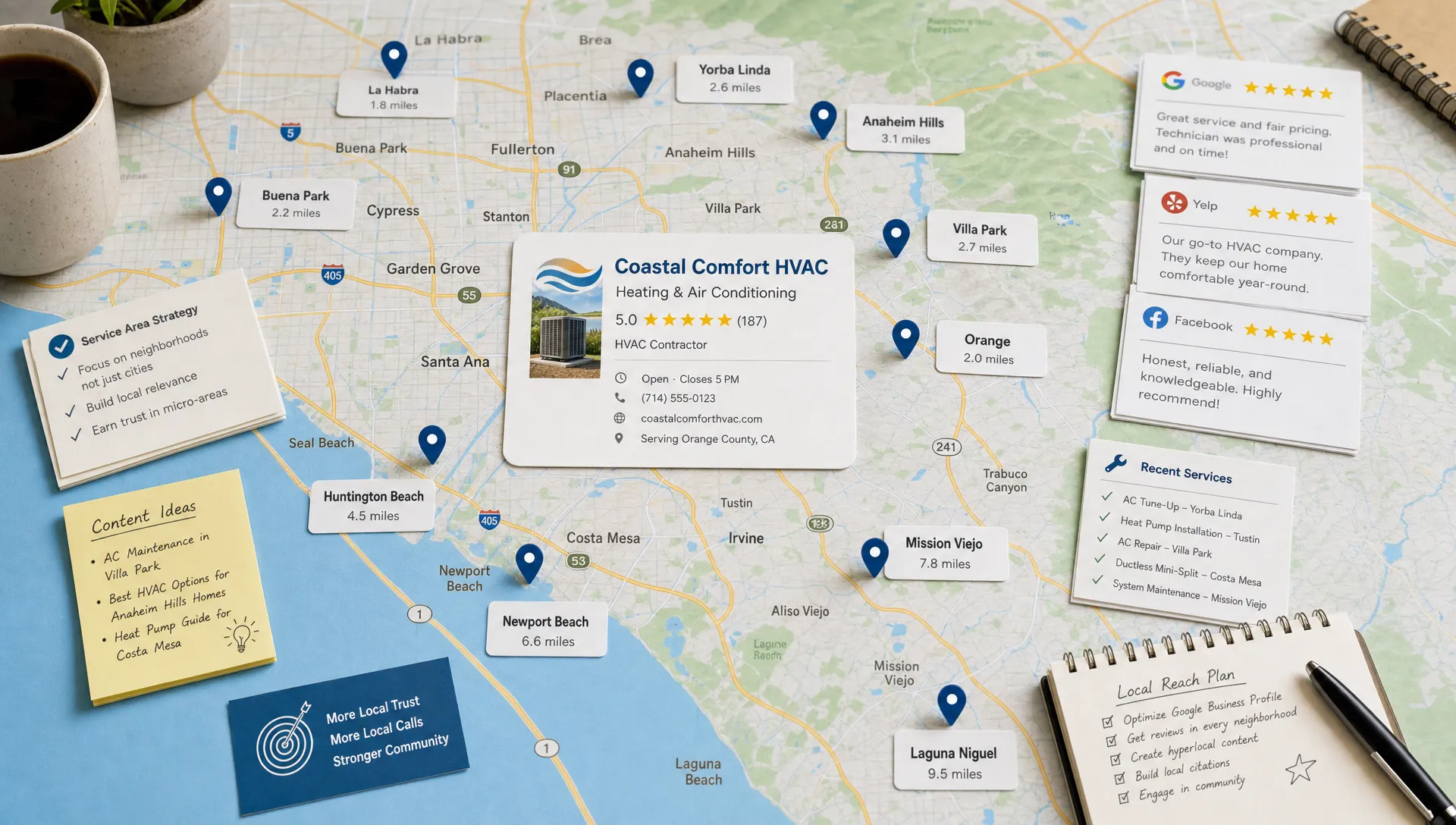
This is why hyperlocal authority matters. You need signals that connect your brand to specific places and services. For an HVAC company, that could mean building authority around Laguna Niguel, Irvine, Huntington Beach, Anaheim, and Newport Beach. For a legal or dental group, it could mean creating distinct authority around office catchments in Los Angeles, San Diego, San Jose, Oakland, or Sacramento.
Kell Web Solutions’ Hyperlocal Authority Builder is designed for this problem. It uses local authority assets, content, and trust signals to help businesses surround a target market rather than relying on one generic website page to carry the entire burden.
| Market type | Local AI challenge | Authority move |
|---|---|---|
| Orange County cities like Laguna Beach, Irvine, and Anaheim | High competition in maps and service searches | Build neighborhood-specific service proof, reviews, and answer-ready content |
| Large metros like Los Angeles and San Diego | Search intent varies dramatically by neighborhood | Create distinct local assets for major service areas and customer segments |
| Northern California markets like San Jose and San Francisco | Professional services and tech competition are dense | Strengthen expertise signals, provider bios, and location-specific authority |
| Central and Inland California markets like Fresno, Bakersfield, and Sacramento | Service-area coverage can be broad and inconsistent | Clarify service boundaries, response expectations, and city-level proof |
The strategic goal is simple: when AI systems look for evidence of who is relevant in a local market, your brand should appear repeatedly in trustworthy, consistent, geographically specific contexts.
Step 7: Optimize Google Business Profile and local citations
For local companies, Google Business Profile is still one of the strongest sources of local business information. Answer engines, map results, and local search experiences all depend heavily on structured business data.
Google says local results are primarily based on relevance, distance, and prominence in its guide to improving local ranking on Google. Those concepts also align closely with AI answer readiness.
Relevance means your business clearly matches the query. Distance means the business fits the searcher’s local context. Prominence means the business appears trusted, known, and well-supported by reviews and other signals.
Your Google Business Profile should be complete and actively maintained. Choose accurate primary and secondary categories. Add services that match what you actually provide. Keep hours current. Upload real photos. Use posts when they are useful. Answer common questions. Respond to reviews professionally.
Citations still matter too, but quality is more important than quantity. Your business information should be consistent across major directories, industry platforms, social profiles, and local sources. Conflicting phone numbers, old addresses, duplicate listings, and mismatched categories all create friction.
Kell’s Local SEO Mastery service addresses these foundational signals with Google Business Profile optimization, citation management, local content, and on-page improvements for businesses that need a stronger local base before or alongside AEO.
Step 8: Make the conversion path as strong as the visibility path
Becoming the AI answer is only valuable if customers can take action easily. Many local searches end in a call, booking, or consultation request. If your phone is missed, your form is slow, or your intake process is unclear, you can win the AI answer and still lose the revenue.
This is especially important for home services. When someone has no heat, a leaking pipe, a failed electrical panel, or storm damage, they are not casually browsing. They want a fast, confident response.
Professional practices face a similar issue. A potential patient or client may be ready to book, but if the front desk does not answer, the form is confusing, or follow-up takes too long, the next recommended provider gets the opportunity.
Your conversion system should make these actions easy:
- Call the right number from mobile search
- Request an estimate or consultation quickly
- Understand service areas and availability
- Know what happens after submitting a form
- Get a timely response after hours or during busy periods
For businesses that need more qualified conversations, Kell’s Profit Accelerator focuses on managed outreach, qualification, follow-up, and booked conversations. It is a separate growth lever from AEO, but the two can support each other when visibility and appointment flow need to work together.
Step 9: Measure share of answer, not just rankings
Rankings still matter, but they are no longer the whole story. If AI summaries, voice assistants, and map results influence decisions before a website click, then traffic alone may underreport your true visibility.
A modern local measurement system should track both search performance and answer presence. You can start with a monthly AI answer audit using realistic prompts your customers might ask.
Test questions like these:
- Who is the best HVAC company near Laguna Niguel for emergency repair?
- Which roofer serves Anaheim Hills and handles tile roof leaks?
- What dental practice near Irvine offers same-week appointments?
- Which law firm in Long Beach handles consultations for my issue?
- Who provides solar installation in San Diego with strong local reviews?
Document whether your business appears, which competitors are mentioned, what sources are cited, and what proof seems to influence the answer. Then compare that with calls, form fills, Google Business Profile actions, booked appointments, and closed revenue.
The point is not to chase every AI response. These systems change often. The point is to build durable authority so your business becomes a logical answer across many related local queries.
A practical 90-day plan to become more answerable
You do not need to rebuild your entire marketing system in one week. Start with the signals that create the most clarity and trust.
| Timeline | Priority | Outcome |
|---|---|---|
| Days 1 to 15 | Audit entity signals, website structure, Google Business Profile, reviews, and citations | Identify gaps that prevent answer engines from trusting your business |
| Days 16 to 30 | Map real customer questions by service, urgency, and location | Build an intent plan based on how customers actually ask for help |
| Days 31 to 60 | Improve service pages, location pages, FAQs, schema, and internal links | Make your site easier to understand, quote, and recommend |
| Days 61 to 75 | Strengthen reviews, proof assets, project examples, bios, and local content | Increase corroboration and local trust signals |
| Days 76 to 90 | Expand hyperlocal authority and begin monthly share-of-answer tracking | Move from one-site visibility to broader local answer presence |
For many California businesses, the fastest wins come from clarity. Clean up inconsistent business data. Rewrite vague service pages. Add direct answers. Improve location proof. Ask for reviews properly. Make it easy to call.
Once the foundation is clean, the next advantage comes from authority. That is where neighborhood content, local proof, supporting assets, and ongoing AEO work begin to compound.
Common mistakes that keep businesses out of AI answers
Many local businesses are not invisible because they lack expertise. They are invisible because their expertise is not structured in a way that search and AI systems can confidently interpret.
The most common mistakes include thin city pages, duplicate location content, inconsistent phone numbers, weak Google Business Profile categories, few recent reviews, generic blog posts, unclear service areas, missing schema, and websites that bury the answer below marketing fluff.
Another mistake is treating AEO as a one-time technical task. AI answer visibility is not a plugin. It is the result of clear positioning, useful content, verified local proof, consistent data, and ongoing adaptation.
Finally, do not make claims you cannot support. If you say you are the top provider in Orange County, show why. If you claim 24-hour service, make sure your operations support it. Trust is easier to build when your marketing matches reality.
Frequently Asked Questions
What is an AI answer in local search? An AI answer is a direct response generated by an AI-powered search or assistant experience. For local businesses, it may recommend a contractor, practice, or service provider based on relevance, location, trust signals, reviews, content, and available business data.
How is Answer Engine Optimization different from SEO? SEO focuses on improving visibility in traditional search results. Answer Engine Optimization focuses on making your business clear, credible, and structured enough to be selected or cited in AI-generated answers, voice responses, and answer-driven search experiences.
Do local businesses still need traditional SEO? Yes. AEO does not replace SEO. Strong technical SEO, local SEO, content, reviews, and Google Business Profile optimization all support answer engine visibility. The difference is that the goal expands from ranking to being recommended.
How long does it take to become the AI answer? Timelines vary by competition, market, website quality, reviews, and authority. Some clarity improvements can help within weeks, while stronger local authority across competitive markets like Orange County, Los Angeles, San Diego, or San Jose usually compounds over several months.
Can a service-area business become the AI answer in multiple cities? Yes, but each city needs real support. A contractor should show clear service-area relevance, location-specific content, reviews, project proof, and consistent citations rather than relying on duplicated pages with city names swapped.
What should I measure besides rankings? Track calls, qualified form fills, booked appointments, Google Business Profile actions, review growth, local page engagement, AI citation presence, and share of answer across important customer questions.
Ready to become the AI answer in your market?
If your business depends on local calls, consultations, or booked jobs, the next stage of search is already here. Customers are asking AI tools who to trust. Your job is to make your business the clearest and most credible answer.
Kell Web Solutions helps Orange County and California businesses build that visibility through Answer Engine Optimization, Local SEO Mastery, and hyperlocal authority strategies for contractors and professional practices.
To discuss how your business can become the AI answer in Laguna Beach, Laguna Niguel, Irvine, Anaheim, Los Angeles, San Diego, San Jose, Sacramento, Fresno, or your local California market, contact Kell Web Solutions at (949) 575-8553 or request a strategy call through the website.