How Answer Engine Optimization Wins Local Calls in 2026
Local customers still want the same thing they have always wanted: a trustworthy company that can solve the problem now. What changed in 2026 is how they decide who to call.
A homeowner in Laguna Niguel may ask an AI assistant which HVAC company can repair an AC unit today. A family in Irvine may ask Google which dentist handles emergencies near Woodbridge. A property manager in San Diego may ask who replaces commercial roofs in their area. In each case, the winner is not simply the business with the most keywords on a page. The winner is the business the answer engine can understand, verify, and confidently recommend.
That is the job of answer engine optimization. For local contractors and multi-location professional practices, AEO is becoming a direct path to better phone calls, not just more website visits.
Why local calls now depend on answers, not just rankings
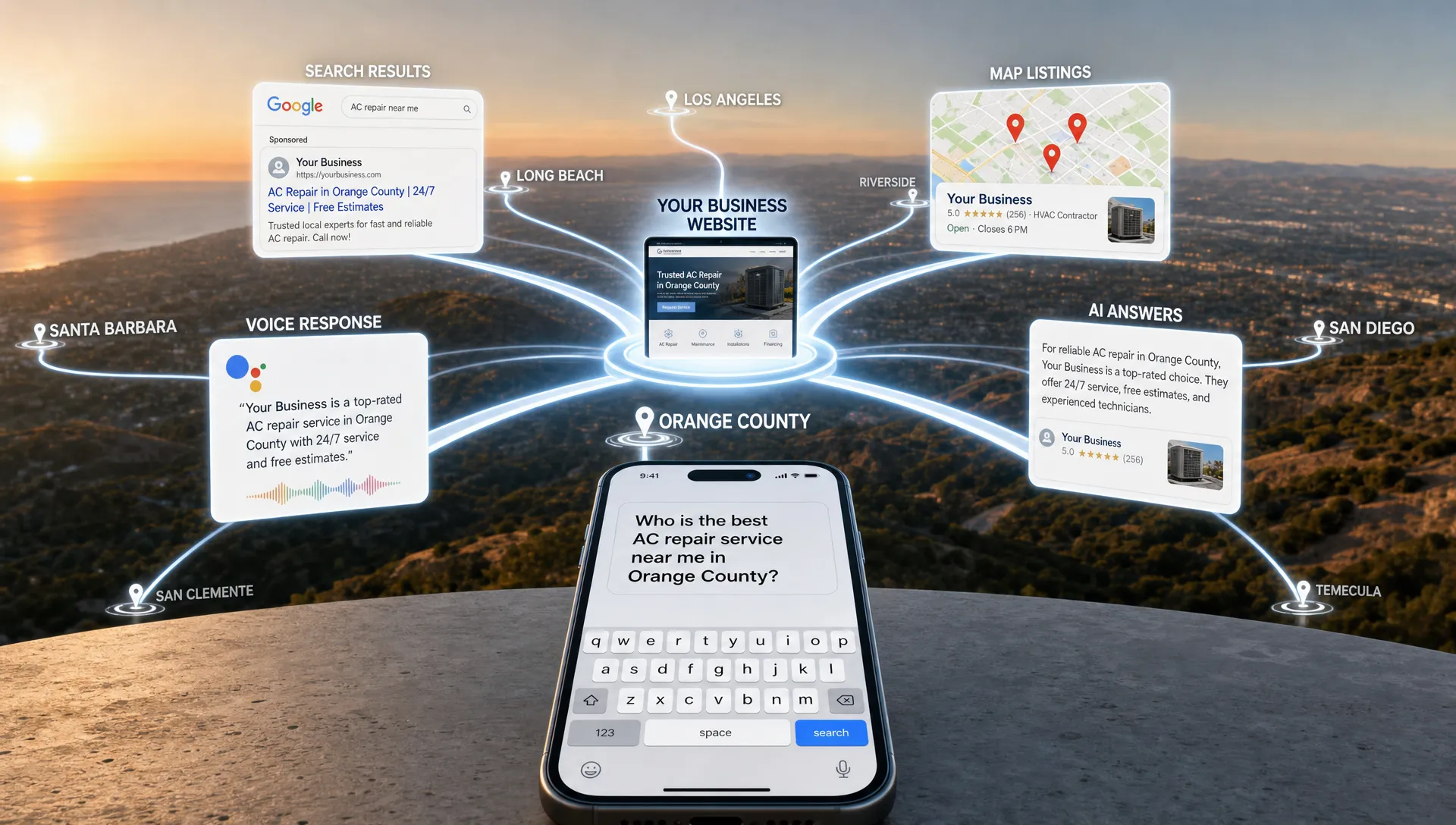
Search used to feel linear. A customer typed a phrase, scanned search results, clicked a few websites, and chose who to contact. Today, the journey is compressed. AI summaries, map results, voice assistants, business profiles, and review snippets often shape the decision before a visitor ever lands on your website.
That shift matters most for high-intent local services. People looking for plumbing repair, roof leak help, HVAC service, dental appointments, or legal consultations do not want to research forever. They want a short list they can trust. If an answer engine can summarize the options and surface a credible local business, the call may happen before the traditional website visit.
This does not mean SEO is dead. It means search visibility has a new layer. Your website, Google Business Profile, citations, reviews, service pages, schema, and local content all need to tell the same story. If those signals are inconsistent or thin, AI-driven platforms may hesitate to recommend you, even if your business is a good fit.
For a deeper look at how search behavior is changing this year, Kell Web Solutions explains the broader shift in ranking search in 2026. The key takeaway is simple: local businesses now need to be visible, understandable, and trusted across the places answer engines retrieve information.
What answer engine optimization actually does
Answer engine optimization structures your digital presence so AI-driven platforms can clearly identify who you are, what you do, where you serve, and why you are a trustworthy recommendation.
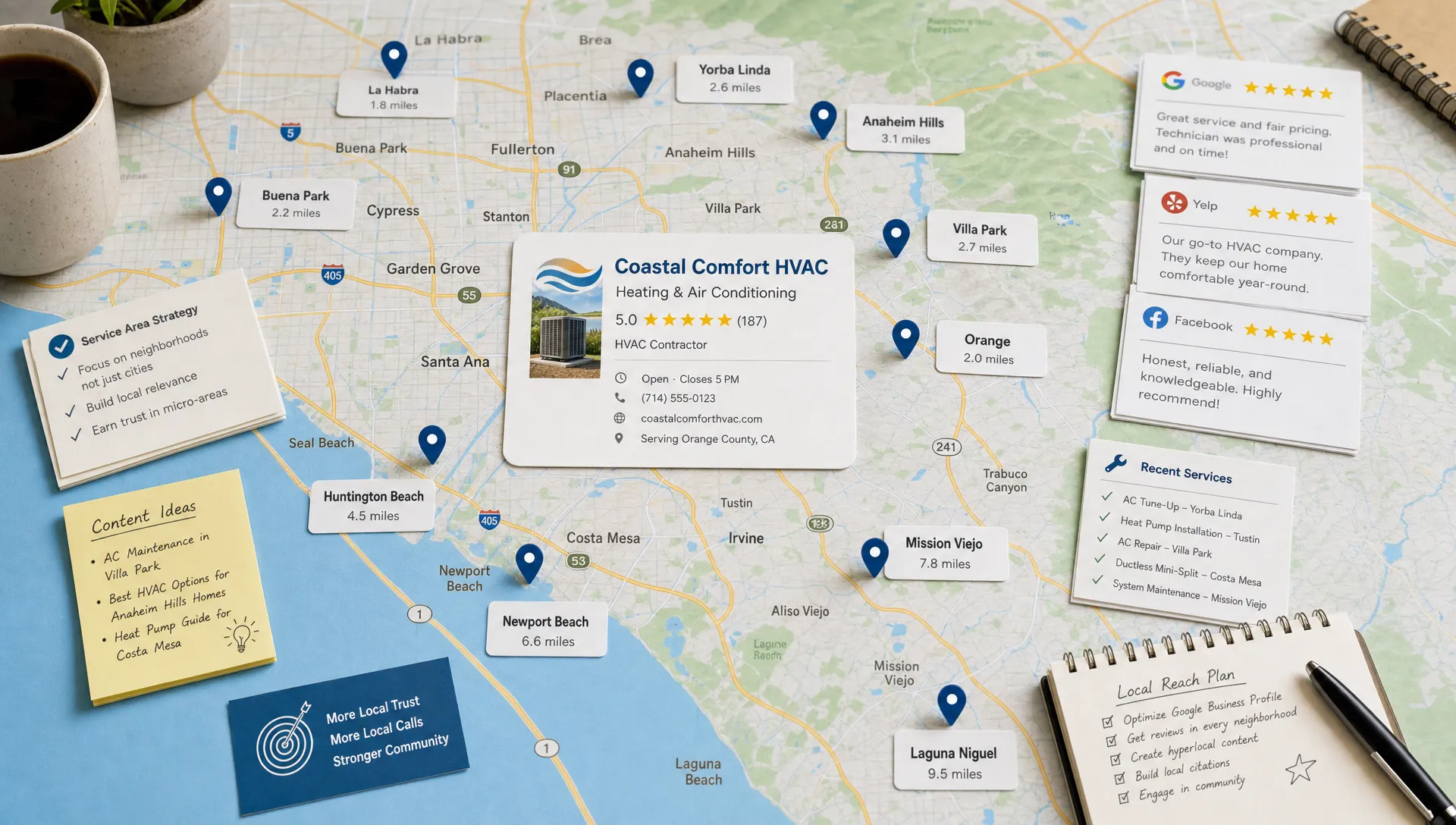
For an Orange County contractor, that may mean making it obvious that you serve Laguna Beach, Laguna Niguel, Irvine, Huntington Beach, and Anaheim with specific repair or installation services. For a dental, medical, or legal practice, it may mean clarifying each office location, specialty, provider expertise, appointment options, and neighborhood catchment area.
Kell Web Solutions describes this broader service as Answer Engine Optimization for local businesses, with a focus on helping AI platforms understand, trust, and recommend a company when customers ask service-based questions.
Here is how AEO compares with traditional SEO when the goal is more qualified calls:
| Area | Traditional SEO focus | Answer engine optimization focus | Call impact |
|---|---|---|---|
| Main goal | Rank pages for keywords | Become the trusted answer | More high-intent visibility |
| Content | Keyword-targeted pages and posts | Direct answers to customer questions | Better pre-qualified callers |
| Local signals | City pages, citations, map rankings | Entity clarity, proof, service-area relevance | Stronger local recommendation confidence |
| Measurement | Rankings, traffic, impressions | Answer presence, call quality, share of answer | Closer connection to revenue |
| Best use | Discovery and search foundation | AI, voice, map, and answer-driven decisions | More calls from ready buyers |
The best strategy is not SEO or AEO. It is SEO plus AEO. Your local SEO foundation helps you get found. AEO helps AI systems interpret your business as the right answer. If your foundation needs work, this guide to local search engine optimization that wins nearby jobs explains the local ranking elements that still matter.
The 2026 local call formula
AEO wins calls when four signals line up at the same time:
- Entity clarity: Search and AI systems can identify your business, services, locations, and contact details without confusion.
- Local relevance: Your content demonstrates real connection to the cities, neighborhoods, and service areas where you want calls.
- Trust evidence: Reviews, credentials, examples, FAQs, and consistent listings support the claim that you are a reliable choice.
- Call readiness: Once the customer is convinced, the next step is obvious, fast, and mobile-friendly.
If one of these signals is weak, calls suffer. A business can rank well but lose the call because the phone number is hard to find. A practice can have strong reviews but fail to appear in AI-generated answers because its location and specialty data are unclear. A contractor can publish dozens of posts but miss the job because none of them answer the urgent questions real homeowners ask.
The winning approach is to connect visibility to action. AEO is not just about being mentioned. It is about being mentioned in a way that makes the next call feel safe.
1. Make your business entity unmistakable
Answer engines need clean facts. Before they can recommend you, they must understand your business as a distinct entity. That means your website, business profiles, local directories, review platforms, and content should consistently communicate the same core information.
For a local service company, the fundamentals include your business name, primary phone number, service categories, physical address or service-area details, hours, cities served, and the specific services you provide. For professional practices, the same principle applies to office locations, provider names, specialties, appointment types, and practice areas.
Google states that local results are influenced by relevance, distance, and prominence in its documentation on how local results are ranked. AEO strengthens the relevance and prominence side of that equation by making your expertise easier to verify across the web.
The mistake many businesses make is assuming that one contact page is enough. It usually is not. If your website says you serve Orange County, but your service pages never mention the specific cities where customers search, answer engines have less context. If your directory listings use different categories, phone numbers, or descriptions, confidence drops. If your reviews mention services that your website barely explains, the signals are disconnected.
AEO turns those scattered signals into a clearer business identity.
2. Build answer-ready pages for high-intent questions
A customer who asks a specific question is often closer to calling than a customer who searches a broad keyword. For example,
HVAC company Orange County
is useful, but
why is my AC blowing warm air in Laguna Niguel
reveals a more urgent problem.
Roofing contractor San Diego
is broad, while
who repairs a roof leak near La Jolla after rain
suggests immediate need.
Answer-ready content should respond directly to those questions. The page should not bury the answer under generic marketing copy. It should quickly explain the problem, when to call a professional, what the customer can expect, and why your business is relevant locally.
| Local audience | High-intent question | Answer-ready content should include |
|---|---|---|
| HVAC contractor | Why is my AC blowing warm air in Irvine? | Likely causes, urgency signs, service area proof, clear call option |
| Roofer | Who fixes roof leaks in Huntington Beach after storms? | Leak warning signs, local roof considerations, inspection process |
| Plumber | What should I do if my water heater leaks in Anaheim? | Immediate safety steps, repair versus replacement factors, phone CTA |
| Dental practice | Where can I get an emergency dentist appointment in San Jose? | Symptoms, appointment availability if true, location details |
| Law firm | Do I need a local attorney for a business dispute in Sacramento? | Practice-area explanation, local relevance, consultation path |
This is where AEO becomes practical. You are not writing content for traffic alone. You are building a library of trustworthy answers that can be retrieved by AI systems, voice assistants, and search engines when a local customer is deciding who to call.
3. Turn neighborhood relevance into a trust signal
California is not one local market. Orange County alone contains very different customer expectations in Laguna Beach, Newport Coast, Santa Ana, Irvine, Huntington Beach, and Anaheim. Los Angeles, San Diego, San Jose, Sacramento, Fresno, and Bakersfield each have their own search patterns, competitive pressure, and service-area realities.
AEO works better when your content reflects that local nuance. This does not mean creating thin city pages that swap out place names. It means showing that your business understands the market you claim to serve.
For contractors, that can include service-area content tied to climate, housing stock, common repair scenarios, local urgency, or neighborhood-specific customer concerns. For professional practices, it can include office access details, nearby communities served, appointment context, and practice-area questions people ask in that region.
Kell Web Solutions supports this idea through its Hyperlocal Authority Builder, which is designed to strengthen neighborhood-level authority signals for businesses that depend on local visibility.
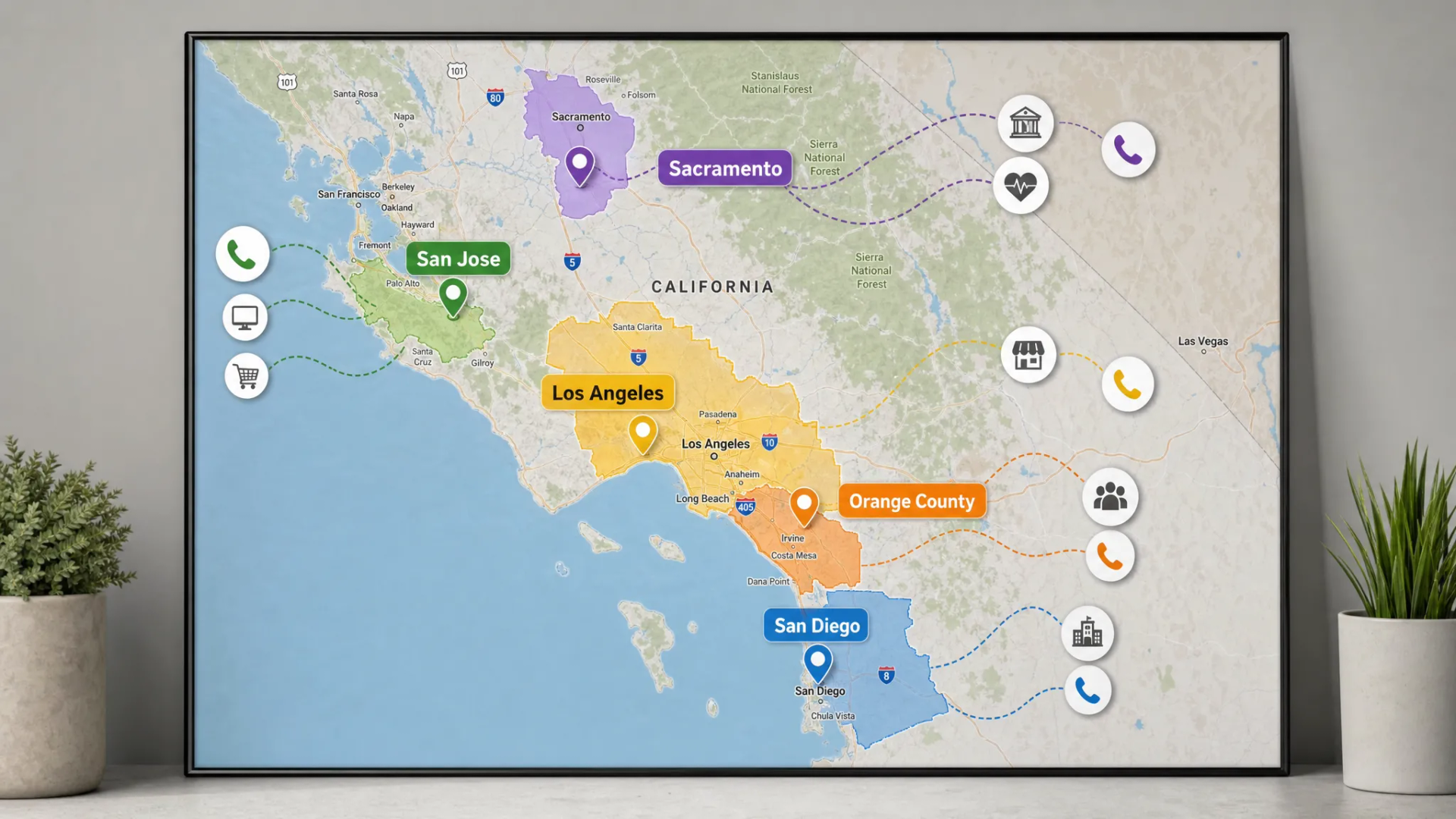
The goal is not to appear local everywhere with shallow content. The goal is to be genuinely understandable in the places where you want profitable calls.
4. Make trust machine-readable
Humans look for trust in reviews, credentials, photos, helpful answers, and clear contact information. Answer engines look for many of the same clues, but they also rely on structure.
Structured data helps search systems interpret the meaning of a page. Google’s introduction to structured data for search explains how standardized markup can provide explicit clues about page content. For local businesses, this can support clearer understanding of business details, services, FAQs, locations, and other relevant information.
AEO-friendly trust signals include clear service descriptions, consistent NAP information, helpful FAQs, author or team context, review themes, case examples, and schema markup that matches the visible content on the page. The important phrase is matches the visible content. Do not use structured data to claim things your page does not actually support.
For 2026, trust also means making your website easy for machines to crawl and summarize. Clean page architecture, descriptive headings, direct answers, internal links, and accessible text matter. If critical information is locked inside images, vague taglines, or outdated PDFs, answer engines may miss it.
5. Strengthen Google Business Profile and local listings
For local calls, your Google Business Profile is often as important as your website. It can influence map visibility, tap-to-call behavior, directions requests, and the customer’s first impression of your business.
A strong profile should accurately reflect your primary category, services, hours, service areas, photos, reviews, and business description. It should also stay active. For many service businesses, a stale profile creates doubt. If your most recent photo, post, or review response is old, customers may wonder whether you are still the best choice.
AEO connects your profile to the rest of your digital presence. Your website should reinforce the same services and locations. Your local listings should use consistent information. Your content should answer the questions your profile creates. Your reviews should support the promises your website makes.
This cross-checking effect is important. Answer engines do not rely on one page alone. They compare signals. The more consistent and specific those signals are, the easier it becomes to recommend your company with confidence.
6. Design the call path for urgency
Winning the answer is only half the job. You also need to convert interest into a call.
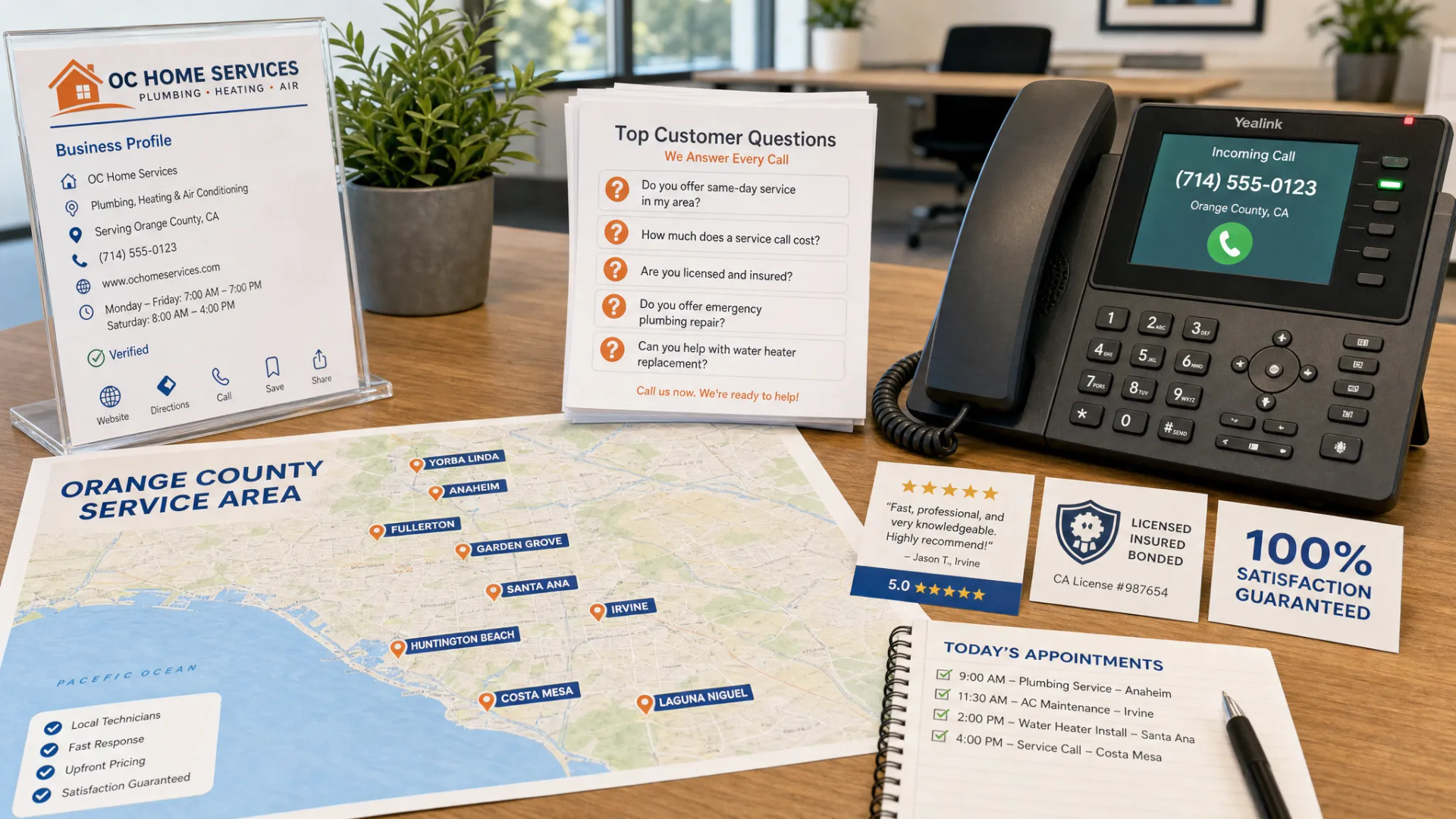
Local service customers are often on mobile devices. They may be standing next to a leaking water heater, sitting in a hot house, searching from a dental waiting room, or comparing attorneys during a stressful situation. If they have to hunt for your number, pinch and zoom, fill out a long form, or wonder whether you serve their city, you may lose the call.
A call-ready AEO page should make the next step obvious. Place a tap-to-call option near the top of key service pages. Use clear service-area language. Explain what happens when someone calls. Match the CTA to the intent of the page. An emergency plumbing page should not feel like a generic brochure. A legal consultation page should reduce uncertainty about the first conversation.
| Page element | Why it helps local calls |
|---|---|
| Clear phone number | Reduces friction for mobile users |
| Service-area confirmation | Reassures the caller you handle their location |
| Direct answer near the top | Builds confidence quickly |
| Review or proof snippet | Supports trust before the call |
| Simple CTA | Turns interest into action |
| Fast-loading mobile design | Prevents abandonment during urgent searches |
This is especially important for paid and organic visibility together. If you invest in SEO, AEO, local ads, or referral campaigns, weak call conversion wastes demand you already earned.
What a local AEO rollout can look like in the first 90 days
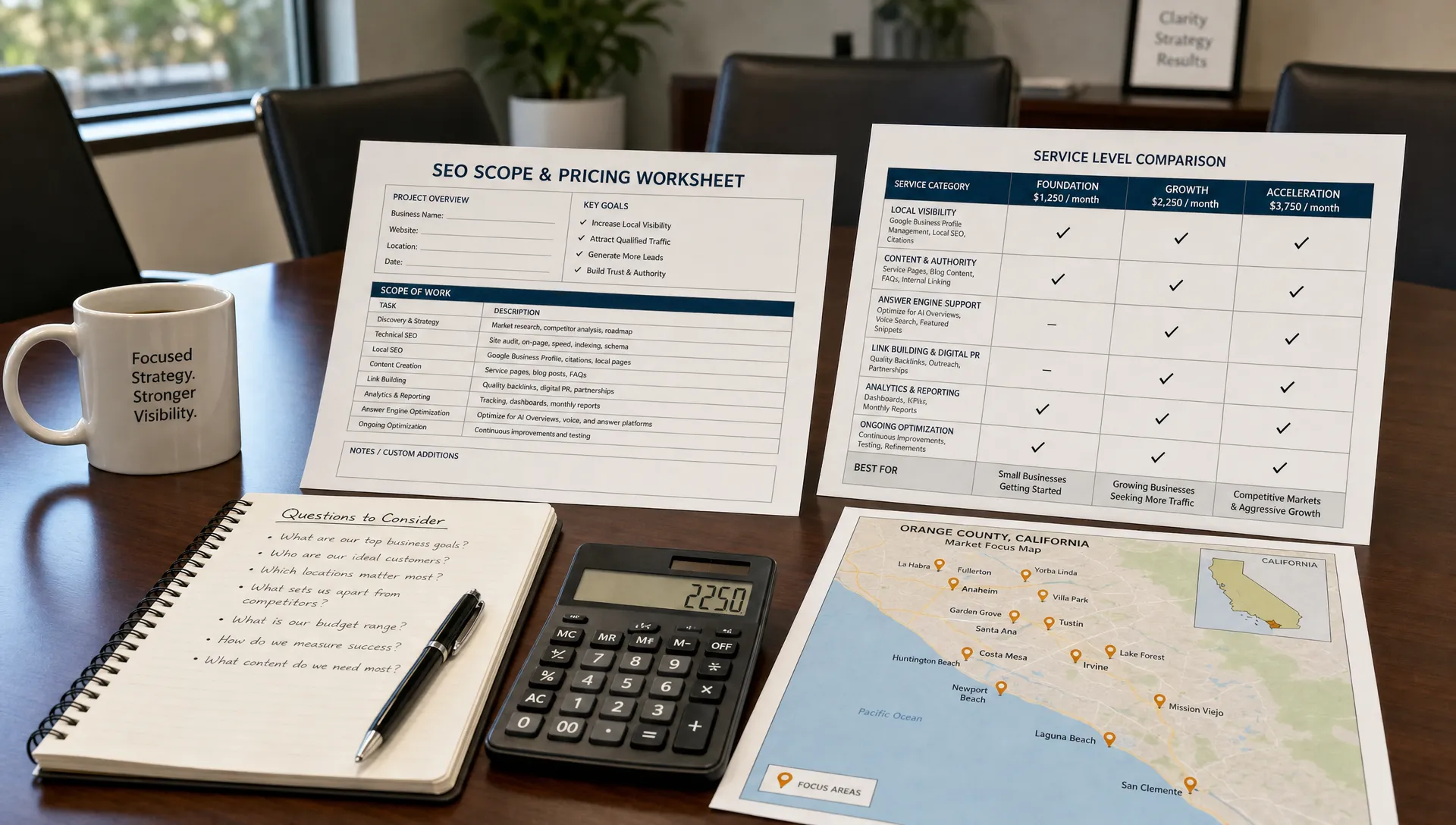
AEO is not a one-time plugin or a single blog post. It is a structured improvement process. The first 90 days should focus on clarity, consistency, and measurable call intent.
| Timeline | Priority | Practical work | Expected outcome |
|---|---|---|---|
| Days 1 to 30 | Entity and call-intent audit | Review website, GBP, citations, service pages, FAQs, reviews, and call paths | Identify gaps that block trust or calls |
| Days 31 to 60 | Answer-ready restructuring | Improve key pages, add direct answers, clarify service areas, align business facts | Make the business easier to retrieve and recommend |
| Days 61 to 90 | Authority and measurement | Publish local answers, strengthen proof, monitor calls and answer visibility | Connect AEO activity to qualified conversations |
For a contractor, this might start with the highest-value services and cities. For example, an HVAC company in Orange County may prioritize AC repair in Irvine, furnace service in Laguna Niguel, and heat pump installation in Huntington Beach. A roofing company may focus on leak repair, roof replacement, and inspections in the cities with the best margins.
For a multi-location practice, the rollout may begin with each office location and its most profitable appointment types. A dental group may optimize emergency, implant, and cosmetic dentistry questions by city. A law firm may build answer-ready pages around practice areas and local consultation intent.
The point is focus. AEO works best when it starts with the questions most likely to turn into revenue.
How to know whether AEO is winning more local calls
Rankings still matter, but they are not enough. A business can rank for informational terms that never produce calls. AEO measurement should look closer to revenue.
Track whether your business appears in AI-generated answers for service questions. Monitor Google Business Profile calls, website calls, tap-to-call activity, direction requests, and contact form submissions. Review call recordings or intake notes where appropriate and legally permitted. Separate qualified calls from spam, vendor calls, and wrong-number traffic.
The strongest local AEO programs measure questions like these:
- Which services are producing the best calls?
- Which cities or neighborhoods generate the highest-quality leads?
- Which pages assist calls, even when they are not the final landing page?
- Which AI or search experiences mention the business as an answer?
- Where do customers hesitate before calling?
In 2026, call quality matters more than raw traffic. A smaller number of better-informed callers can outperform a larger number of casual visitors. That is why AEO should be tied to booked appointments, estimates, consultations, and closed jobs whenever possible.
Common mistakes that keep local businesses out of the answer
Many local businesses are closer to AEO-ready than they think, but a few common issues hold them back.
Thin city pages are one of the biggest problems. A page that only changes the city name does not prove local expertise. Inconsistent business information is another. If phone numbers, categories, hours, or service areas vary across the web, answer engines have less confidence.
Another mistake is writing only about the company instead of the customer’s question. People do not usually ask AI assistants for your mission statement. They ask what to do, who can help, how much urgency exists, and whether a local provider is trustworthy.
Finally, many businesses forget the call path. Visibility without conversion is an expensive leak. If your answer-ready content does not lead to a clear phone call, estimate request, or consultation, it is not doing its full job.
Frequently Asked Questions
Is answer engine optimization the same as SEO? No. SEO helps pages rank in search results, while answer engine optimization helps AI-driven systems understand and recommend your business as a direct answer. The two work best together, especially for local companies that depend on phone calls.
How does AEO help a contractor get more calls? AEO connects service expertise, local relevance, reviews, structured data, and clear call paths. When a homeowner asks a high-intent question, the contractor becomes easier for answer engines to identify as a trustworthy local option.
How long does answer engine optimization take to work? Timing depends on your current website, local authority, competition, and consistency of business information. Many improvements begin with clarity and conversion fixes, while authority and answer visibility compound over time.
Does AEO matter for professional practices with multiple locations? Yes. Medical, dental, and legal practices often compete at the neighborhood level. AEO helps clarify each location, specialty, provider context, and appointment path so answer engines can match the right office to the right local question.
Can a business target multiple California cities with AEO? Yes, but each location or service area needs genuine relevance. A strong AEO strategy avoids duplicate city pages and instead builds useful local answers for places such as Orange County, Los Angeles, San Diego, San Jose, Sacramento, Fresno, and other priority markets.
Turn local AI visibility into real phone calls
If your business depends on calls from Orange County or across California, answer engine optimization is no longer optional background work. It is how you help AI systems, map results, voice assistants, and local customers understand why you are the right choice.
Kell Web Solutions helps contractors and professional practices build durable local authority for the way customers search in 2026. To discuss your visibility, call readiness, and growth opportunities, visit Kell Web Solutions or call (949) 575-8553.