Internet Marketing Tactics That Still Work for Local Brands
Internet marketing has not stopped working for local brands. What stopped working is the old habit of chasing clicks without building trust, proof, and local authority around the places where customers actually make decisions.
For an HVAC contractor in Laguna Niguel, a roofing company in Irvine, a dental group with offices in Anaheim and Huntington Beach, or a law firm expanding into San Diego and San Jose, the goal is not simply to get more traffic.
The goal is to be found, believed, contacted, and chosen when a real buyer has intent.
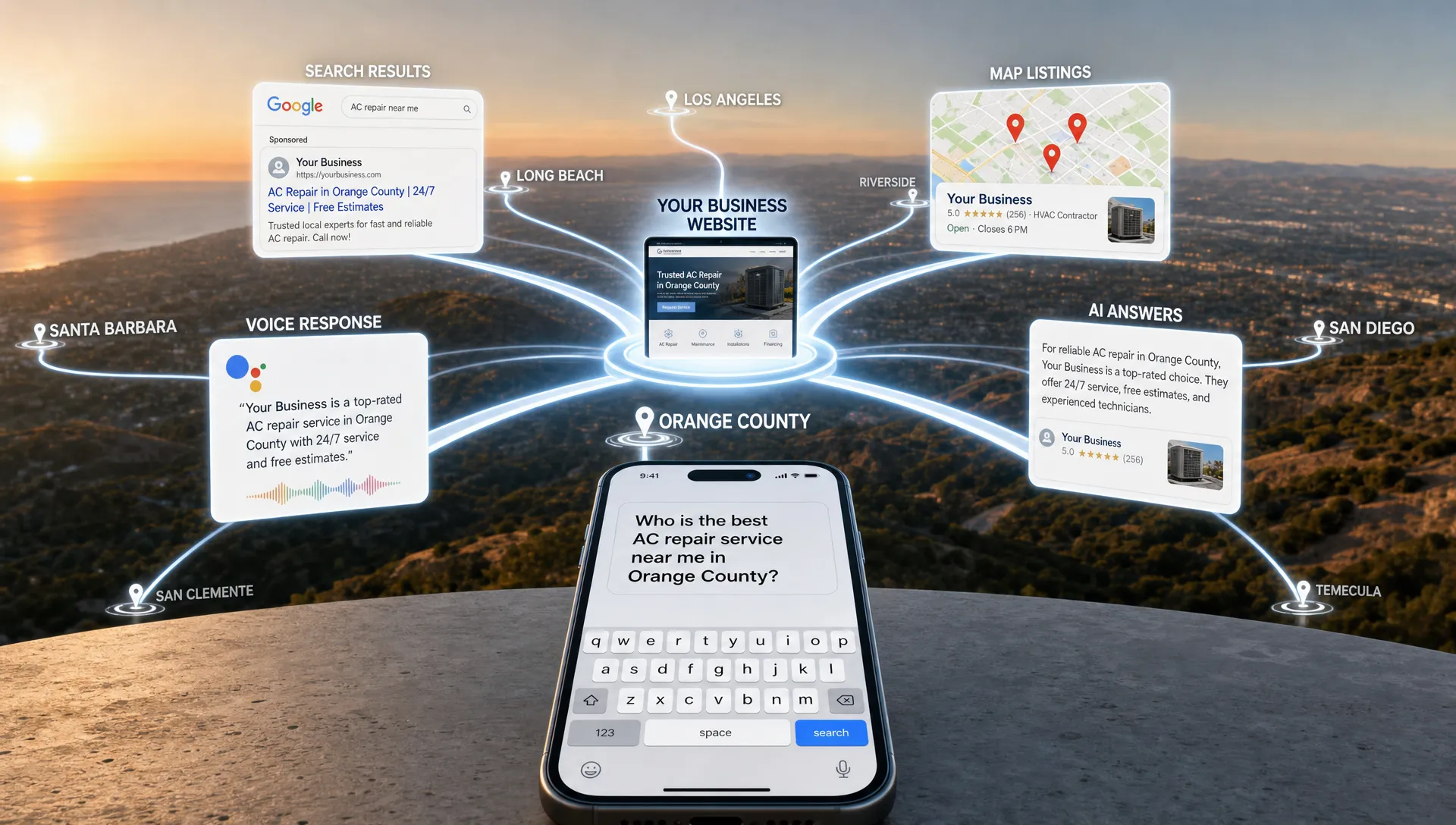
That is why the internet marketing tactics that still work in 2026 look less like tricks and more like durable business assets. Search engines, AI answer engines, maps, review platforms, voice assistants, and social feeds all reward the same fundamentals: clear expertise, local relevance, customer proof, and fast response.
Why local internet marketing has changed, but the fundamentals still matter
Local buyers now move across more decision points before contacting a business. A homeowner might ask Google for emergency AC repair near Mission Viejo, check map reviews, read a service page, compare before-and-after photos, and then call from a mobile device. A patient might ask an AI tool which dental office is best for implants in Irvine, then verify the answer with reviews and location pages.
The buying journey is more fragmented, but the intent is still strong. People still need contractors, doctors, attorneys, roofers, electricians, solar installers, and remodelers. The brands that win are the ones that make it easy for both humans and machines to understand who they serve, where they serve, why they can be trusted, and how to take the next step.
| Old internet marketing mindset | What works now for local brands | Why it matters |
|---|---|---|
| Rank for broad keywords | Become the trusted local answer | AI and map results prioritize clear, authoritative entities |
| Publish generic blog posts | Answer real buyer questions by city, service, and situation | Customers search with specific problems, not generic terms |
| Send all traffic to a homepage | Build focused landing pages for each service and location | Buyers convert faster when the page matches their need |
| Collect reviews passively | Build review velocity and use reviews as proof assets | Reviews influence rankings, trust, and conversion |
| Measure clicks only | Measure calls, booked appointments, revenue, and answer visibility | Visibility is only useful when it creates business outcomes |
Tactic 1: Build a Google Business Profile that answers buyer intent
For most local brands, the Google Business Profile is still one of the highest-impact internet marketing assets. It often appears before a website, especially for service searches with local intent.
A strong profile does more than list your address and phone number. It communicates relevance, distance, and prominence, the core factors Google uses to evaluate local results. For a local contractor or professional practice, that means every field should reduce uncertainty for the buyer.
Your profile should clearly show your primary category, secondary categories, service areas, hours, appointment links, services, photos, review responses, and recent updates. If you are an electrician serving Laguna Beach, Newport Beach, and Dana Point, your services and content should make that coverage obvious. If you are a dental practice with multiple offices, each location should have its own accurate profile with unique photos, staff details, and location-specific reviews.
The practical takeaway: treat your Google Business Profile like a conversion page, not a directory listing. Keep it active, accurate, and aligned with the language your customers use when they are ready to call.
Tactic 2: Create location-specific pages that are genuinely useful
Local landing pages still work, but thin city pages do not. A page that swaps one city name for another is unlikely to impress customers, search engines, or AI systems.
A useful local page should prove that your business understands the area. For example, an HVAC page for Newport Coast can discuss coastal corrosion, luxury home expectations, energy efficiency concerns, and rapid response during heat waves. A plumbing page for Santa Ana might address older homes, slab leaks, permitting realities, and emergency response windows. A medical practice page for Irvine can explain parking, nearby neighborhoods, insurance considerations, and appointment expectations.
Strong local pages usually include:
- A clear service and city match, such as AC repair in Laguna Niguel or dental implants in Irvine
- Real details about the neighborhood, building types, customer needs, or local conditions
- Service-specific FAQs written in natural language
- Testimonials or review snippets from nearby customers when available
- Clear calls to action for calls, forms, or appointment booking
- Structured data that helps search engines understand the page
This is where local SEO and Answer Engine Optimization start to overlap. A page is no longer just competing for blue links. It is also feeding AI systems with structured, trustworthy, location-specific information.
For brands that want this foundation handled strategically, Kell Web Solutions offers Local SEO Mastery for Google Business Profile optimization, citations, local content, and map visibility across a primary city and nearby feeder cities.
Tactic 3: Publish answer-first content for buyers and AI systems
Content marketing still works when it answers the questions customers ask before they buy. It fails when it is written only to satisfy a keyword list.
Local buyers ask practical questions. They want to know cost ranges, timelines, warning signs, options, risks, warranties, financing, credentials, and whether a problem can wait. AI answer engines also look for content that directly addresses questions with clarity and supporting context.
For a home services company, effective content might include:
- Should I repair or replace my HVAC system in Orange County?
- How long does a roof replacement take in Irvine?
- What causes low water pressure in older Laguna Beach homes?
- Is solar still worth it for California homeowners in 2026?
- What should I ask before hiring a kitchen remodeler in Huntington Beach?
For a professional practice, effective content might include:
- What should I bring to my first legal consultation in Anaheim?
- How do I choose a dental implant provider in Irvine?
- When should a medical practice open a second location in Orange County?
- What makes a local law firm trustworthy for business disputes?
The strongest content has a simple structure: answer the question quickly, explain the reasoning, add local context, address objections, and give the reader a next step. This makes the content useful for people and easier for AI-driven systems to summarize accurately.
Kell’s Answer Engine Optimization service is designed around this shift: helping businesses structure their digital presence so AI-driven platforms, Google AI results, ChatGPT, and voice assistants can understand, trust, and recommend them.
Tactic 4: Turn reviews into a marketing asset, not a vanity metric
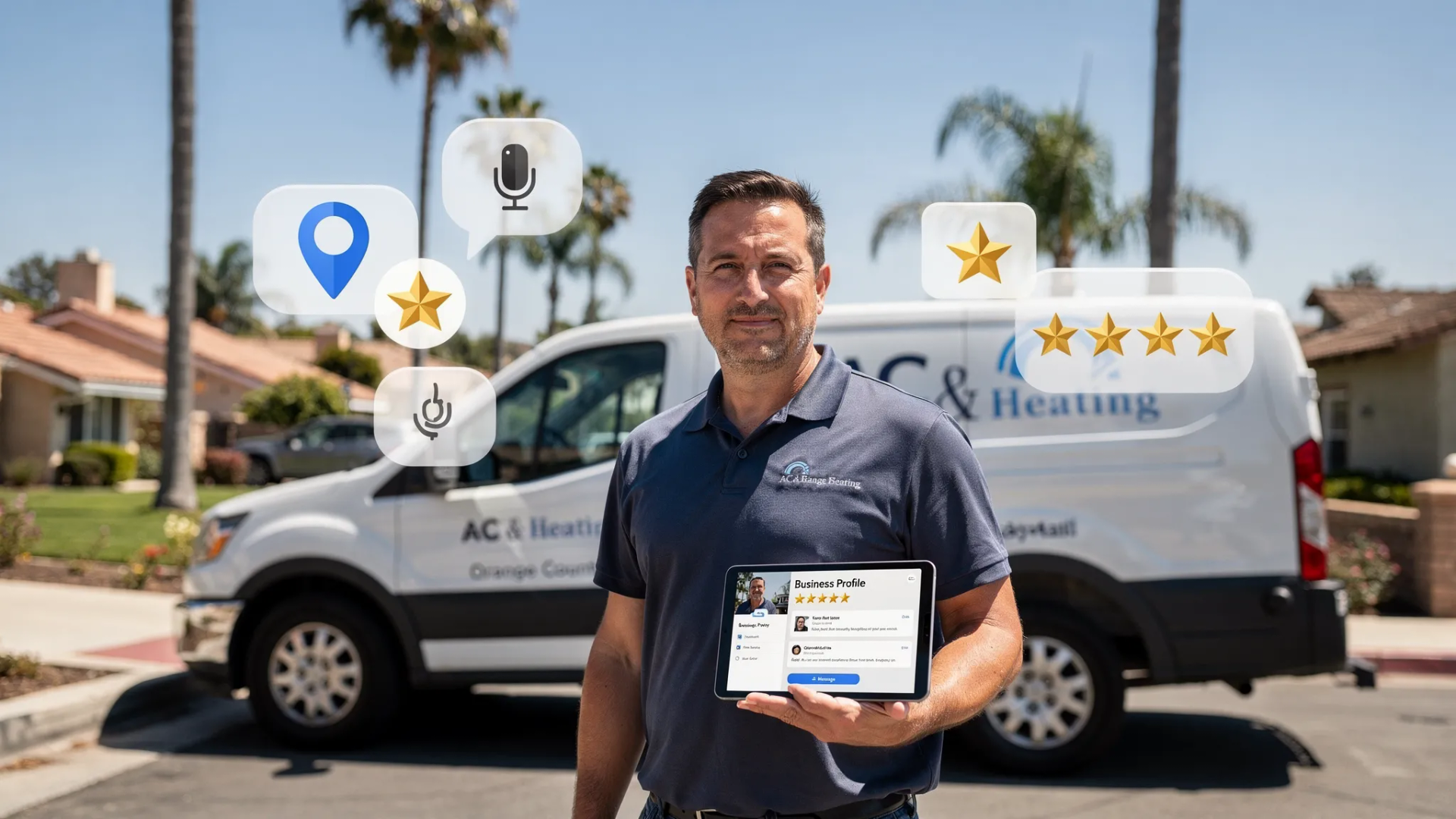
Reviews are one of the few internet marketing tactics that influence almost every part of the local buyer journey. They affect map visibility, conversion rates, trust, referrals, and even how AI systems interpret local authority.
The mistake many businesses make is collecting reviews without a system. They ask occasionally, forget to follow up, and leave positive reviews buried on third-party platforms.
A better review strategy includes consistent requests, timely responses, service-specific language, and smart reuse across your website and marketing materials. The goal is not to manipulate reviews. The goal is to make it easy for satisfied customers to describe what went well.
For example, a generic review that says great service is helpful. A specific review that says the technician diagnosed our AC problem in Laguna Niguel, explained the repair, and had the system running the same day is far more powerful. It helps future customers understand the experience, and it reinforces service and location relevance.
Local brands should also respond to negative reviews professionally. A calm, specific response can show future buyers that the business is accountable and serious about service quality.
Tactic 5: Make the phone call and appointment path effortless
Local internet marketing does not end when someone clicks. For contractors and professional practices, the most expensive failure often happens after the lead is generated.
If a homeowner with a broken AC unit calls and reaches voicemail, the next call goes to a competitor. If a patient tries to schedule a consultation and the form is confusing, they may never return. If a legal prospect submits a form and waits two days for a reply, the opportunity is likely gone.
That is why conversion infrastructure still matters. The basics are not glamorous, but they produce revenue:
- Prominent click-to-call buttons on mobile pages
- Short forms with only necessary fields
- Fast response workflows for new leads
- Call tracking to identify which channels produce real opportunities
- Appointment scheduling options for lower-friction consultations
- Follow-up sequences for prospects who are interested but not ready
For B2B local brands, commercial contractors, specialty practices, and firms selling higher-value services, outbound follow-up can also play a role. Kell’s Profit Accelerator is built as a managed AI outreach system focused on qualified, pre-warmed conversations rather than manual prospecting.
Tactic 6: Surround the market with hyperlocal authority signals
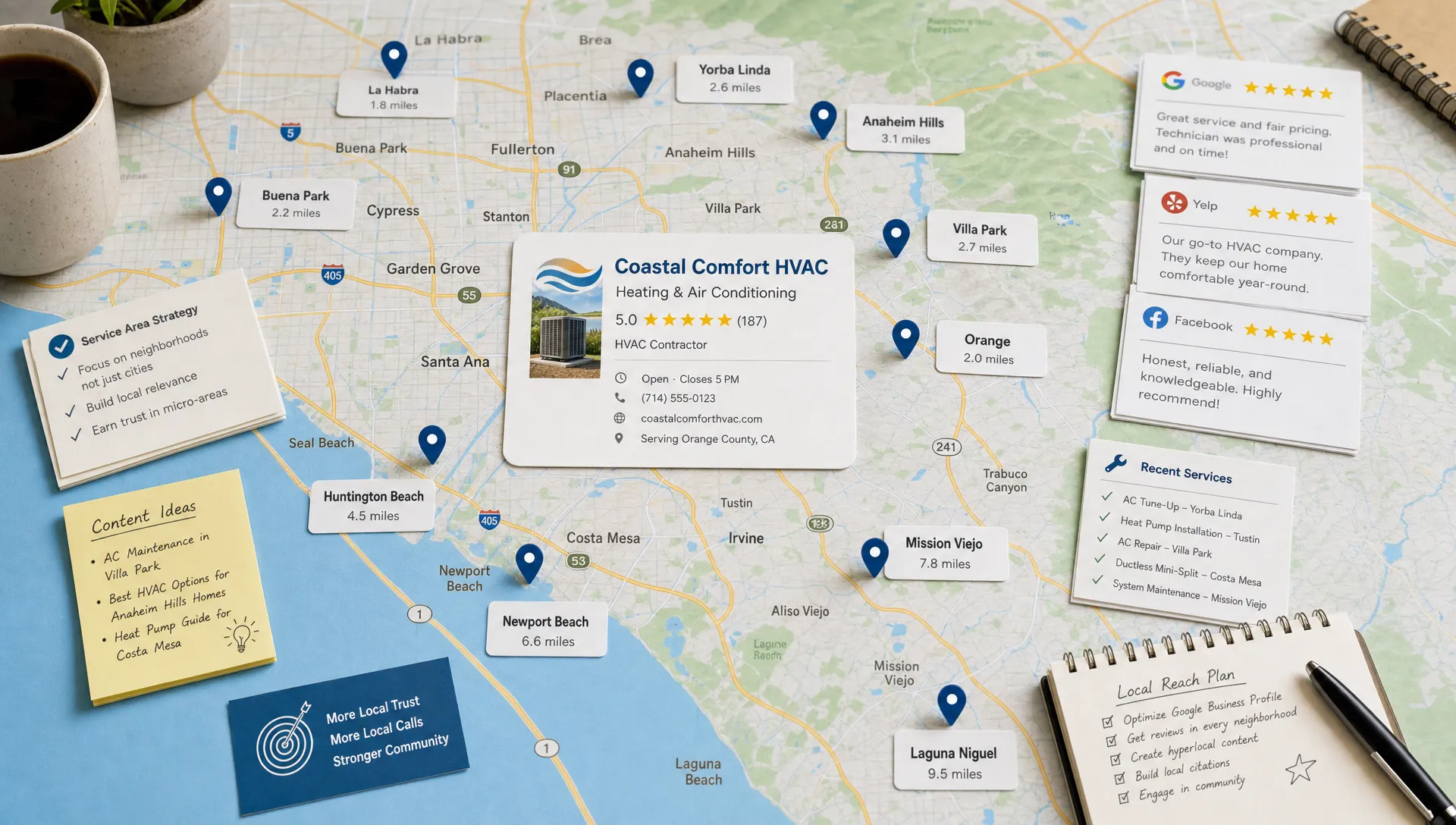
One website is often not enough for competitive local markets. This is especially true for home services businesses trying to win across multiple neighborhoods, where AI systems and search engines look for repeated, consistent evidence that the brand is relevant in a specific area.
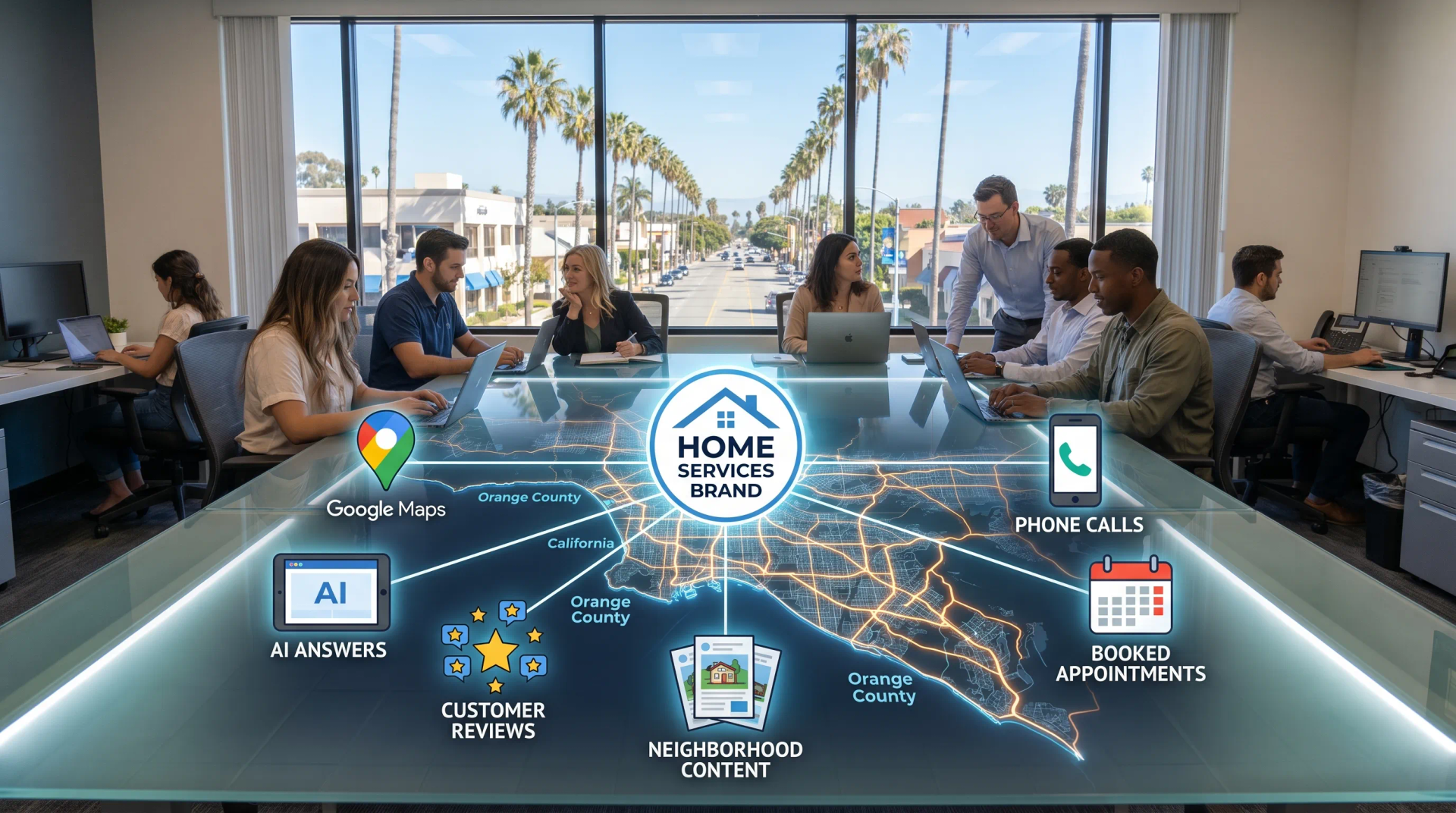
Hyperlocal authority comes from a network of signals: location pages, Google Business Profiles, citations, reviews, neighborhood content, local backlinks, service-area proof, and structured data. When these assets agree with each other, the business becomes easier to understand and recommend.
For example, a roofing company that wants to grow across Irvine, Tustin, Costa Mesa, and Huntington Beach should not rely on one generic roofing page. It should build a web of localized proof that explains services, local project types, customer concerns, and neighborhood-specific needs.
This is the thinking behind Kell’s Hyperlocal Authority Builder, which combines geo-targeted authority assets, researched local content, and review-focused conversion elements for businesses that need stronger neighborhood-level visibility.
Tactic 7: Use paid search as a controlled accelerator, not a crutch
Paid search can still work for local brands, especially for urgent intent. Emergency plumbing, HVAC repair, roof leaks, legal consultations, and medical appointments can all justify paid campaigns when the numbers are managed carefully.
The danger is dependency. If paid search becomes the only source of leads, costs can rise faster than profit. Local Services Ads and pay-per-click campaigns should be used with tight targeting, strong landing pages, call tracking, and clear qualification rules.
Paid campaigns work best when they support a broader system. Ads can help capture immediate demand while local SEO, AEO, reviews, and content build long-term authority. Retargeting can bring back visitors who researched your service but did not call. Branded campaigns can protect your name from competitors. Geo-specific campaigns can test demand before investing in deeper local content.
The rule is simple: pay for speed, build for durability.
Tactic 8: Keep human expertise visible in an AI-driven market
AI can help with research, content planning, data analysis, and workflow automation. But local buyers still want to know who is behind the business. Experience, credentials, team photos, case studies, project examples, and leadership perspective all matter.
For a contractor, that might mean showing licenses, certifications, project photos, safety practices, and real customer outcomes. For a medical, dental, or legal practice, it means making provider credentials, practice philosophy, office details, and patient or client experience clear.
As local brands grow, the human side of marketing also includes hiring the right people. Multi-location firms and fast-growing companies often need stronger sales, marketing, client service, or executive leadership to support expansion. For organizations building a broader go-to-market team, specialist partners such as Optima Search Europe can help identify experienced talent for business-critical sales, marketing, client services, and executive roles.
The larger point is that internet marketing is not just software. It is a combination of positioning, proof, systems, people, and follow-through.
Tactic 9: Measure what creates revenue, not just what creates activity
Traffic is useful, but it is not the final score. Local brands should measure the path from visibility to revenue.
A contractor may care about booked jobs, average ticket value, service area profitability, and repeat customers. A dental practice may care about consultation bookings, treatment acceptance, new patient value, and location-level growth. A law firm may care about qualified consultations, signed matters, and practice-area profitability.
| Metric | What it shows | Why it matters |
|---|---|---|
| Local visibility by city | Whether your brand appears where customers search | Helps prioritize neighborhoods and service areas |
| Google Business Profile calls | How often searchers contact you directly | Measures high-intent local demand |
| Form and booking conversions | Whether pages turn visitors into leads | Reveals landing page and offer strength |
| Review volume and quality | How much trust the market sees | Supports rankings and buyer confidence |
| Cost per qualified lead | How efficiently marketing creates opportunity | Keeps paid and organic investment accountable |
| Booked appointment rate | Whether leads become conversations | Connects marketing to sales operations |
| Share of Answer | Whether AI systems mention your brand for target questions | Tracks visibility in the retrieval economy |
When you track the right numbers, internet marketing becomes less mysterious. You can see which cities are gaining traction, which services convert, which pages need improvement, and which channels deserve more investment.
A practical 90-day plan for California local brands
Local marketing works best when it is sequenced. Trying to fix everything at once creates noise. A focused 90-day plan can build momentum without overwhelming the business.
| Timeline | Priority | Outcome |
|---|---|---|
| Days 1 to 15 | Audit local visibility, website structure, reviews, calls, and competitor positioning | Clear baseline and priority list |
| Days 16 to 30 | Fix Google Business Profile, citations, service pages, tracking, and calls to action | Stronger local foundation |
| Days 31 to 60 | Publish answer-first content and improve location-specific pages | More relevance for buyers, search engines, and AI systems |
| Days 61 to 75 | Build review requests, review responses, and proof assets into operations | More trust and better conversion |
| Days 76 to 90 | Test paid campaigns, outbound follow-up, and AEO improvements | Faster demand capture and clearer scaling decisions |
This plan can work in Orange County markets such as Laguna Beach, Laguna Niguel, Irvine, Anaheim, Santa Ana, Huntington Beach, and Newport Beach. The same principles apply across California, including Los Angeles, San Diego, San Jose, San Francisco, Sacramento, Fresno, Riverside, and Bakersfield. The tactics stay consistent, but the local proof must fit each market.
The internet marketing tactics that are fading
Some tactics are losing effectiveness because they do not align with how modern buyers and AI systems evaluate businesses.
Generic blog posts, mass-produced city pages, fake local offices, bought reviews, spammy backlinks, over-automated social posting, and keyword-stuffed pages are all risky. They may create short-term activity, but they do not build durable authority.
The same is true for marketing programs that report impressions while ignoring calls, appointments, and revenue. Local brands do not need more dashboards. They need a reliable system that connects visibility to conversations and conversations to growth.
Frequently Asked Questions
Is internet marketing still worth it for local businesses? Yes. Local buyers still use search engines, maps, reviews, websites, social proof, email, and referrals before making decisions. What has changed is that local brands must now optimize for both human buyers and AI-driven answer systems.
What is the difference between local SEO and internet marketing? Local SEO focuses on visibility in search and maps. Internet marketing is broader. It includes local SEO, content, reviews, conversion design, paid media, outreach, follow-up, analytics, and the systems that turn visibility into customers.
How long does local internet marketing take to work? Some improvements, such as Google Business Profile updates, better calls to action, and paid campaigns, can create faster movement. Authority-building tactics such as local content, reviews, citations, and AEO usually compound over several months.
Should contractors focus on Google Maps or AI search first? Start with the foundation that supports both: accurate business data, strong service pages, reviews, local content, and clear structured information. Google Maps often drives immediate local calls, while AEO helps prepare the brand for AI-driven discovery.
What should multi-location practices do differently? Each location needs its own proof system. That includes accurate profiles, unique location pages, local reviews, provider or staff details, service-area content, and tracking by office. A single generic website page rarely supports multi-location growth effectively.
Ready to make internet marketing produce real local growth?
If your business depends on calls, appointments, and neighborhood-level visibility, the right internet marketing strategy should make you easier to find, easier to trust, and easier to contact.
Kell Web Solutions helps Orange County and California businesses build durable authority for the AI search era, from local SEO and Answer Engine Optimization to hyperlocal authority and managed outreach systems. Based in the Laguna Beach and Laguna Niguel area, Kell has more than 20 years of experience helping local brands adapt as search changes.
If you want to understand where your visibility is leaking and which tactics will create the fastest path to qualified conversations, book a strategy call with Kell Web Solutions. You can also explore how Answer Engine Optimization can help your business become the trusted answer when customers and AI agents ask who to call next.