Build a Search Engine Optimization Website AI Can Trust
A search engine optimization website is no longer just a site with title tags, service pages, and a few local keywords. In 2026, it also has to be clear enough for AI systems to understand, consistent enough for search engines to verify, and credible enough for customers to trust before they call.
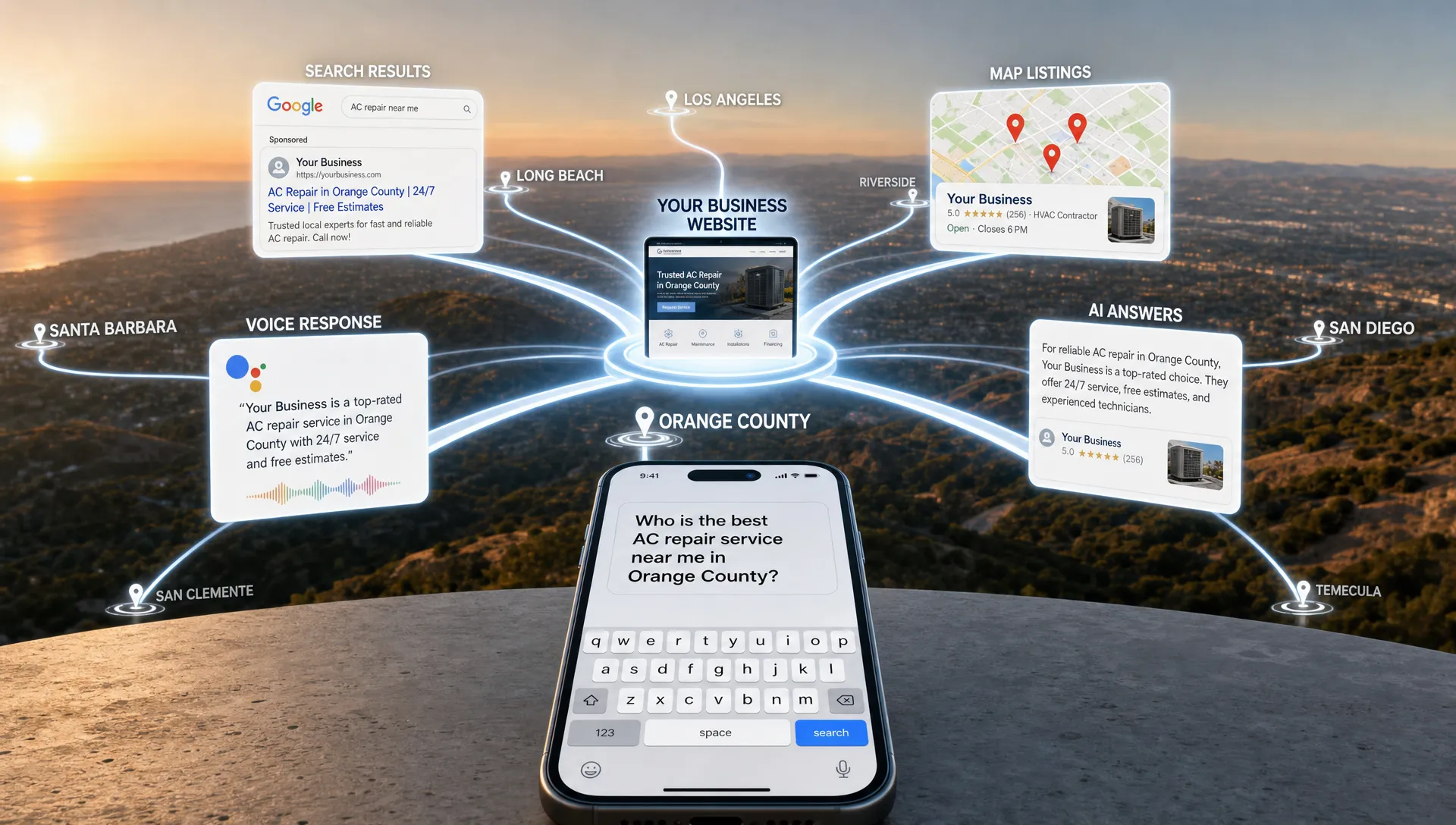
That matters for California home services contractors and multi-location professional practices because the buying journey has changed. A homeowner in Irvine may ask Google, ChatGPT, or a voice assistant who repairs AC systems near them. A patient in San Jose may ask which dental practice handles emergency appointments in a specific neighborhood. A business owner in Laguna Beach may compare legal firms without ever clicking ten blue links.
If your website does not communicate who you are, where you serve, what you do, and why you are trustworthy in a machine-readable way, AI search systems may choose a competitor as the answer.
This guide explains how to build a search engine optimization website AI can trust, without turning your site into a keyword-stuffed mess.
What it means for AI to trust your website
AI trust is not a single ranking factor. It is the result of many signals that make your business easy to retrieve, understand, corroborate, and recommend.
Traditional SEO often focused on rankings for specific keywords. That still matters, but AI search adds another layer. Search systems increasingly look for entities, relationships, evidence, and consistency. They are trying to answer questions like:
- Is this a real business?
- Does this business clearly serve the location in question?
- Does the website match what other trusted sources say?
- Does the page directly answer the user's question?
- Are claims supported by reviews, experience, credentials, or structured data?
- Can the page be crawled, parsed, and summarized accurately?
For a roofing company in Anaheim, an AI-trustworthy site does more than say roofing services in Orange County. It explains roof repair, roof replacement, leak detection, materials, service areas, emergency availability, warranty language where applicable, licensing details, proof of work, reviews, and local context.
For a dental practice with offices in San Diego, Irvine, and Santa Ana, the site should help both humans and machines understand each location, each provider, each service, insurance or payment information when relevant, and appointment pathways.
The goal is simple: make your website the cleanest, most verifiable source of truth about your business.
Start with entity clarity before content volume
Most weak SEO websites have the same problem: they publish more content before they define the business clearly. AI systems do not reward confusion. They reward clarity.
Your site should make your business entity obvious on every important page. That includes your legal or public business name, primary category, service area, contact information, leadership, credentials, and the exact services you provide.
For local businesses, entity clarity should be consistent across your website, Google Business Profile, citations, social profiles, review platforms, industry directories, and any supporting local authority assets.
| Trust signal | What to publish on your website | Why it helps AI and search engines |
|---|---|---|
| Business identity | Business name, logo, phone, address or service-area details, about page | Helps systems connect your site to your real-world business entity |
| Service specificity | Dedicated pages for core services, not one generic services page | Makes it easier to match your business to high-intent customer questions |
| Geographic clarity | City, neighborhood, and service-area pages with unique local context | Supports local relevance for Orange County and broader California markets |
| Expertise evidence | Team bios, certifications, licenses, experience, project examples | Strengthens E-E-A-T and reduces ambiguity |
| Review proof | Testimonials, review snippets, case studies, reputation signals | Helps validate that customers have real experiences with your business |
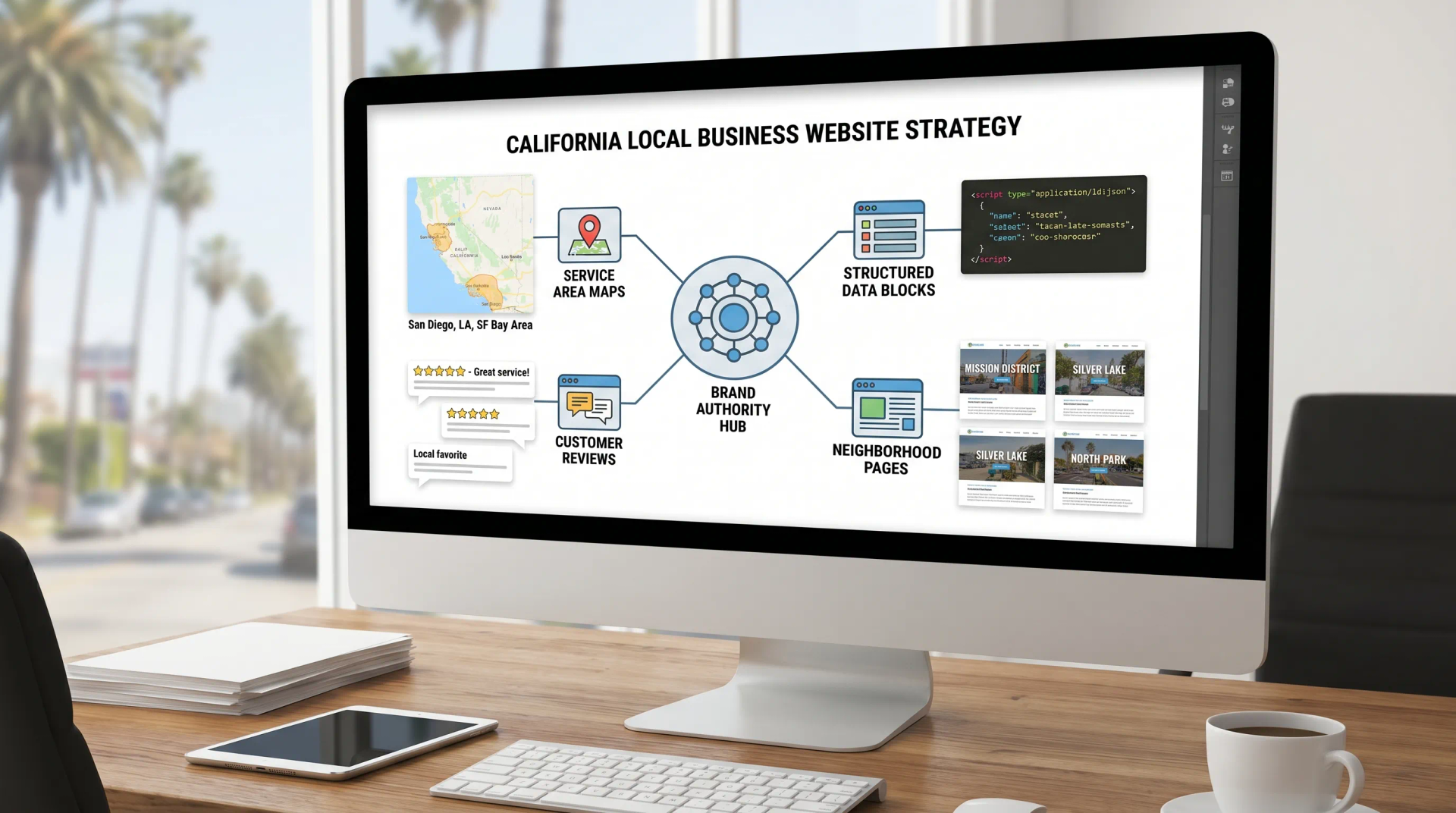
| Structured data | LocalBusiness, Service, FAQ, Review, Breadcrumb, and Organization schema where appropriate | Gives machines a cleaner way to interpret your pages |
A strong search engine optimization website does not hide the basics in a footer. It repeats critical trust information naturally where it matters, especially on service pages, location pages, contact pages, and conversion sections.
Build around real buyer questions, not just keywords
The best SEO websites answer the questions customers actually ask before they buy. This is especially important for contractors and professional practices because the decision is often urgent, local, and trust-heavy.
A homeowner does not only search for HVAC company Orange County. They ask whether it is worth repairing a 12-year-old AC system, why their furnace is blowing cold air, how fast a technician can arrive in Huntington Beach, or what permits are needed for a remodel in Laguna Niguel.
A patient or client does not only search for dentist near me or attorney in Irvine. They ask about appointment availability, insurance, credentials, case types, treatment options, privacy, pricing factors, or what to bring to a first consultation.
Your website should map pages to these intent types:
| Intent type | Example question | Best page format |
|---|---|---|
| Emergency need | Who can fix a leaking pipe in Newport Beach today? | Emergency service page with local proof and click-to-call |
| Research | Should I repair or replace my AC in Irvine? | Educational blog or service guide |
| Comparison | Which roofing material is best for coastal Orange County homes? | Service comparison page or buyer guide |
| Location validation | Do you serve Laguna Beach or Dana Point? | Service-area page with neighborhood context |
| Trust check | Are your technicians licensed and reviewed? | About page, review page, service page proof section |
| Conversion | Can I schedule a consultation or estimate? | Contact page, booking section, call-focused CTA |
This approach aligns with Google's SEO Starter Guide, which emphasizes creating helpful, reliable content for users first. The difference in the AI era is that helpful content also needs structure, consistency, and enough context for answer engines to understand it.
Design service pages as answer assets
A thin service page is one of the biggest missed opportunities on a local business website. If your plumbing page says only that you offer plumbing repair, drain cleaning, and water heater installation, you have not given AI systems enough to work with.
A strong service page should function as a complete answer asset. It should explain the service, when customers need it, what problems it solves, what makes your process credible, where you provide it, and how someone should take the next step.
For an HVAC contractor, a high-trust AC repair page might include symptoms, diagnostic process, service area, emergency options, maintenance advice, technician credentials, related services, FAQs, reviews, and clear calls to call or schedule.
For a legal, medical, or dental practice, the same logic applies. A service page should clarify who the service is for, what to expect, who provides the service, what location handles it, and what questions a prospective client or patient may ask before booking.
Do not write these pages for robots. Write them for a buyer who is nervous, busy, and trying to decide whom to trust. Then format the page so search engines and AI systems can parse it cleanly.
Make your website machine-readable with structured data
Structured data is one of the clearest ways to help search engines interpret your website. It does not guarantee rankings or AI citations, but it helps systems identify the entities and relationships on your pages.
Google provides a helpful introduction to structured data for search, and the vocabulary at Schema.org gives website owners a shared language for marking up businesses, services, reviews, FAQs, products, events, and more.
For California local businesses, useful schema types may include:
| Schema type | Best use case |
|---|---|
| LocalBusiness | Core business identity, address or service area, phone, hours, website |
| Organization | Brand-level information, logo, same-as profiles, leadership context |
| Service | Specific services such as AC repair, roof replacement, dental implants, estate planning |
| FAQPage | Common questions and answers on service or location pages |
| BreadcrumbList | Clear site hierarchy for users and crawlers |
| Review | Legitimate review content when it follows platform and search guidelines |
| Person | Provider, founder, attorney, doctor, dentist, or expert bio pages |
The key is accuracy. Do not add schema that claims reviews, locations, services, or credentials you cannot support. AI trust depends on alignment between what your code says, what your page says, and what third-party sources confirm.
For more advanced Answer Engine Optimization, some businesses also publish AI-facing reference files such as
llms.txt
, use detailed JSON-LD, and maintain clean entity descriptions across their digital footprint. Kell Web Solutions builds this type of machine-readable foundation through its
Answer Engine Optimization services.
Create local authority for each market you serve
Local SEO is not one-size-fits-all across California. The way people search in Laguna Beach is not identical to the way they search in Fresno, San Francisco, Irvine, or San Diego. Local language, neighborhood names, customer expectations, housing stock, climate, competition, and urgency all change the search context.
That is why a trustworthy SEO website needs location depth, not just a list of cities in the footer.
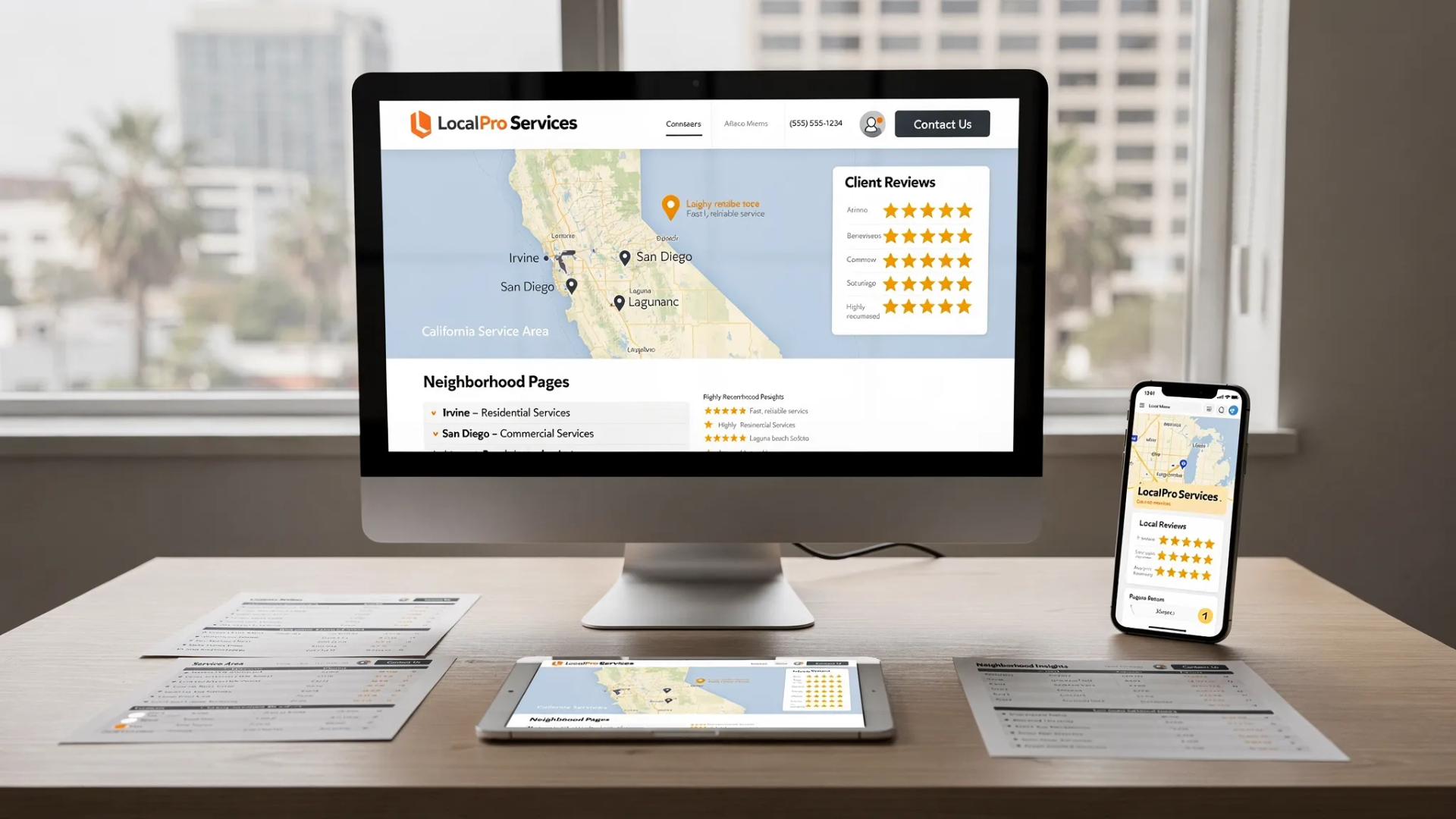
A contractor serving Orange County might need pages for Laguna Beach, Laguna Niguel, Irvine, Huntington Beach, Anaheim, Santa Ana, and Newport Beach. A multi-location medical group may need separate location pages for each office, plus service pages that connect to those offices. A law firm serving Los Angeles and San Diego may need practice-area pages that reflect the realities of each market.
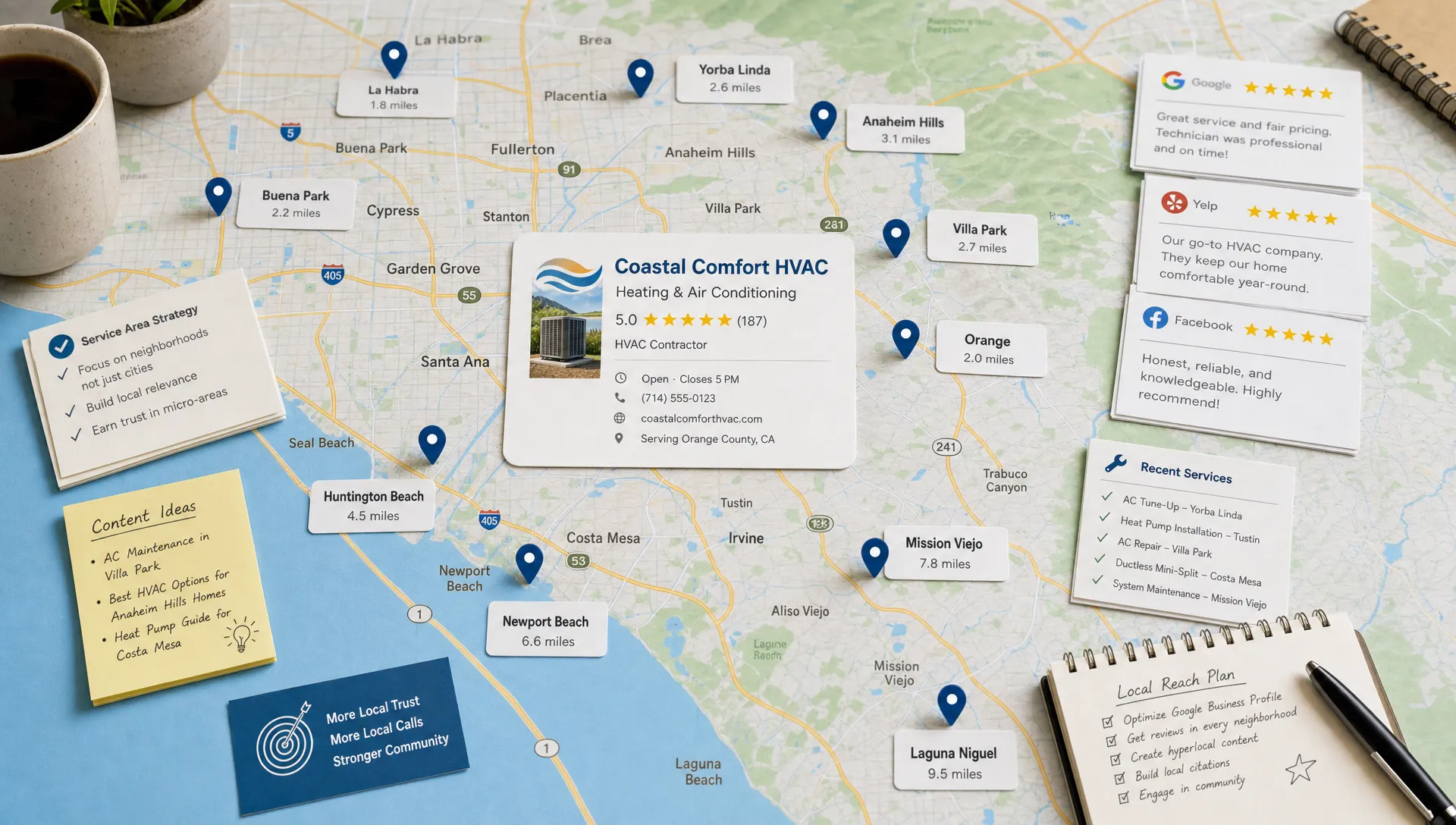
A strong location page should include real local context. Mention the neighborhoods you serve, common customer needs in that area, relevant service considerations, local testimonials if available, driving or appointment details, and a clear way to contact the correct office or team.
Avoid doorway pages. A doorway page swaps city names into the same copy and adds no value. AI systems are getting better at ignoring thin local pages because they do not help users. Instead, publish pages that prove your experience in that place.
Kell Web Solutions approaches this through local authority building, including Local SEO and hyperlocal strategies for businesses that need to compete at the neighborhood level.
Connect your website to third-party proof
AI systems do not evaluate your website in isolation. They compare what your site says with what the wider web says about your business. That includes Google Business Profile, Yelp, BBB, industry directories, local chambers, social profiles, maps, review platforms, news mentions, and niche websites.
For local businesses, consistency matters. If your website lists one phone number, your Google profile lists another, and your citations show an old address, you create doubt. If your website claims to serve all of Southern California but your reviews only mention one city, that mismatch can weaken local confidence.
Your site should make third-party validation easy to find. Use review sections, project examples, awards, media mentions, partner logos, professional memberships, and links to relevant profiles where appropriate.
Trust also comes from specificity. A good example outside the contractor world is a relocation service such as rental and school relocation support, where the website clearly explains who it helps, what outcomes it supports, and how the process works before a family arrives. Local service businesses can apply the same principle: reduce uncertainty by showing the customer exactly what happens next.
Build technical trust into the foundation
A beautiful website that search engines cannot crawl is not an SEO website. A fast website with vague content is not enough either. Technical trust and content trust have to work together.
At minimum, your website should have a clean crawl path, mobile-friendly design, secure HTTPS, fast page loading, logical internal links, optimized title tags, descriptive headings, accessible images, and no accidental blocking of important pages.
For service businesses, technical problems often show up in simple ways. Contact buttons do not work on mobile. Location pages are orphaned. Service pages have duplicate titles. Old pages return errors. Images are too large. Tracking scripts slow the site. The navigation hides the highest-value pages. The site has no clear internal link path from a blog post to a money page.
These issues hurt both customers and AI systems. If a user cannot quickly understand and contact you, the page fails commercially. If a crawler cannot interpret the page, the site fails technically.
| Technical element | Why it matters |
|---|---|
| Mobile-first layout | Many local searches happen on phones, especially emergency service searches |
| Fast loading pages | Reduces bounce and improves user experience |
| Clean navigation | Helps users and crawlers understand your services and locations |
| Internal links | Connects educational content to service and location pages |
| Indexable pages | Ensures important content can appear in search results |
| Canonical tags | Reduces duplicate content confusion |
| Alt text | Helps accessibility and gives context to image content |
| HTTPS | Supports security and user confidence |
The technical goal is not perfection for its own sake. The goal is to remove friction between your expertise and the customer who needs it.
Use content evidence, not marketing fluff
AI can summarize claims, but it cannot create trust from vague language. Pages filled with phrases like best service, highest quality, and trusted experts are not persuasive unless they are backed by evidence.
For a contractor, evidence may include before-and-after project photos, service checklists, maintenance guidance, warranty explanations, technician training, license information, safety standards, and customer reviews.
For a medical, dental, or legal practice, evidence may include provider bios, education, certifications, practice focus, patient or client process explanations, accepted insurance or consultation details when applicable, and clearly written service information.
A strong search engine optimization website should show why your business deserves to be recommended. That means replacing generic claims with concrete proof.
Instead of saying you are the leading HVAC company in Orange County, explain your years in business, the communities you serve, the types of systems you handle, how your diagnostics work, and what customers say after service. Instead of saying your law firm is client-focused, explain your intake process, communication standards, attorney experience, and what types of matters you handle.
The more specific the evidence, the easier it is for both humans and AI systems to understand your authority.
Align website structure with the customer journey
Many local business websites are organized around the company, not the customer. They have a home page, about page, services page, gallery, and contact page. That is a start, but it is usually not enough for AI search or modern buyer behavior.
A better structure connects discovery, evaluation, and conversion.
| Customer stage | What the visitor needs | Website asset |
|---|---|---|
| Discovery | Understand the problem and possible solutions | Educational blog posts, guides, FAQs |
| Evaluation | Compare service providers and trust factors | Service pages, reviews, case studies, provider bios |
| Local validation | Confirm the business serves their area | Location pages, Google map context, local testimonials |
| Conversion | Take the next step with confidence | Contact page, click-to-call, scheduling, quote request |
| Reassurance | Know what happens after reaching out | Process sections, response-time expectations, follow-up details |
This structure helps customers move forward, but it also helps AI systems associate your brand with specific problems, services, and locations.
For example, a plumber in Newport Beach should not rely only on a generic plumbing page. The site should connect water heater repair, slab leak detection, drain cleaning, emergency plumbing, and Newport Beach service-area content in a way that makes the business a clear answer for relevant searches.
Add Answer Engine Optimization to your SEO foundation
SEO helps your site rank. AEO helps your business become the answer.
That difference matters because users increasingly interact with summarized answers, map results, AI assistants, and voice responses. AEO is not a replacement for SEO. It is an evolution that makes your website and wider digital presence easier for AI systems to understand and cite.
AEO-ready websites typically include clear entity language, direct answers to common questions, structured data, topical authority, consistent off-site references, strong local signals, and a conversion path built for users who may arrive with high intent.
For Orange County businesses, this is especially important in competitive categories like HVAC, roofing, plumbing, electrical, solar, remodeling, dentistry, medicine, and law. These markets are crowded, and AI systems often favor businesses that are easier to verify.
Kell Web Solutions' Hyperlocal Authority Builder was designed around this reality: one website is often not enough when your revenue depends on neighborhood-level visibility.
A 90-day plan to build a website AI can trust
You do not need to rebuild everything at once. Most businesses can make meaningful progress by sequencing the work.
| Timeframe | Priority | Key actions |
|---|---|---|
| Days 1 to 15 | Entity and technical audit | Review crawlability, indexation, NAP consistency, core pages, analytics, Google Business Profile, and conversion paths |
| Days 16 to 30 | Core page upgrades | Improve home, about, contact, top service pages, and top location pages with clearer proof, FAQs, and calls to action |
| Days 31 to 45 | Structured data | Add or refine LocalBusiness, Organization, Service, FAQ, Breadcrumb, and relevant Person schema |
| Days 46 to 60 | Local authority | Strengthen citations, reviews, location content, internal links, and service-area relevance |
| Days 61 to 75 | Content expansion | Publish high-intent educational content based on real customer questions and sales objections |
| Days 76 to 90 | Measurement and refinement | Track rankings, calls, forms, AI visibility, page engagement, and conversion quality |
The most important part is not the checklist. It is the shift in mindset. Your website should become a durable authority asset, not a brochure that gets redesigned every few years and ignored between updates.
Common mistakes that make AI distrust your website
Even established businesses can weaken their AI visibility with avoidable mistakes.
Thin city pages are one of the most common. If every location page says the same thing with a different city name, you are not proving local relevance. Inconsistent NAP information is another major issue because it creates confusion across the web.
Other problems include publishing AI-generated content without expert review, making unsupported claims, hiding key contact details, failing to update old service information, using stock-heavy pages with no real proof, and treating reviews as separate from SEO.
Another mistake is separating web design from search strategy. A site can look modern and still fail as an SEO asset. Design, content, technical structure, schema, reviews, local authority, and conversion strategy need to work together.
Frequently Asked Questions
What is a search engine optimization website? A search engine optimization website is built so search engines, AI systems, and customers can clearly understand the business, services, locations, expertise, and next steps. It combines technical SEO, helpful content, structured data, local authority, and conversion strategy.
How is an AI-trustworthy website different from a traditional SEO website? A traditional SEO website may focus mainly on rankings and keywords. An AI-trustworthy website also focuses on entity clarity, verified signals, direct answers, structured data, and consistency across the wider web so answer engines can confidently interpret and recommend the business.
Do local businesses still need regular SEO if they invest in AEO? Yes. AEO builds on SEO. Your website still needs crawlable pages, optimized content, local relevance, internal links, reviews, and technical health. AEO adds another layer that helps your business become a trusted answer in AI-driven search experiences.
What pages should a contractor website prioritize first? Most contractors should start with the home page, top revenue service pages, top city or neighborhood pages, about page, contact page, review page, and a few high-intent FAQ or educational articles that answer urgent customer questions.
Can structured data make my business appear in AI answers? Structured data can help search engines understand your content, but it does not guarantee AI visibility. It works best when combined with strong content, consistent business information, reviews, local proof, and a technically sound website.
How long does it take to build AI trust? Some technical and on-page improvements can be completed in weeks, but durable trust usually compounds over several months. Reviews, local authority, content depth, citations, and AI visibility all improve through consistent execution.
Build a website that can be found, understood, and chosen
If your website was built only for the old search environment, it may not be strong enough for today's AI-driven discovery journey. California customers are still searching, but they are searching through smarter systems, summarized answers, maps, and voice assistants.
Your website needs to be more than attractive. It needs to be structured, specific, local, verifiable, and built around the questions your best customers ask before they call.
Kell Web Solutions helps Orange County and California businesses build AEO-ready, locally authoritative websites that search engines and AI systems can understand. If you want to turn your website into a trusted source of truth for your market, book a strategy call with Kell Web Solutions and start building authority that lasts.