7 Signs You Need an SEO Agency, Not More Ad Spend
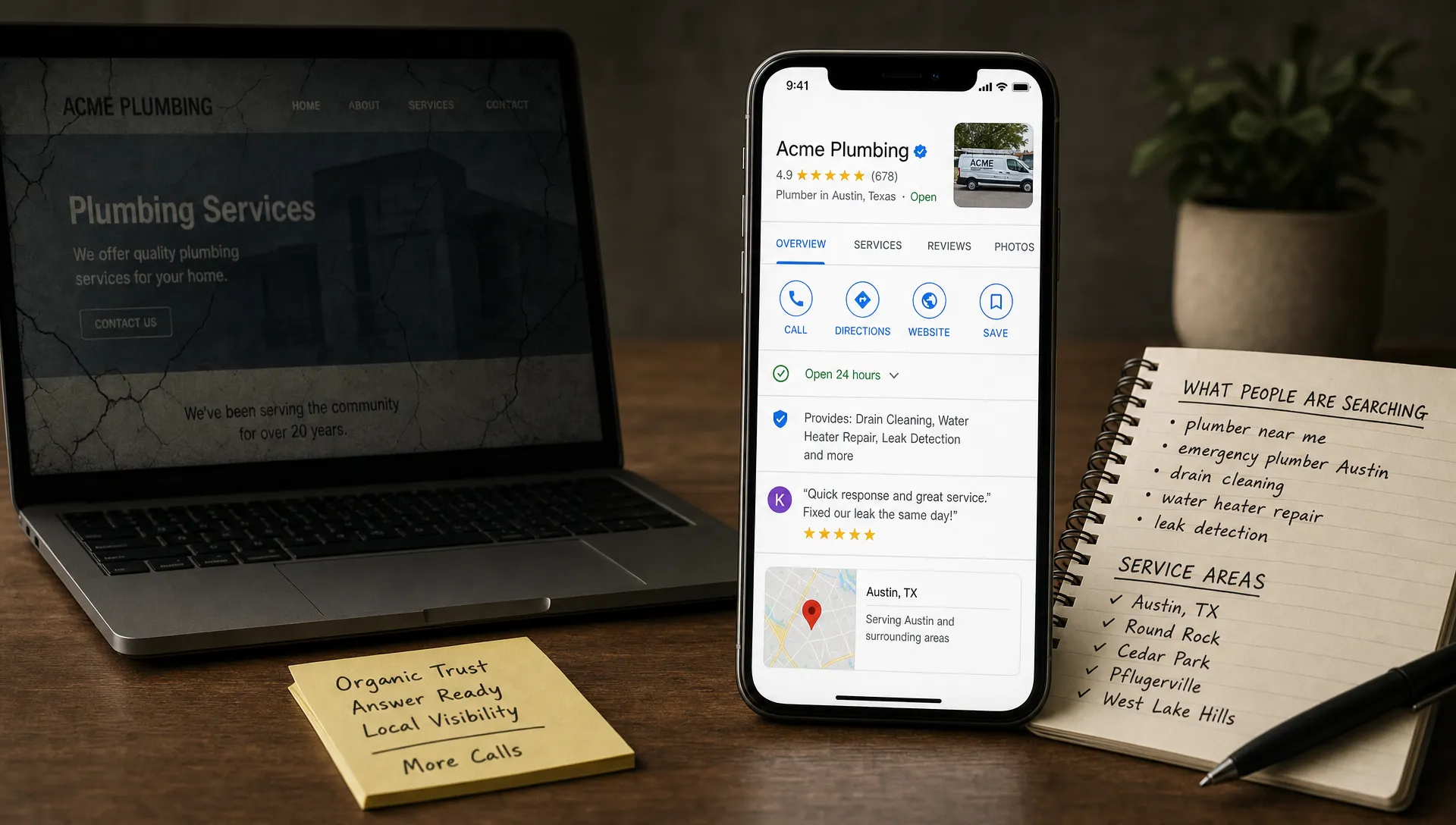
If your paid leads are getting more expensive but your calendar is not getting stronger, the answer may not be a bigger ad budget. You may need an SEO agency to repair the visibility, trust, and conversion problems that ads are currently exposing.
That is especially true for local service businesses in competitive California markets. An HVAC contractor in Irvine, a roofer in San Diego, a dental group in San Jose, or a law firm with offices across Orange County can all buy visibility for a short period of time. But if the business is weak in organic search, map results, reviews, website clarity, and AI-generated answers, every paid click has to work harder than it should.
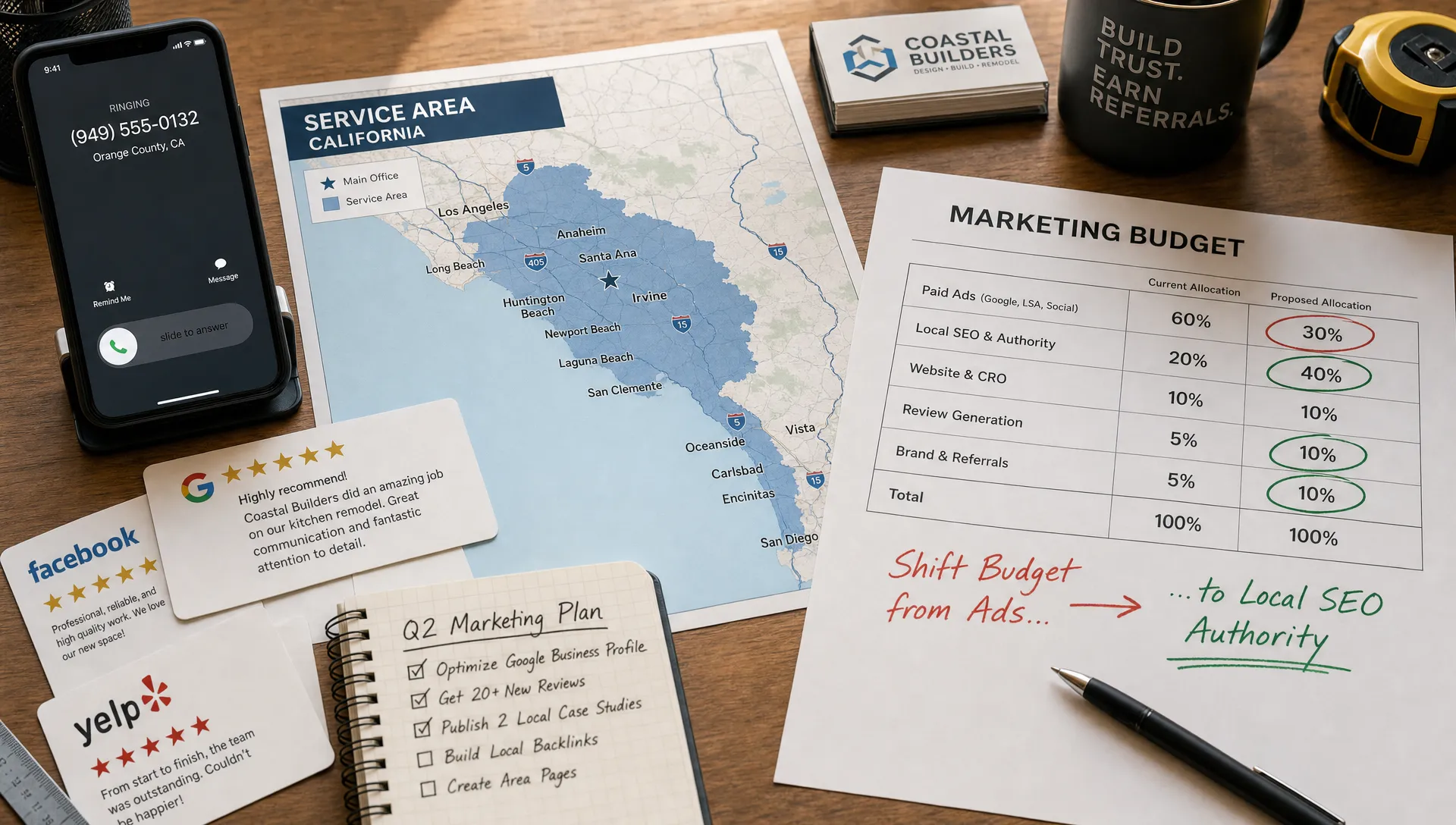
Ads are not bad. Paid search, Local Services Ads, and social ads can create fast demand when they are managed well. The problem starts when ad spend becomes the only engine keeping the phone alive. At that point, you are not building market authority. You are renting attention.
Here are seven signs your next move should be hiring an SEO agency, not simply increasing ad spend.
First, ask the real question: do you have a traffic problem or an authority problem?
More ad spend helps when the core issue is reach. If your offer is strong, your website converts, your reviews are current, your Google Business Profile is healthy, and your organic visibility is already credible, ads can scale what is working.
But many local businesses do not have a reach problem. They have an authority problem.
Google has long stated that local rankings depend on relevance, distance, and prominence, and Google Business Profile guidance still reflects that foundation. In practical terms, this means the businesses that win local attention are not always the ones with the biggest ad budget. They are the ones that search systems can understand, trust, and match to the buyer’s intent.
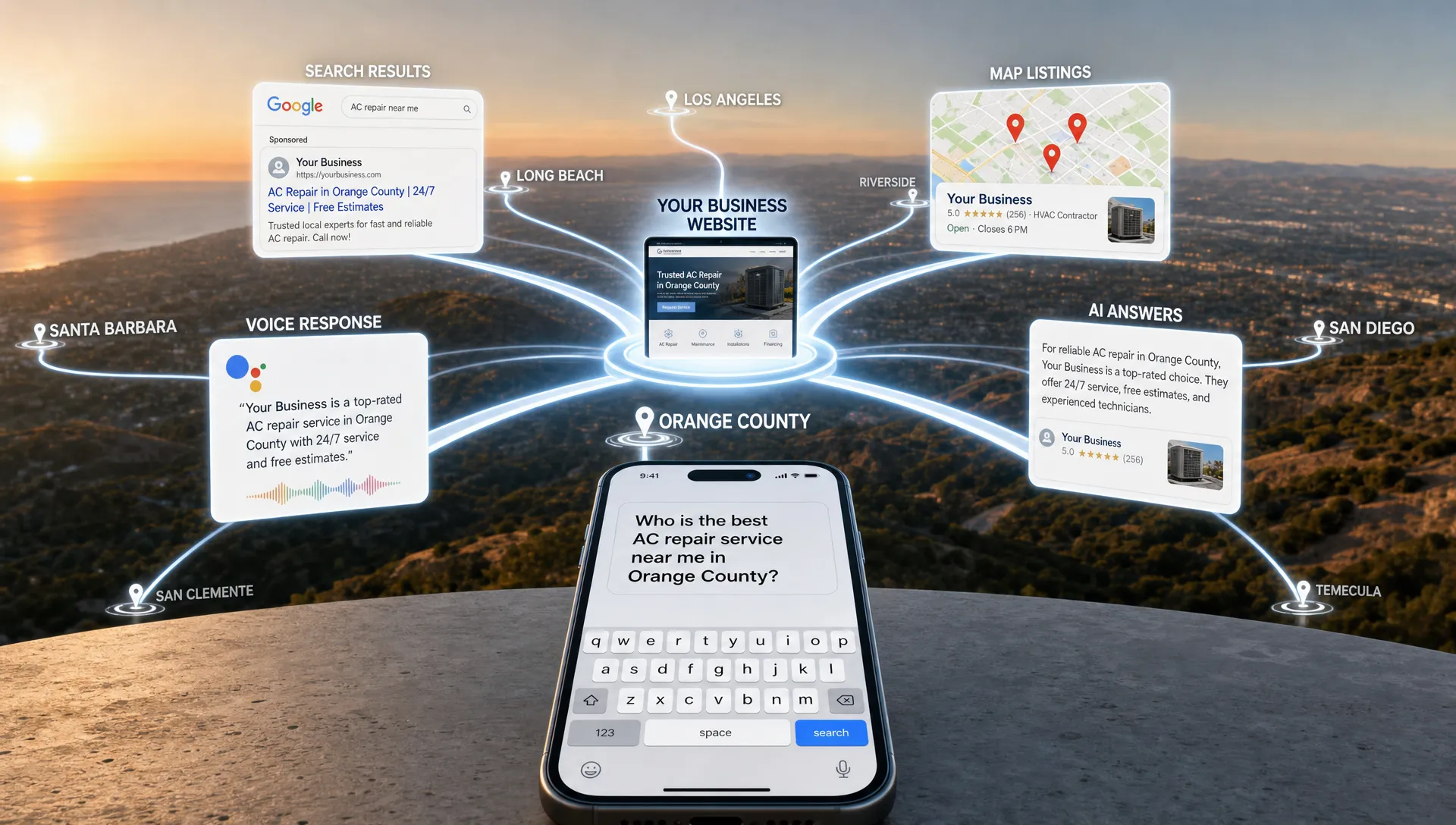
That foundation now matters beyond traditional search. In 2026, customers are also asking AI tools, voice assistants, map apps, and answer-style search results who to call. If your business is not described clearly across the web, if your service pages are thin, or if your neighborhood-level relevance is weak, you may be invisible even when you are spending heavily.
For a deeper look at how nearby jobs are won organically, Kell Web Solutions explains the local foundation in its guide to local search engine optimization that wins nearby jobs.
1. Your cost per lead keeps rising, but your close rate is flat
Rising lead costs are not automatically a sign your ads are failing. Competitive markets change. Seasonality matters. Auction prices rise when more contractors, practices, and franchises enter the same local search space.
The warning sign is different: your cost per qualified lead increases while your booked jobs, consults, or case evaluations do not improve.
This often happens when prospects click an ad, then compare you against competitors in organic results, map listings, reviews, and AI summaries. If a competitor appears more established, has stronger local content, shows up in multiple neighborhood searches, and has clearer proof of expertise, your ad becomes only the first touch. It does not close the confidence gap.
For example, a Laguna Niguel homeowner searching for emergency AC repair may click a paid result, then check the map pack, reviews, and service page before calling. A San Jose patient comparing dental implant providers may read organic pages and reviews before booking. A business owner in Los Angeles may ask ChatGPT or Perplexity for local options before ever visiting a website.
An SEO agency can diagnose whether paid traffic is leaking because of weak organic authority, poor local relevance, unclear service pages, or trust signals that lag behind competitors. More ad spend may generate more clicks, but it will not fix why buyers hesitate.
2. Your phone stops ringing the moment ads are paused
If pausing ads immediately dries up the pipeline, your business is overly dependent on rented visibility.
This is common in home services. A plumbing company may get calls from paid search when the campaign is active, but disappear from organic results for city and service searches. A roofing company may rank for its brand name but not for roof replacement in Huntington Beach, Irvine, or Anaheim. A multi-location practice may have one strong location page but weak visibility around nearby neighborhoods.
A healthy local marketing system should have more than one source of demand. Paid ads can create speed, but organic search, map visibility, reviews, referrals, direct traffic, and answer engine visibility create resilience.
Think of ad spend as acceleration. Think of SEO as infrastructure. If there is no infrastructure, every month starts from zero.
An SEO agency helps build assets that keep working after the click budget is spent. These assets include service pages, location pages, Google Business Profile optimization, internal linking, content that answers buyer questions, technical improvements, and better entity signals across the web.
The goal is not always to eliminate paid ads. The goal is to stop needing ads for every single opportunity.
3. You are missing from map results in the cities that actually pay you
For local businesses, ranking somewhere is not enough. You need visibility in the places where profitable customers live, work, and search.
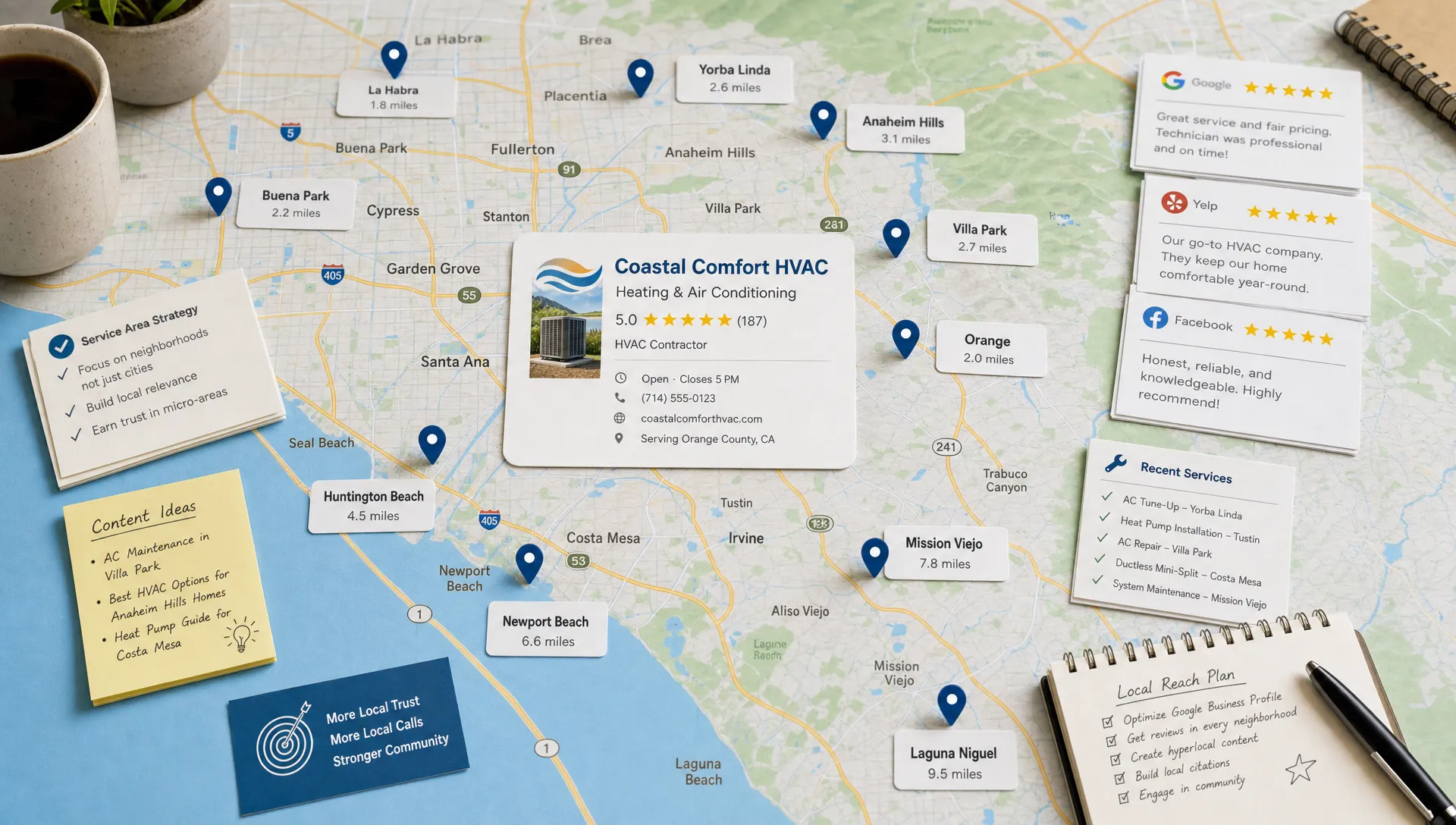
A contractor based in Orange County may want jobs in Laguna Beach, Newport Beach, Irvine, Mission Viejo, and Huntington Beach. A remodeler in San Diego may care about coastal neighborhoods, inland suburbs, and high-value service areas. A medical or legal practice may need to win specific catchments around each office rather than an entire county.
If your ads are targeting these areas but your organic presence is weak there, you are paying to enter markets where you have not built enough local proof.
Signs of this problem include:
- Your Google Business Profile appears only for searches very close to your office.
- Your website has one generic service area page instead of useful city or neighborhood content.
- Competitors show up in the local pack for searches where you are buying clicks.
- Your reviews mention your company but not the services and locations customers search for.
- Your content sounds broad, even though your revenue depends on specific cities.
This is where a local SEO strategy becomes more valuable than a bigger paid radius. Ads can target a location instantly, but organic prominence must be earned through relevance, reviews, content, citations, website structure, and consistent local signals.
For California businesses, the difference can be significant. Showing up for solar installation in Riverside, emergency electrician in Fresno, or roof repair in Santa Ana requires more than a budget setting. It requires a local authority system.
4. You are getting clicks, but too many of them are the wrong calls
Not all leads are equal. A campaign can look busy while quietly wasting money.
If your team is fielding calls from people outside your service area, buyers looking for services you do not offer, price shoppers who are not a fit, or low-value requests that crowd out better opportunities, the problem may be message alignment.
Paid ads often reveal this issue because they amplify whatever is already unclear. If your landing page says you serve all of Southern California but your best work is in coastal Orange County, you will attract broad demand. If your practice website lists every possible service but does not clarify specialties, insurance, case types, or appointment fit, you will get more unqualified inquiries. If your contractor site does not separate repair, replacement, maintenance, emergency service, and commercial work, searchers may not know whether to call.
An SEO agency looks at how buyers search before they are ready to click. That includes question-based searches, comparison searches, service-specific searches, and location modifiers. Then your website can be structured to guide the right people to the right page.
This improves paid performance too. When SEO and ads are aligned, ad traffic lands on pages that already match organic search intent. Buyers get clearer answers. Your team gets better calls. Your budget stops paying for confusion.
5. Competitors are showing up in AI answers, but your business is absent
Search is no longer limited to a list of links. Customers increasingly ask direct questions such as who is the best HVAC company near me, which roofer serves my neighborhood, or what dental office handles same-week appointments in San Jose.
When AI-generated answers, voice assistants, and answer engines respond, they tend to favor businesses that are easy to understand, consistently described, and supported by credible signals. If your website is vague, your service pages are thin, your reviews are hard to interpret, and your business information is inconsistent, AI systems have less reason to cite or recommend you.
This is where Answer Engine Optimization becomes important. Traditional SEO asks, can we rank for this query? AEO asks, can a machine confidently select us as the answer?
For an Orange County contractor, that might mean making expertise, service areas, licensing context, reviews, FAQs, and project categories easier for search systems to interpret. For a multi-location practice, it might mean clarifying which office serves which neighborhood, which providers offer which services, and what questions patients or clients ask before booking.
Kell Web Solutions describes this shift on its Answer Engine Optimization service page, where the focus is on helping AI-driven platforms understand, trust, and recommend a business.
If competitors are becoming the cited answer while you are only buying paid clicks, more ad spend will not solve the deeper problem. You need to become more understandable and authoritative to both people and machines.
6. Your reviews, citations, and business information are inconsistent
Local trust is cumulative. A customer may see your ad, then check your Google Business Profile, Yelp listing, website footer, service pages, Apple Maps listing, Facebook page, and industry directories. If the details do not line up, confidence drops.
Inconsistent name, address, and phone information is only one part of the issue. Outdated photos, missing service categories, weak review responses, incomplete location pages, and old business descriptions can all reduce trust. For multi-location practices, the problem can multiply quickly if each office has different hours, phone numbers, providers, or service offerings.
Ads can temporarily push people toward you, but they cannot make your public footprint coherent.
An SEO agency should review the full local presence, including your website, Google Business Profile, citations, reviews, schema markup, and service area language. The objective is simple: when a customer or search system checks your business, the evidence should reinforce the same story.
This matters in Orange County, Los Angeles, San Diego, San Jose, Fresno, Sacramento, and every competitive California city where buyers compare options quickly. The more expensive the service, the more trust signals matter before the call.
7. You cannot tell which marketing activities create revenue
If your reporting stops at clicks, impressions, or form fills, you are not ready to simply spend more.
A local business needs to know which channels create qualified calls, which pages assist conversions, which cities produce profitable jobs, which services close at the best rate, and where follow-up breaks down. Without that visibility, raising the ad budget can scale waste just as easily as it scales revenue.
This is a common problem for contractors and professional practices because the real sale often happens offline. The prospect calls, speaks with staff, schedules an estimate or consultation, receives a proposal, and decides later. If marketing reports do not connect to those business outcomes, the loudest platform often gets the most credit.
A good SEO agency will not evaluate organic visibility in isolation. It should help you ask better revenue questions before recommending more content, more ads, or a broader city strategy.
Use this table as a practical review tool before increasing paid spend:
| Area to review | What it reveals | Warning sign |
|---|---|---|
| Google Business Profile visibility | Whether you appear where nearby buyers search | You only show for your brand name or immediate office area |
| Service and location pages | Whether your website matches profitable search intent | One generic page tries to cover every city and service |
| Call quality | Whether marketing produces real opportunities | Calls increase, but booked jobs or consultations do not |
| Review profile | Whether buyers see recent proof | Competitors have fresher, more specific reviews |
| AI and answer visibility | Whether search systems can confidently recommend you | Competitors are cited, summarized, or suggested more often |
| Revenue tracking | Whether decisions are based on business outcomes | Reports celebrate clicks without showing booked revenue |
If these areas are weak, your first budget increase should go toward fixing the foundation.
When more ad spend still makes sense
This article is not an argument against advertising. It is an argument against using ads to cover up an organic visibility problem.
More ad spend can make sense when:
- You are entering a new market and need immediate visibility while SEO assets mature.
- You have strong organic presence and want to capture more high-intent demand.
- You are promoting a seasonal service, emergency offer, or limited-time campaign.
- You can clearly measure which campaigns generate profitable jobs or appointments.
- Your website and local profiles already convert traffic well.
The best strategy is usually not SEO versus ads. It is sequencing. Build a trustworthy foundation, then use ads to accelerate a system that already gives buyers confidence.
What to expect from the right SEO agency
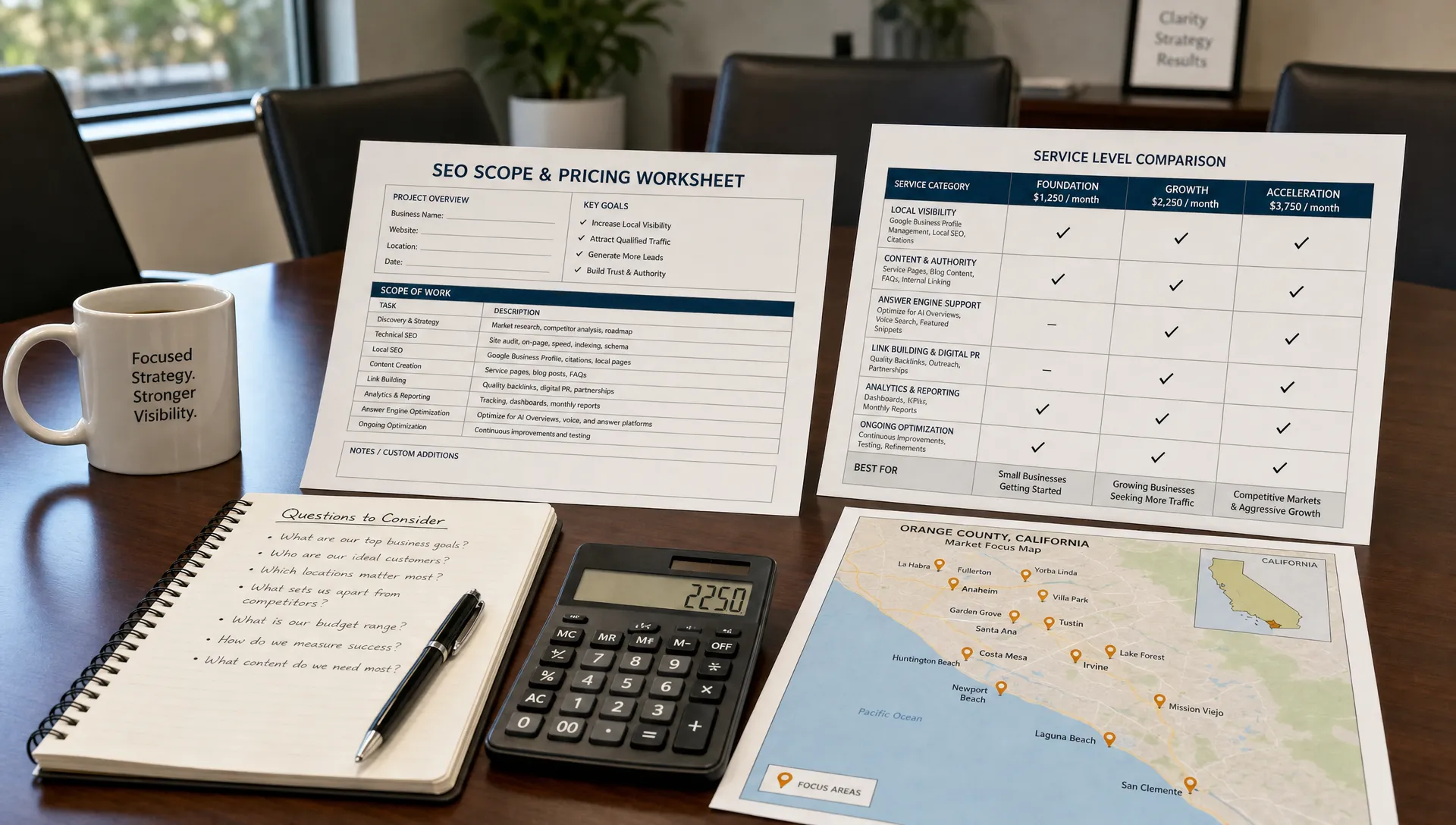
The right SEO partner should not begin with a package before understanding your market. A serious agency should investigate how customers search, which cities matter most, what competitors are doing, where your website is unclear, how your Google Business Profile performs, and whether AI-driven search can understand your business.
For contractors, that means looking beyond broad keywords and into service-area demand. For professional practices, it means aligning location, specialty, provider, and trust signals. For California businesses expanding across cities like Irvine, Anaheim, Los Angeles, San Diego, San Jose, Sacramento, and Bakersfield, it means building local relevance without creating thin or duplicate pages.
A good agency should also be honest about timing. SEO is not instant. Some improvements can affect conversion quickly, especially clearer pages and profile updates. Broader organic authority often compounds over months. Anyone promising overnight dominance in every city is likely selling shortcuts.
If you are comparing options, Kell Web Solutions also offers a practical framework for choosing marketing firms that grow local revenue, not just traffic charts.
Frequently Asked Questions
Should I stop running ads if I hire an SEO agency? Not necessarily. Ads can keep leads flowing while organic visibility improves. The smarter move is usually to audit what ads are covering up, fix the local SEO foundation, then rebalance spend based on qualified calls and booked revenue.
How long does SEO take for a local business? It depends on competition, website condition, Google Business Profile strength, reviews, content quality, and service area complexity. Some conversion improvements can happen quickly, but durable local authority typically builds over several months.
What is the difference between an SEO agency and a PPC agency? A PPC agency focuses on paid visibility and campaign efficiency. An SEO agency focuses on organic visibility, website structure, local authority, content, technical health, and trust signals. Many businesses need both, but they solve different problems.
Is Answer Engine Optimization replacing SEO? No. AEO builds on SEO. Local businesses still need strong websites, reviews, Google Business Profiles, and relevant content. AEO adds the extra discipline of making the business clear and credible enough for AI-driven systems to cite or recommend.
What is the biggest sign I should not increase ad spend yet? If you cannot explain which services, locations, pages, and lead sources produce profitable customers, more ad spend may simply amplify uncertainty. Fix measurement and organic trust first.
Build authority before you buy more attention
If you recognize several of these signs, your business may not need louder advertising. It may need a stronger digital foundation.
Kell Web Solutions is based in Orange County and has worked with local California businesses since 2001. If you are a contractor, multi-location practice, or service business trying to reduce dependence on paid ads, the next step is to find out whether SEO, AEO, local authority building, or a different growth system is the right fit.
You can call Kell Web Solutions at (949) 575-8553 or schedule a strategy call to review whether your next marketing dollar should go into ads, authority, or both.