How to Become the Search Answer for Local Buyers
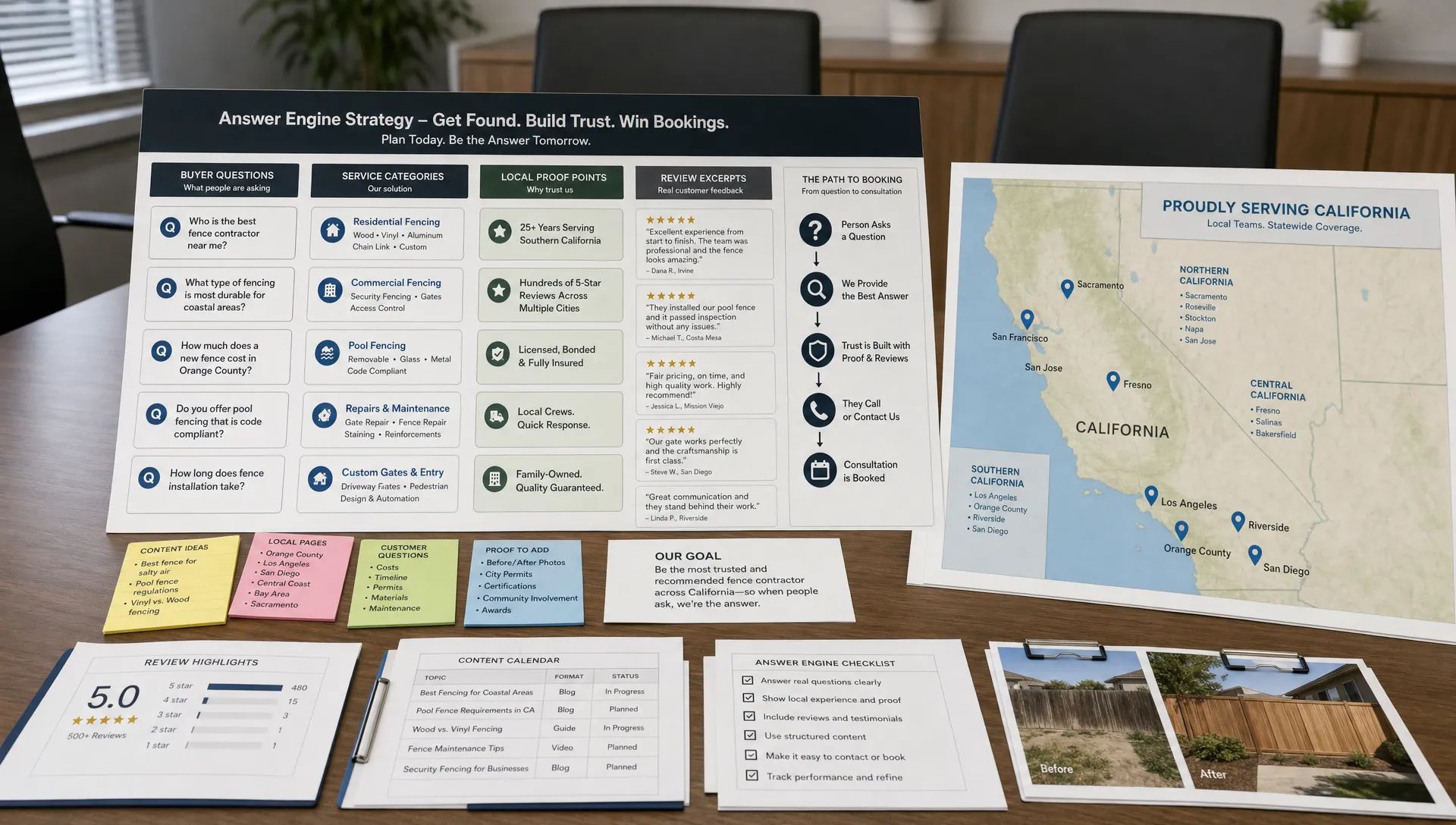
Local buyers are no longer just typing a keyword and scanning ten blue links. They are asking complete, high-intent questions: “Who repairs tankless water heaters near Laguna Niguel?” “Best roofer for a tile roof leak in Irvine?” “Emergency electrician open now in Anaheim?” “Which dental implant specialist is trusted in San Jose?”
To become the search answer, your business has to do more than appear online. It has to be the clearest, most trusted, most locally relevant choice when Google, AI Overviews, Maps, voice assistants, and other answer engines decide what to recommend.
For contractors, remodelers, medical practices, dental groups, and law firms across Orange County and California, this shift is a major opportunity. The companies that organize their digital presence around buyer questions, local proof, and entity clarity will be easier for both people and machines to choose.
What “the search answer” really means
Becoming the search answer does not always mean ranking first for one broad keyword. It means your business is repeatedly selected, cited, displayed, or recommended when a local buyer asks a question that matches your service.
A buyer in Huntington Beach may not search “HVAC company.” They may ask, “Why is my AC blowing warm air and who can fix it today?” A homeowner in San Diego may ask, “How much does a roof repair cost after storm damage?” A patient in Irvine may search for “same-week cosmetic dentist near me with good reviews.”
Answer engines need confidence before they recommend a business. That confidence comes from consistent information, relevant service content, neighborhood-level signals, reviews, structured data, and third-party corroboration.
Traditional SEO still matters, but the goal has changed. You are not just optimizing pages for rankings. You are building a digital footprint that proves your business is a reliable answer for a specific buyer, service, and location.
Why local buyers choose answers differently now
Local buyers move fast. When the problem is urgent, such as a broken water heater, electrical issue, roof leak, or dental emergency, they often choose from the first credible options they see. In many cases, those options appear inside Google Maps, AI-generated summaries, local packs, voice responses, or business profiles before the buyer ever reaches a website.
Google’s own guidance on local ranking factors emphasizes relevance, distance, and prominence. That framework still matters, but AI-driven search adds another layer: answer engines must understand who you are, what you do, where you do it, and why you should be trusted.
For local businesses, the sources that shape that understanding include:
- Your website and service pages
- Your Google Business Profile
- Local citations and directory listings
- Reviews and review responses
- Schema markup and structured business data
- Locally relevant articles, FAQs, and project proof
- Mentions from other credible websites
If these sources tell a consistent story, your business becomes easier to retrieve and recommend. If they are thin, outdated, or contradictory, answer engines may choose a competitor instead.
Start with entity clarity
Before you try to become the answer for hundreds of searches, make sure search engines can clearly identify your business as an entity. An entity is a real-world thing that machines can understand, such as a company, location, service, practitioner, brand, or organization.
For a local service business, entity clarity starts with the basics: business name, address, phone number, service categories, service areas, hours, website URL, and proof of legitimacy. These details should be consistent across your website, Google Business Profile, major directories, social profiles, and industry platforms.
This is especially important for California businesses serving multiple cities. A contractor based in Laguna Beach may serve Newport Beach, Irvine, Costa Mesa, Mission Viejo, and San Clemente. A legal or dental practice may have locations across Los Angeles, San Diego, or San Jose. If your website says one thing, your profile says another, and directories list old locations or phone numbers, answer engines receive mixed signals.
Entity clarity also includes how you describe your services. “Home services” is vague. “Emergency AC repair in Orange County,” “standing seam metal roofing in San Diego,” or “family dentistry in Irvine” is easier to understand and match to buyer intent.
Build pages around the questions buyers actually ask
Many local websites are organized around company preferences instead of buyer questions. They list services, add a few generic paragraphs, and hope visitors call. That is not enough for answer-driven discovery.
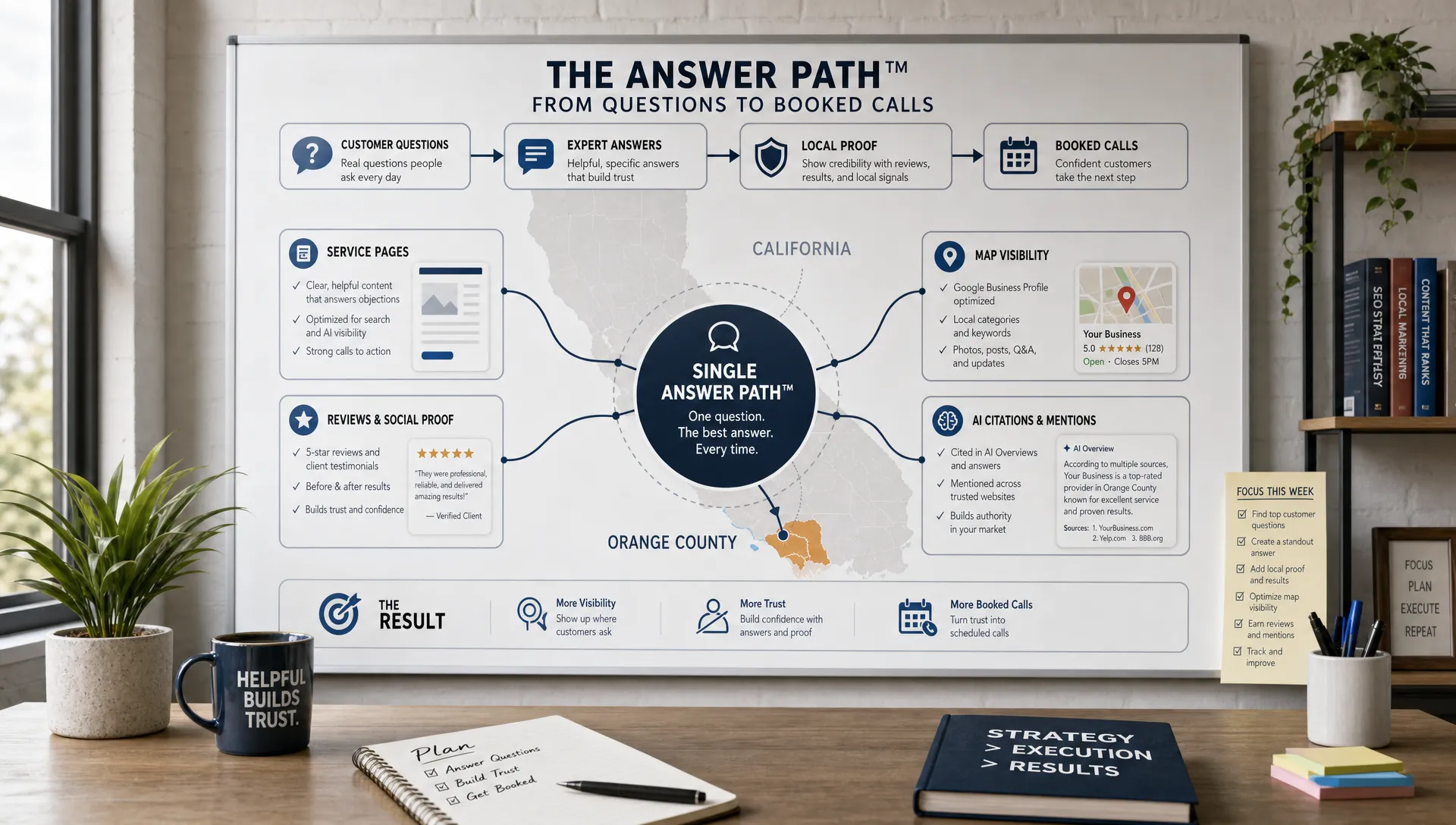
A strong local service page should answer the questions a buyer is already asking before they contact you. For example, a plumbing page should make it clear what problems you fix, where you work, what signs indicate urgency, what the process looks like, and why your company is qualified.
The same principle applies to professional practices. A medical, dental, or legal service page should explain who the service is for, what the first appointment or consultation involves, what local patients or clients should expect, and how to take the next step.
A useful answer-first page typically includes:
- A direct explanation of the service
- The specific locations served
- Common symptoms, problems, or scenarios
- Trust signals such as credentials, experience, reviews, or case examples
- Clear next steps for calling, booking, or requesting an estimate
- FAQs written in the language buyers use
This does not mean stuffing every page with city names. It means making each page genuinely useful for a local buyer deciding whether to trust you.
Strengthen neighborhood-level proof
Local intent is rarely statewide. Even when a company serves all of Orange County, Los Angeles County, San Diego County, or the Bay Area, buyers still think in neighborhoods, cities, and nearby landmarks.
A homeowner in Laguna Niguel wants to know you understand coastal homes, HOA expectations, hillside properties, or local permitting realities. A buyer in Santa Ana may care about fast response times and bilingual communication. A commercial client in San Jose may want proof that you understand dense urban service areas and tech corridor expectations.
This is where many businesses fall short. They create one broad service area page and expect it to compete everywhere. Answer engines need more local proof than that.
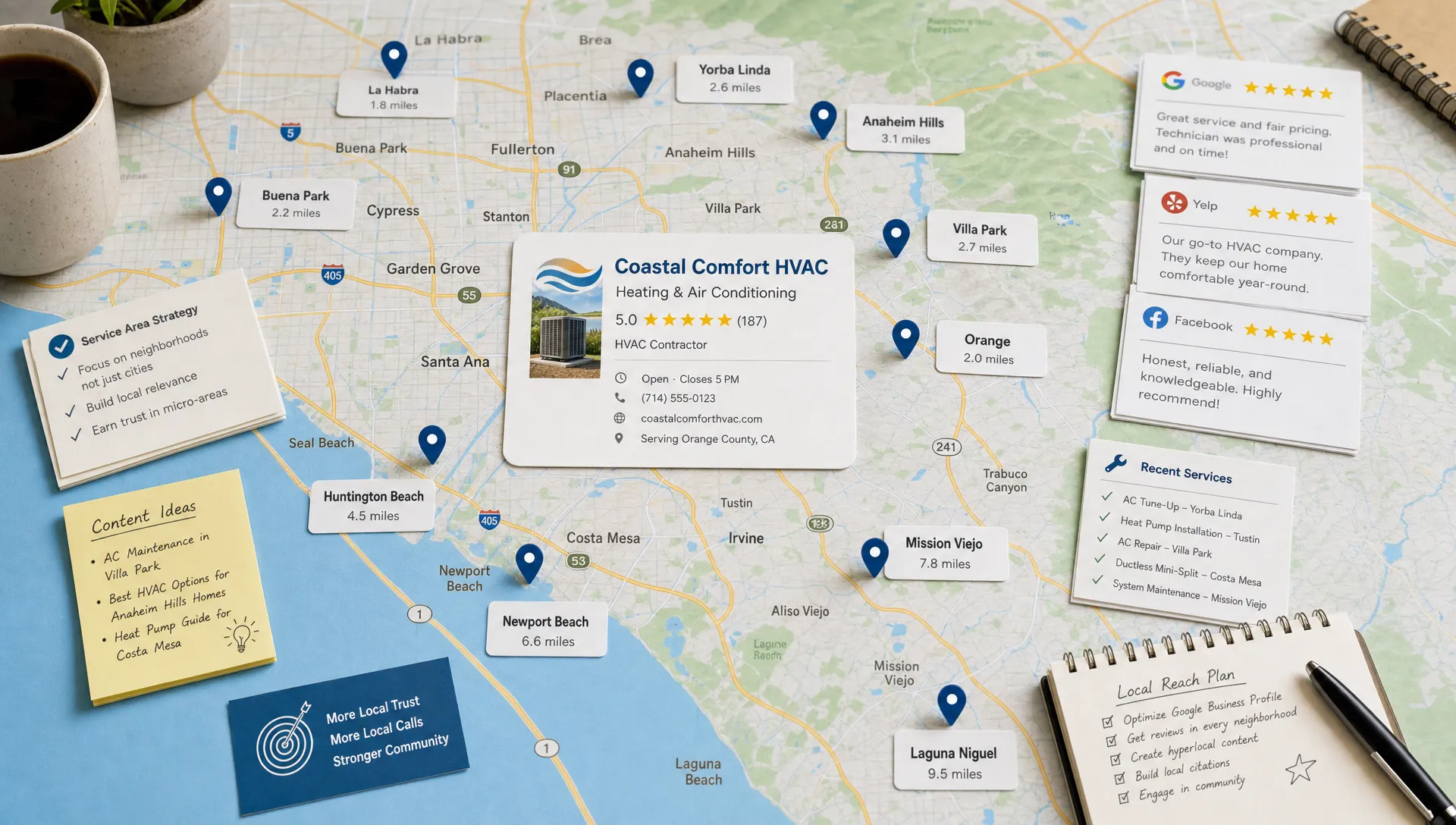
Neighborhood-level proof can come from completed project pages, city-specific service pages, localized blog articles, customer reviews that mention cities, photos from real jobs, and consistent local citations. If you want a deeper foundation for winning local jobs through search, Kell Web Solutions explains the practical building blocks in its guide to local search engine optimization that wins nearby jobs.
The goal is not to create low-quality doorway pages. The goal is to prove that your business has a real relationship with the communities it serves.
| Search answer signal | What it tells buyers and answer engines | How to improve it |
|---|---|---|
| Clear service pages | You solve the exact problem being searched | Write pages around buyer questions, not internal jargon |
| Consistent business data | Your company is legitimate and easy to verify | Align name, address, phone, hours, and categories everywhere |
| Local reviews | Real customers trust you in the target area | Ask for specific, honest reviews after completed work |
| City and neighborhood proof | You actually serve the local market | Publish project examples, location pages, and relevant local content |
| Structured data | Machines can interpret your business details | Use appropriate LocalBusiness, service, FAQ, and review markup where valid |
| Fast conversion paths | Buyers can take action immediately | Make phone numbers, forms, booking links, and CTAs easy to find |
Structure content so machines can extract the answer
A page can be persuasive to a human but still difficult for an answer engine to interpret. That happens when the main answer is buried, headings are vague, services are unclear, or important details only appear in images.
Answer-ready content is direct. It uses clear headings, concise explanations, relevant FAQs, and structured sections that map to real buyer intent. Google’s documentation on helpful, reliable, people-first content reinforces the importance of content that demonstrates expertise and helps users accomplish their goal.
For local businesses, answer-ready structure means each important page should quickly clarify:
- What service you provide
- Who the service is for
- Where the service is available
- What problem it solves
- Why your business is credible
- How the buyer can take action
Schema markup can help reinforce this clarity. LocalBusiness schema, service schema, FAQ schema, and organization details can make your business easier for machines to parse when used accurately. Schema is not a shortcut for weak content, but it can strengthen a page that already gives clear, useful answers.
Turn reviews into answer evidence
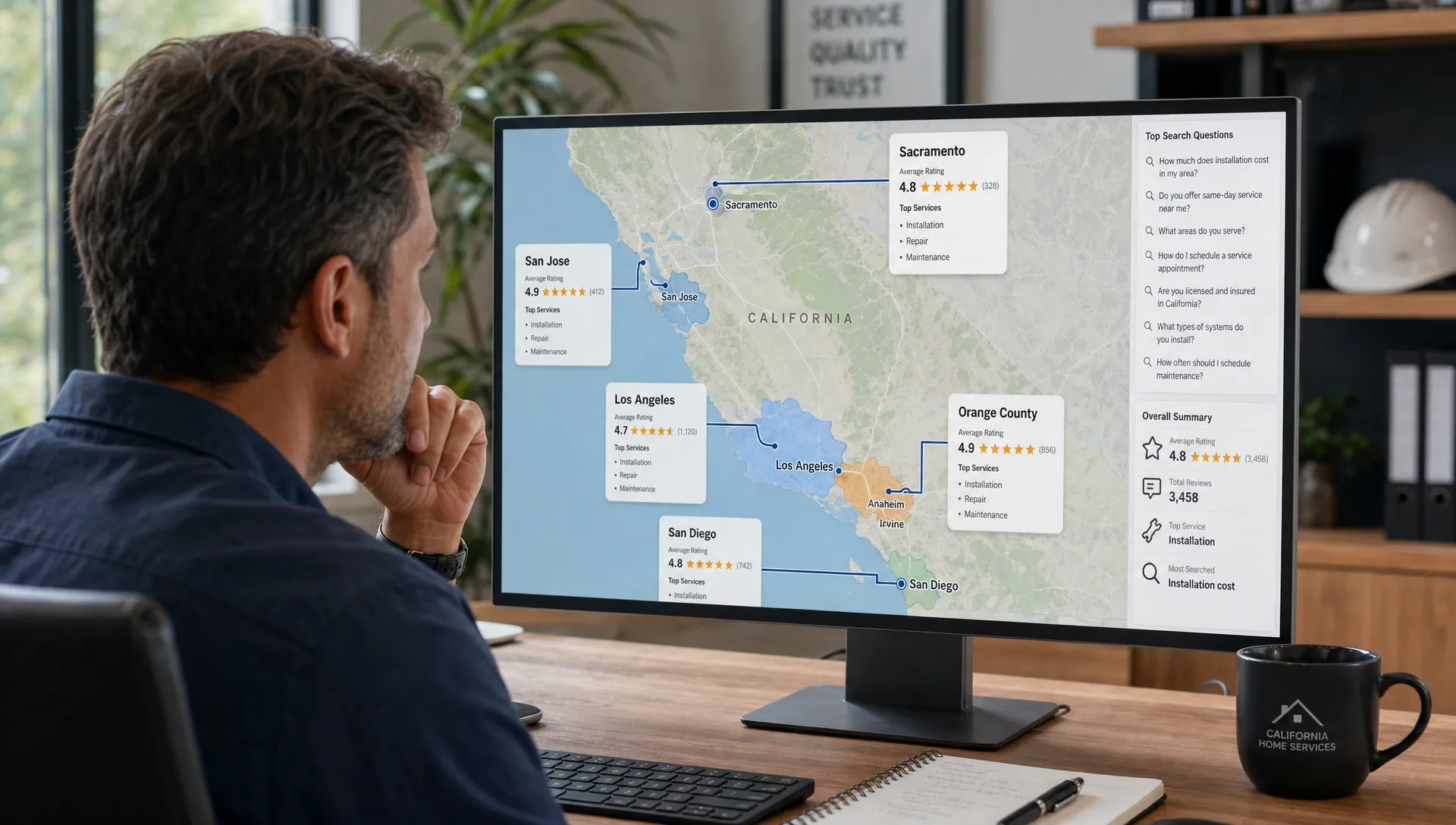
Reviews are not just reputation assets. They are answer evidence. They tell buyers and platforms what customers experienced, which services were performed, where the work happened, and whether the business can be trusted.
A generic review that says “Great company” is helpful, but a specific review is far more powerful. For example, “They repaired our AC in Irvine the same day during a heat wave” gives answer engines and buyers more context. It connects service, location, urgency, and satisfaction.
BrightLocal’s ongoing Local Consumer Review Survey consistently shows that reviews play a major role in how consumers evaluate local businesses. For contractors and professional practices, review quality, recency, and specificity can influence both visibility and conversion.
Encourage customers to describe the real service they received, but never pressure them to use scripted language or leave dishonest feedback. Authenticity matters. Review responses also help, especially when they reinforce service areas, professionalism, and customer care without sounding robotic.
Build topical authority around real local problems
To become the search answer, your website needs more than core service pages. It needs supporting content that proves expertise around the problems buyers care about.
For a roofing company, that might include articles about roof leak warning signs, tile roof repair, storm damage inspections, and roof replacement timelines in Southern California. For an HVAC company, it may include AC efficiency, furnace safety, heat pump questions, indoor air quality, and seasonal maintenance. For a dental practice, it may include implant candidacy, emergency dental visits, cosmetic treatment options, and insurance questions.
The best supporting content is specific enough to be useful and local enough to be relevant. “How to know if your AC needs repair in Orange County before summer” is stronger than “Top HVAC tips.” “What San Diego homeowners should know about roof underlayment” is stronger than “Roofing facts.”
This is also where answer engine optimization becomes more strategic than traditional blogging. You are not publishing content just to have fresh posts. You are creating a body of evidence that connects your business to services, questions, locations, and buyer decisions. For more context on that shift, Kell Web Solutions has outlined why Answer Engine Optimization services are essential for businesses that want to be selected in AI-assisted search.
Make the next step obvious
Visibility does not pay the bills unless it turns into calls, consultations, appointments, or estimate requests. A local buyer who sees you as the answer should not have to hunt for the next step.
Your website should make conversion simple on every important page. Phone numbers should be easy to tap on mobile. Contact forms should be short enough to complete quickly. Booking options should be visible where appropriate. Service pages should include calls to action that match buyer urgency.
For home services, urgent pages may need language such as “Call for same-day availability” if that is accurate for the business. For professional practices, the next step may be “Request a consultation” or “Schedule an appointment.” The wording should be truthful, clear, and aligned with how your team actually operates.
Also consider what happens after the call. If missed calls go unanswered, even strong search visibility can leak revenue. The search answer wins the opportunity, but the phone experience often wins or loses the customer.
Measure your share of answer, not just rankings
Rankings still provide useful feedback, but they are no longer the only measure of local visibility. A business can rank well for a keyword and still fail to appear in AI summaries, Maps results, voice responses, or high-intent local comparisons.
A better measurement approach looks at how often your business appears when buyers ask the questions that matter. Track searches by service, city, urgency, and buyer scenario. Review Google Business Profile performance, call volume, form fills, booked appointments, review growth, local page engagement, and visibility across answer-style results.
For example, an HVAC company may track “AC repair near me,” “emergency AC repair Irvine,” “why is my AC not cooling,” and “best HVAC company in Laguna Niguel.” A law firm may track practice-area questions by city. A dental group may track treatment and appointment-related questions around each location.
This broader view helps you identify gaps. Maybe your business is visible for brand searches but not service questions. Maybe you rank in one city but disappear in nearby markets. Maybe your reviews are strong, but your service pages do not answer enough buyer questions.
Common mistakes that keep local businesses invisible
Many businesses try to become the search answer but accidentally send weak or confusing signals. The most common mistakes are usually fixable.
Thin city pages are one example. A page that swaps “Irvine” for “Anaheim” without adding meaningful local value is unlikely to build durable authority. Another mistake is publishing generic AI-written content that sounds polished but says nothing specific about the company, market, or customer problem.
Inconsistent business information is another major issue. Old phone numbers, mismatched addresses, outdated hours, and duplicate listings can reduce trust. Ignoring reviews also hurts, especially in competitive markets where buyers compare several providers before calling.
The biggest mistake is treating search visibility as a single website problem. In the retrieval economy, your business is understood through a distributed set of signals. Your website matters, but so do profiles, reviews, local mentions, structured data, and content across your entire digital footprint.
A practical path to becoming the local search answer
If you want to become the answer for local buyers, start with the highest-value questions and locations. Do not try to optimize for every possible phrase at once.
Choose the services that drive the most profitable calls. Identify the cities or neighborhoods where you want more business. Search the questions your buyers ask before they call. Then build or improve pages that answer those questions clearly, support them with local proof, and make the next step easy.
For an Orange County contractor, that may mean strengthening pages for Laguna Beach, Irvine, Newport Beach, and Mission Viejo before expanding into wider Southern California. For a multi-location practice, it may mean building location-specific authority around each office before targeting broader county-level terms.
The businesses that win will be the ones that combine human trust with machine-readable clarity. They will not rely on keyword stuffing or short-term ranking tricks. They will become the obvious answer because every signal says the same thing: this business solves this problem, in this location, for this type of buyer, and can be trusted.
Frequently Asked Questions
What does it mean to become the search answer? It means your business is clearly understood, trusted, and recommended when local buyers ask high-intent questions in Google, Maps, AI results, voice search, or other answer engines.
Is becoming the search answer different from traditional SEO? Yes. Traditional SEO focuses heavily on rankings and keywords. Becoming the search answer also requires entity clarity, structured information, reviews, local proof, and content that directly answers buyer questions.
How long does it take for a local business to become more visible in answer-driven search? Timing depends on competition, website quality, review strength, local authority, and how much inconsistent information needs to be fixed. Most businesses should think in months, not days, because trust signals compound over time.
Do contractors need separate pages for every city they serve? Not always. City pages should only be created when they provide real value, such as local project proof, service details, reviews, photos, and information specific to that community. Thin duplicate pages can weaken trust.
What is the first step for an Orange County business? Start by auditing how your business appears for your most profitable services and cities. Look at your website, Google Business Profile, reviews, citations, and whether your pages clearly answer the questions buyers ask before calling.
Ready to become the answer local buyers choose?
If your business depends on local calls, appointments, or estimate requests, being visible is no longer enough. You need to be understood, trusted, and selected when buyers ask for help.
Kell Web Solutions helps Orange County and California businesses adapt to answer-driven discovery through strategy, local authority building, and Answer Engine Optimization designed for how buyers search now. If you want your business to become the confident answer in your market, start by making every signal clearer, stronger, and more local.