How Search Engine Marketing Drives Better Local Calls
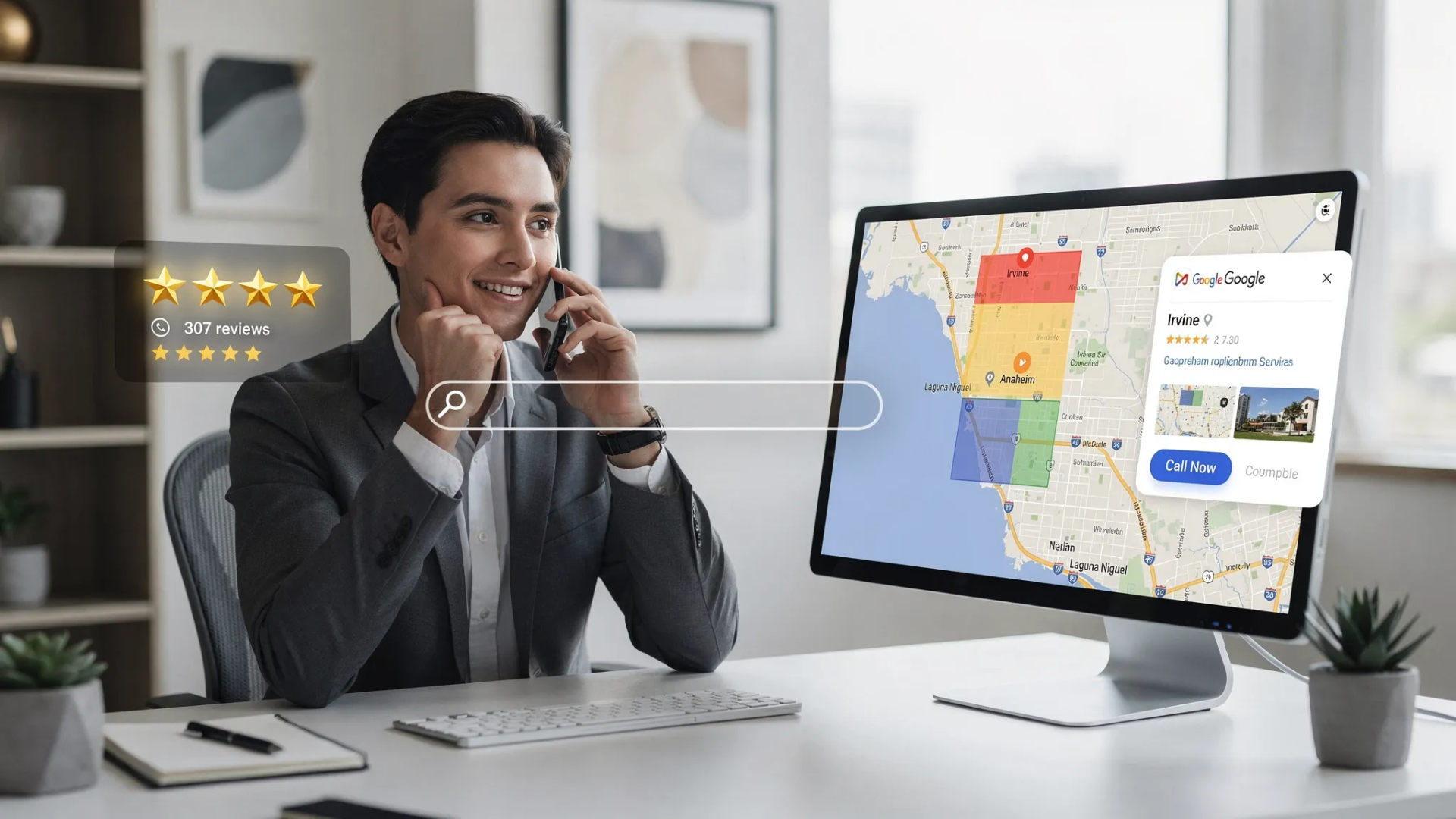
A full calendar does not start with more traffic. It starts with more of the right calls from people who need what you sell, are located where you work, and are ready to schedule.
That is where search engine marketing becomes a revenue tool instead of a visibility exercise. For an HVAC company in Laguna Niguel, a roofing contractor in Irvine, a plumber in Anaheim, or a dental practice with locations across Orange County and San Diego, the win is not simply appearing online. The win is getting the phone to ring with local prospects who already understand why you are a credible choice.
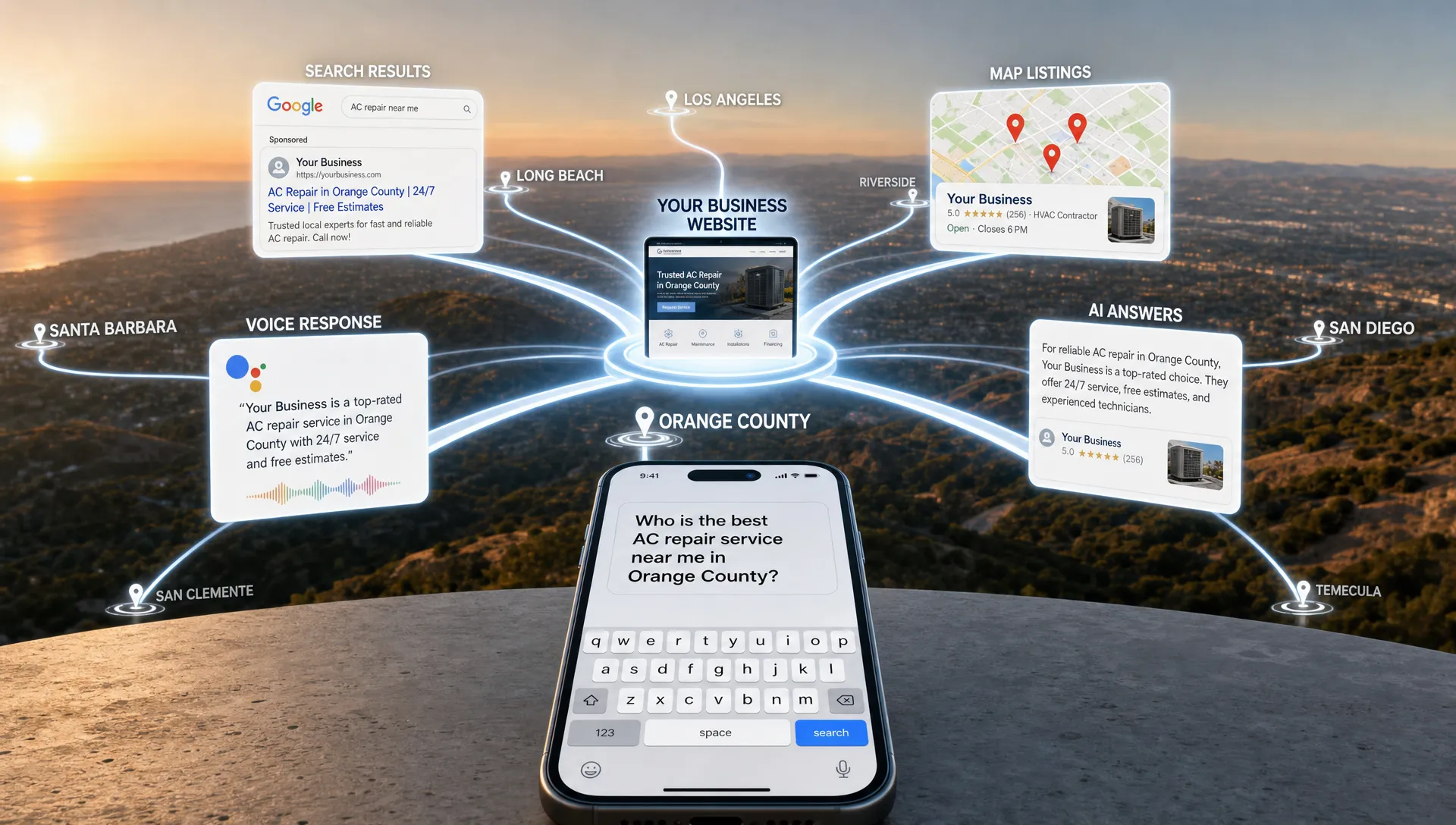
Local search has changed. Customers no longer move in a straight line from keyword to website to contact form. They compare map results, scan reviews, click call buttons, ask voice assistants, read AI summaries, and expect fast answers before they commit. Search engine marketing drives better local calls by aligning every one of those moments around intent, trust, location, and conversion.
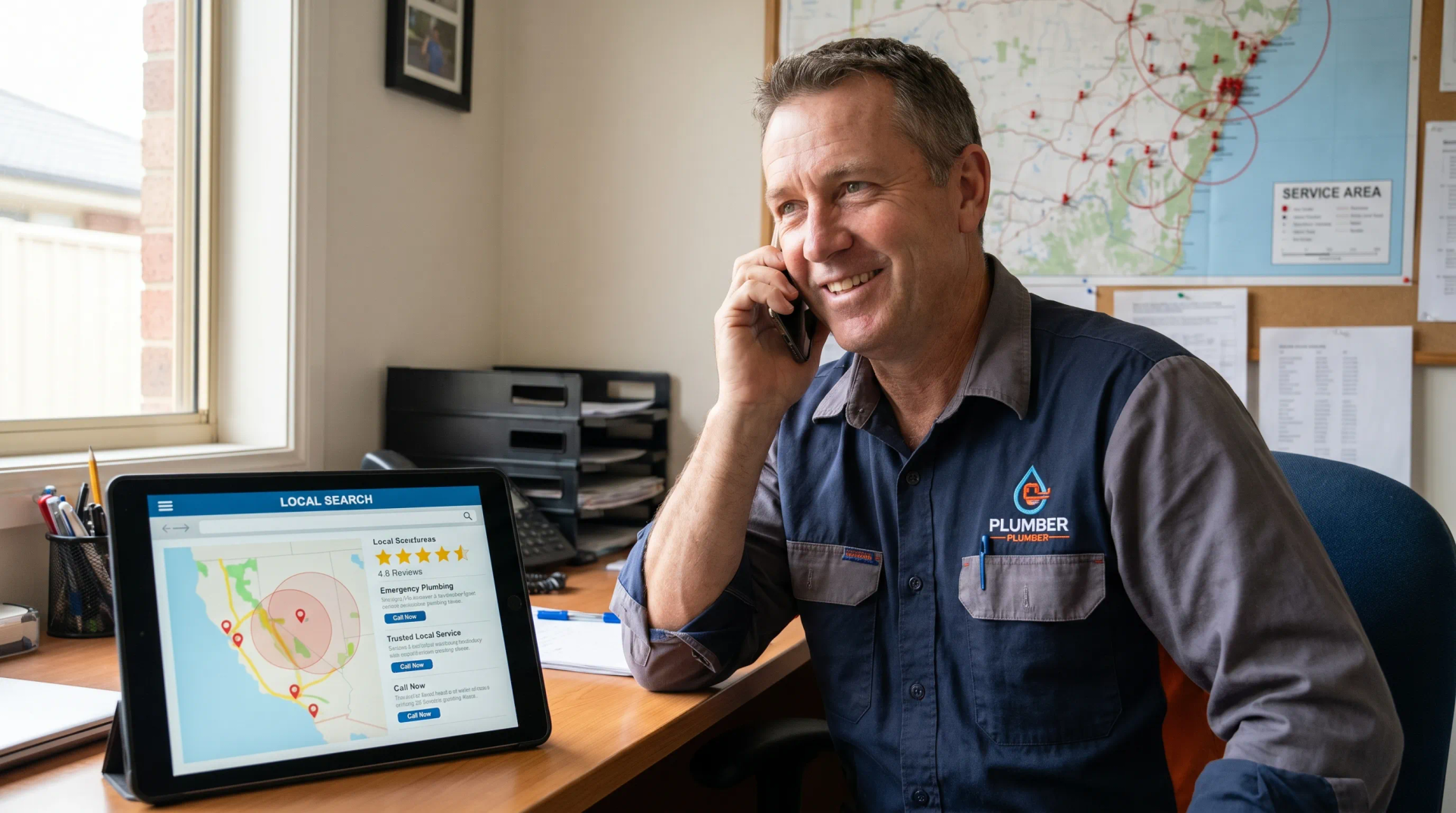
What search engine marketing means for local call generation
Some marketers use SEM to mean paid search ads only. For local businesses that depend on phone calls, it is more useful to think of search engine marketing as the complete system that helps the right person find, trust, and contact you from a search environment.
That system includes paid search, Google Business Profile visibility, local SEO, landing pages, review signals, structured data, call tracking, and increasingly, answer engine optimization for AI-driven search results. The goal is not to chase every click. The goal is to help search engines and answer engines understand when your business is the best local match for a specific customer need.
Google explains that local results are based primarily on relevance, distance, and prominence. Those three factors also explain why some calls are worth far more than others. A caller who finds you because you are relevant to their exact problem, near enough to serve them, and prominent enough to be trusted is much more likely to book.
Better local calls are different from more local calls
A marketing report that shows more calls can feel positive until the front desk explains what actually happened. Some callers are outside the service area. Some are asking for services you do not provide. Some are vendors. Some are unqualified price shoppers. Some call after hours and never reconnect.
Better local calls usually share a few traits:
- The caller is located inside your target service area.
- The caller needs a service you actually want to sell.
- The caller has a clear problem, timeline, or buying reason.
- The caller has seen enough trust signals to take the conversation seriously.
- The call can be answered, routed, tracked, and connected to booked revenue.
For a home services contractor, that might mean fewer random calls and more calls for high-value installations, repairs, or inspections. For a multi-location medical, dental, or legal practice, it might mean more calls to the correct office from patients or clients in the right neighborhood catchment.
Search engine marketing improves call quality by controlling the match between search intent and your business. If your campaigns, map presence, content, and landing pages all communicate the same message, searchers self-qualify before they dial.
How search engine marketing improves call quality
It targets the searches that show real buying intent
Not every keyword deserves your budget or attention. A person searching for general information may be early in the journey. A person searching for a service plus a city, a symptom plus a provider, or an urgent repair need is much closer to calling.
For example, an Orange County HVAC company may not want to focus its best campaign dollars on broad searches about how air conditioning works. It may want to prioritize searches tied to repair, replacement, emergency service, or specific city coverage such as Irvine, Laguna Niguel, Mission Viejo, Newport Beach, or Huntington Beach.
The same principle applies to professional practices. A dental group in San Jose or a law firm in Los Angeles should separate educational searches from appointment-ready searches. Educational content still matters, especially for authority, but call-focused SEM campaigns need tighter intent.
It matches the service area to the caller’s location
Local businesses often waste money because their search visibility is too wide, too vague, or too disconnected from real service capacity. A contractor that wants work in South Orange County should not pay for calls from neighborhoods it cannot reach profitably. A multi-location practice should not send a prospective patient to the wrong office page.
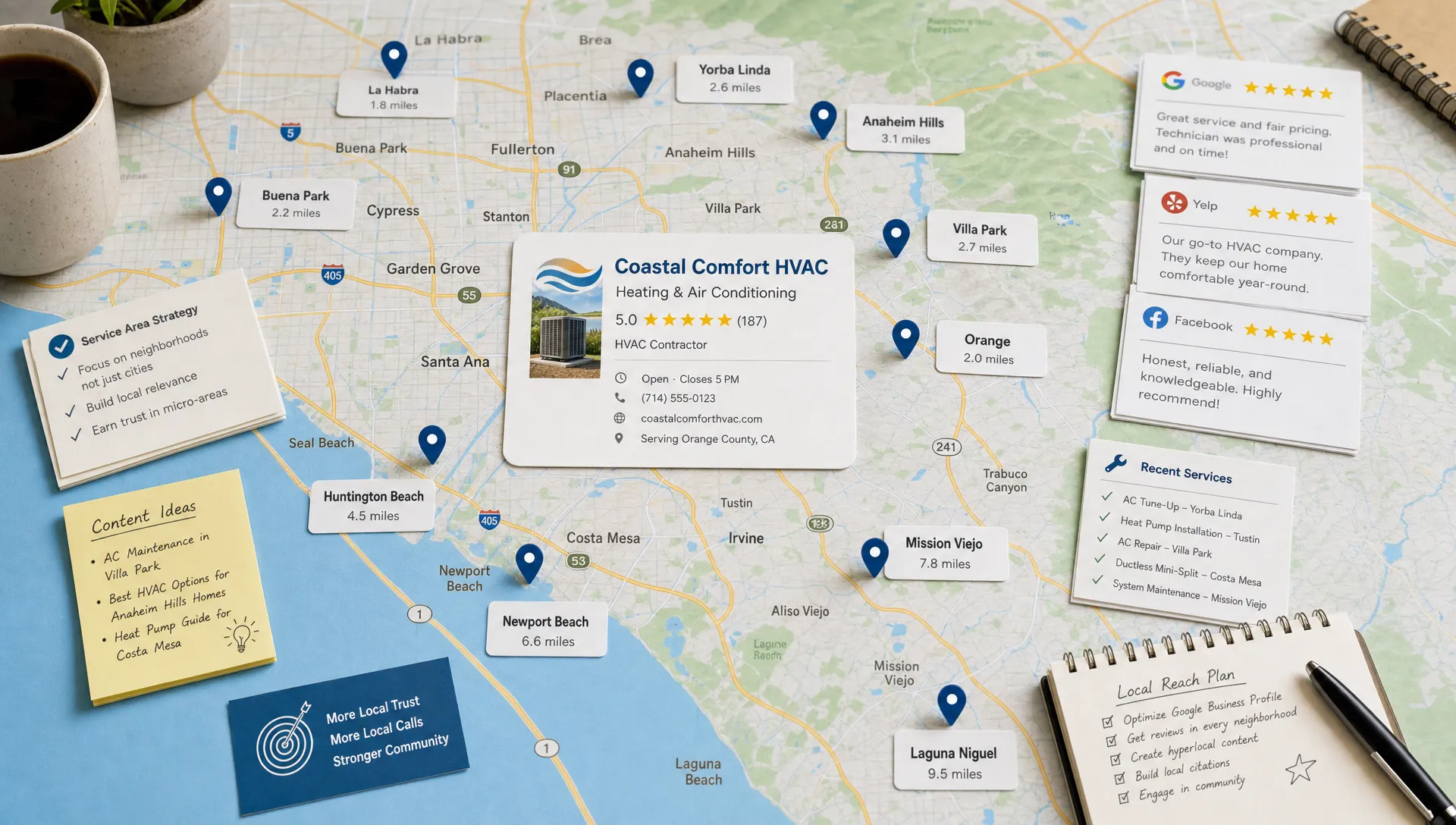
Effective search engine marketing connects geography to operations. City pages, map signals, ad location settings, Google Business Profile categories, service-area details, and review content should all reinforce where the business actually serves.
This is especially important across California, where markets behave differently. Search competition in Los Angeles is not the same as Irvine. San Diego homeowners may use different modifiers than Sacramento homeowners. Bay Area patients may compare providers differently than Central Valley customers. Local call generation improves when campaigns reflect those differences instead of using one generic statewide message.
It gives searchers a reason to call now
A call is a high-intent action. People usually call when they need clarity, availability, pricing context, scheduling help, or reassurance. Your search presence should answer enough of those questions to make the call feel like the natural next step.
Strong local SEM pages and profiles make the essentials easy to understand. What do you do? Where do you do it? Who do you help? Why should someone trust you? What happens when they call? Are you available for the problem they have today?
For contractors, this might include service-specific language, proof of local work, review excerpts, licensing or qualification references where appropriate, financing or estimate language if applicable, and clear phone prompts. For professional practices, it may include practice areas, provider trust signals, office locations, appointment expectations, insurance or consultation guidance where appropriate, and privacy-conscious intake language.
It strengthens Google Business Profile visibility
For many local searches, the phone call happens before a user ever visits your website. A searcher sees the Map Pack, compares reviews, checks distance, scans photos, and taps the call button.
That makes Google Business Profile one of the most important call-generation assets in search engine marketing. Categories, services, business descriptions, photos, posts, reviews, Q&A, and location accuracy all influence how confident a searcher feels.
A strong profile does not replace your website. It works with it. The website gives depth, proof, and conversion context. The profile gives fast local validation. Together, they reduce doubt and improve call quality.
Kell Web Solutions’ Local SEO Mastery focuses on foundational local visibility elements such as Google Business Profile optimization, citation consistency, localized content, and ongoing profile activity. Those fundamentals matter because better calls usually come from better local trust.
It builds landing pages around the call decision
A paid click or organic visit is not a win until it produces a meaningful action. If a local visitor lands on a generic homepage, they may have to work too hard to decide whether you are the right fit.
Call-focused landing pages should match the exact promise of the search. A page for emergency plumbing in Anaheim should not read like a general company brochure. A page for roof replacement in Huntington Beach should speak to that service, that location, and the questions a homeowner is likely asking before picking up the phone.
Google Ads allows businesses to use call assets to encourage direct calls from ads. That can be powerful, but only when the campaign is built around the right search terms, schedule, location, and intake process. Otherwise, call assets may create more interruptions without creating more revenue.
It makes your business easier for AI systems to understand
AI search results, voice assistants, and answer engines are changing how local prospects choose businesses. A homeowner might ask for the best HVAC company near Laguna Beach. A patient might ask which dental office near Irvine offers a specific service. A client might ask for a local attorney with experience in a particular matter.
In these moments, your business needs more than a keyword-optimized page. It needs clear entity signals, consistent business information, structured content, reviews, local proof, and direct answers to real questions. That is the purpose of Answer Engine Optimization: making the business understandable, trustworthy, and selectable when AI-driven platforms summarize options.
For local call generation, this matters because AI systems can influence who gets considered before a searcher ever visits a website. If your business is invisible or unclear to those systems, you may lose the call before you know it existed.
It tracks calls back to business outcomes
The best search engine marketing programs do not stop at impressions, clicks, or call volume. They connect search activity to booked appointments, qualified opportunities, and closed revenue.
At minimum, local businesses should review call data by source, campaign, city, service line, time of day, and outcome. A campaign that produces cheap calls may be expensive if those calls do not book. A campaign with a higher cost per call may be profitable if it attracts high-value customers.
If you record calls for quality review, remember that California has strict consent rules. Use clear disclosures, configure systems carefully, and consult legal counsel before recording or storing call audio.
Why missed calls can erase search marketing gains
Search engine marketing can create demand, but it cannot answer the phone for you unless your intake system is prepared. This is where many local businesses lose money. They invest in ads, SEO, and content, then miss calls during peak demand or route callers to staff who are not ready to qualify and schedule.
For home services, the intake experience should quickly confirm the problem, location, urgency, and next step. For professional practices, it should confirm fit, office location, appointment type, and any required intake details. The caller should never feel like they have to explain your own services to you.
This is also where the often-cited reality of missed-call loss becomes practical: many local callers do not patiently wait for a callback. They move to the next visible provider. If your SEM produces a qualified local call and your business misses it, a competitor may capture the revenue.
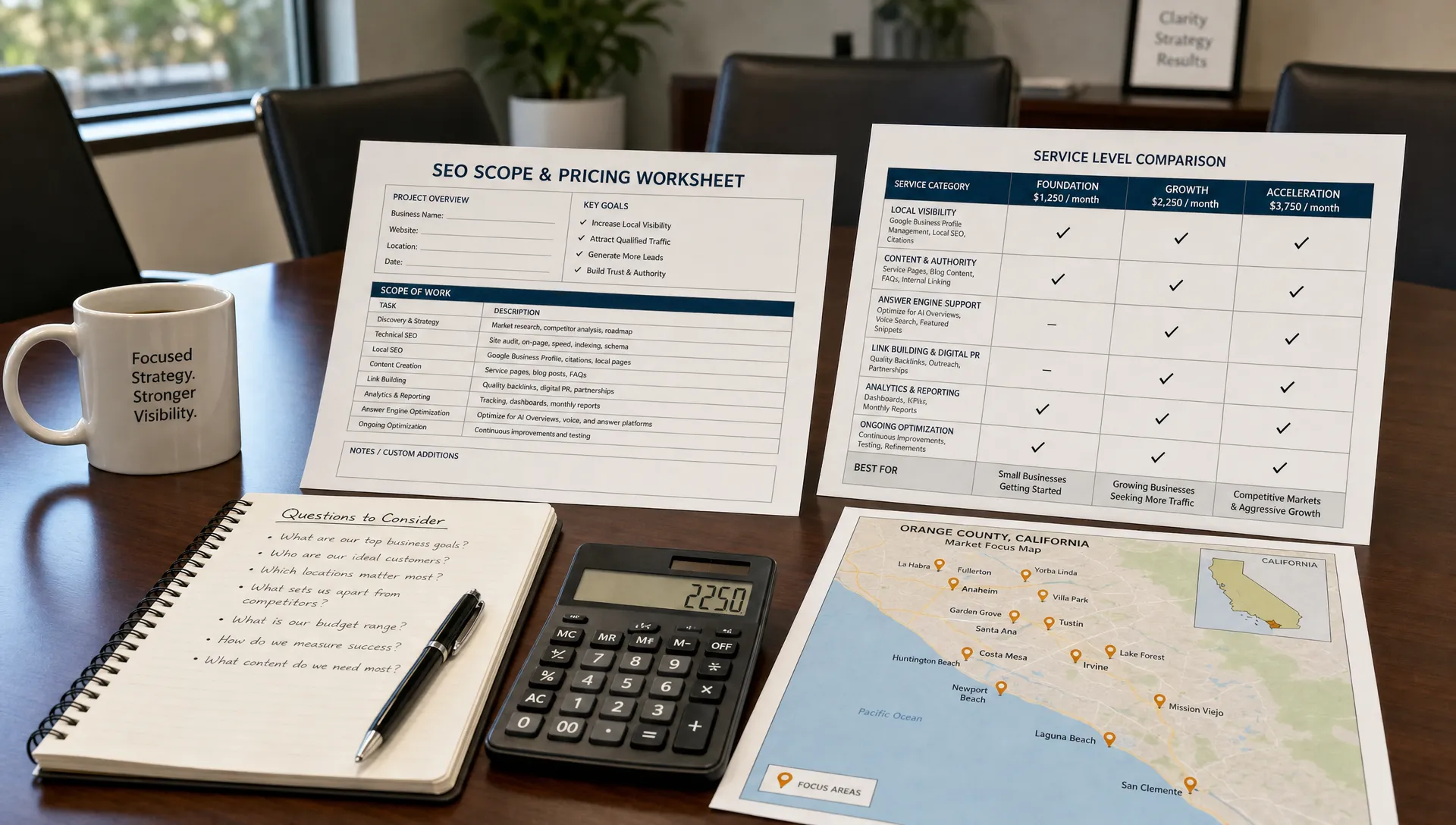
A practical 90-day SEM plan for better local calls
A local call strategy does not need to start with a massive campaign. It should start with clarity, measurement, and tighter alignment between search intent and intake.
For a contractor in Orange County, this might mean narrowing ad spend to the most profitable services, improving Map Pack trust signals, and building city-specific pages for Irvine, Anaheim, Huntington Beach, Laguna Niguel, and Newport Beach. For a multi-location practice, it might mean cleaning up location pages, aligning each office with its neighborhood demand, and measuring call outcomes by location.
Common SEM mistakes that reduce local call quality
One of the biggest mistakes is optimizing for visibility without qualifying the audience. A page can rank, an ad can get clicks, and a profile can get calls while still failing to create profitable conversations.
Another mistake is treating every California market the same. Los Angeles, San Diego, San Jose, Sacramento, Fresno, and Orange County all have different competitive pressures, local language patterns, and service expectations. Localized marketing should reflect that.
Businesses also hurt call quality when they separate SEO, paid search, reviews, and intake into disconnected silos. Searchers do not experience your marketing in silos. They see your ad, your map listing, your reviews, your website, your photos, your AI summary, and your call experience as one trust journey.
Finally, many businesses fail to update their strategy as search behavior changes. AI Overviews, voice assistants, and answer engines are pushing local marketing toward clear answers, entity authority, and machine-readable trust signals. Traditional keyword work still matters, but it is no longer enough by itself.
Where Kell Web Solutions fits
Kell Web Solutions helps California businesses turn search visibility into more confident local conversations. The approach is especially relevant for home services contractors and multi-location professional practices that depend on geography-specific demand.
For businesses that need durable local visibility, Local SEO builds the foundation. For companies preparing for AI-driven discovery, Answer Engine Optimization helps clarify expertise and trust for answer engines. For contractors that need neighborhood-level authority, the Hyperlocal Authority Builder supports a broader local footprint through targeted authority assets. For businesses that also need qualified outbound conversations, Profit Accelerator provides a managed outreach system designed to create pre-warmed meetings.
The important point is not which tactic sounds most advanced. The important point is whether the system produces better conversations with better-fit prospects.
Frequently Asked Questions
How does search engine marketing generate better local calls? Search engine marketing improves local calls by targeting higher-intent searches, aligning visibility with your real service area, strengthening trust signals, and connecting campaigns to call tracking and booked outcomes.
Is paid search or local SEO better for phone calls? Paid search can generate calls faster, while local SEO builds more durable visibility over time. Most local businesses get better results when both work together with Google Business Profile optimization, strong landing pages, and call tracking.
What makes a local call qualified? A qualified local call usually comes from someone in your service area who needs a service you provide, has a realistic timeline, and can take the next step, such as booking an appointment, inspection, estimate, or consultation.
Why does Google Business Profile matter so much for calls? Many local searchers call directly from map results without visiting a website. A complete, active, and trusted Google Business Profile can improve confidence and increase the likelihood that the right searcher calls your business.
How does AEO affect local call generation? AEO helps AI-driven platforms understand your business, services, locations, authority, and answers. As more customers use AI summaries and voice assistants, clear answer-ready signals can influence which businesses get recommended.
Should California businesses track and record calls? They should track call sources and outcomes, but call recording requires caution. California has strict consent requirements, so businesses should use proper disclosures and speak with legal counsel before recording calls.
Turn local search visibility into calls that matter
If your phone is ringing but too many calls are unqualified, missed, or disconnected from revenue, the problem may not be demand. It may be the way your search presence is built.
Kell Web Solutions helps Orange County and California businesses align local SEO, search engine marketing, AEO, and call-focused conversion strategy so visibility turns into better conversations. To discuss your local call growth strategy, call (949) 575-8553 or book a strategy call with Gregg Kell.