Turning Passion Into Profit: How Podcasting Revolutionizes B2B Marketing

Gregg Kell • December 27, 2024

Unlock the Power of Podcasting to Elevate Your Marketing Strategy and Drive Business Growth

A man and a woman are dancing in front of a crowd of people.

In the world of B2B marketing, podcasting has evolved from a niche passion project into a powerhouse marketing channel. What was once a fun experiment has become an essential tool for building brand authority, engaging audiences, and driving measurable results. Let’s dive into why podcasting is a game-changer for B2B marketers and how you can harness its potential to transform your business.


Why Podcasting is a B2B Marketing Powerhouse

Podcasting has matured significantly in recent years. Initially embraced as a creative outlet, it has now earned its place as a legitimate and impactful marketing channel. Businesses are recognizing that podcasts offer more than entertainment; they are a direct, consistent, and personal way to reach their audience. By notifying listeners directly on their devices, podcasts create a unique, ongoing connection that few other channels can match.

Key drivers of this evolution include:

  • Audience Engagement: Podcasts build a loyal following that eagerly anticipates new episodes.
  • Content Longevity: Episodes remain evergreen, providing value long after publication.
  • Direct Access: Podcasts connect brands with audiences directly, bypassing traditional barriers.


Podcasting as a Channel, Not Just Content

One common misconception is viewing podcasts as mere content pieces. Instead, think of them as an evergreen channel that funnels content on a regular schedule. This shift in mindset allows marketers to position podcasts as an integral part of their overall strategy.

Here’s why this perspective matters:

  • Notification Power: Episodes automatically reach your audience via notifications, fostering consistent engagement.
  • Strategic Integration: Podcasts can amplify broader marketing campaigns, such as webinars or product launches.
  • Content Funnel: Podcasts serve as a distribution channel for key messages, thought leadership, and brand storytelling.


How to Integrate Podcasts into Your Marketing Strategy

Once you embrace podcasting as a channel, the next step is integration. Here’s how to make it work within your multichannel marketing strategy:

  1. Align with Campaigns: Review your annual content calendar to identify major initiatives, such as webinars or product launches. Create episodes that align with these events to amplify their reach.
  • Example: If hosting a webinar titled “5 Keys to ABM Success,” produce a podcast series where each episode explores one key topic leading up to the event.
  1. Leverage Video: Record video alongside audio to expand your reach. Publish episodes on platforms like YouTube and social media, catering to audiences who prefer visual content.
  2. Cross-Promote: Use podcasts as part of a cohesive strategy alongside email campaigns, social ads, and co-marketing initiatives to maximize impact.


Expanding Reach with Video Content

Video is a powerful complement to podcasting. By recording episodes on platforms like Riverside.fm or Zoom, you can easily create video content alongside your audio recordings. This dual approach offers several benefits:

  • YouTube Integration: Publish episodes directly on YouTube, reaching its massive user base.
  • Social Media Clips: Create short, engaging video clips to promote episodes on social platforms.
  • Audience Diversification: Attract viewers who prefer video content, increasing your overall audience.


Podcasting in Account-Based Marketing (ABM)

Podcasting aligns perfectly with ABM strategies, offering unique opportunities for relationship-building and revenue generation. Here’s how to leverage it:

  1. Reconnect with Dormant Accounts: Invite contacts from inactive accounts to be guests on your show, using the opportunity to reestablish relationships.
  2. Engage Target Accounts: Identify key prospects and propose guest appearances, creating a non-salesy entry point for future conversations.
  3. Co-Marketing Opportunities: Collaborate with podcast guests on co-marketing efforts, further strengthening connections.


Measuring Podcast ROI and Proving Value

Demonstrating the tangible value of podcasting is essential for gaining leadership buy-in. While traditional podcast metrics like downloads and listens are helpful, advanced tools like Casted’s Advanced Hosting plan provide deeper insights, such as:

  • Attribution Tracking: Understand how podcasts contribute to the customer journey.
  • Account-Level Data: Identify which accounts are engaging with your content.
  • Lead Insights: Track which episodes drive the most leads and conversions.

These advanced analytics enable marketers to showcase podcasting’s direct impact on business growth, making a compelling case for its inclusion in the marketing budget.


The Future of Podcasting in B2B Marketing

Looking ahead, podcasting’s role in B2B marketing will only continue to expand. Key trends to watch include:

  • Video Integration: The lines between podcasting and video content will blur further, with platforms like YouTube playing a central role.
  • Branded Media Networks: Businesses will create multiple shows, effectively building their own media networks and unlocking new revenue streams.
  • Internal Communications: Enterprises will adopt podcasts for internal messaging, leadership updates, and team engagement.


Podcasting is no longer just a passion project; it’s a transformative marketing channel that drives engagement, builds relationships, and delivers measurable results. By embracing podcasting as a core part of your strategy, you can position your business at the forefront of B2B marketing innovation. Ready to amplify your marketing efforts? Start leveraging the power of podcasting today!
June 18, 2026
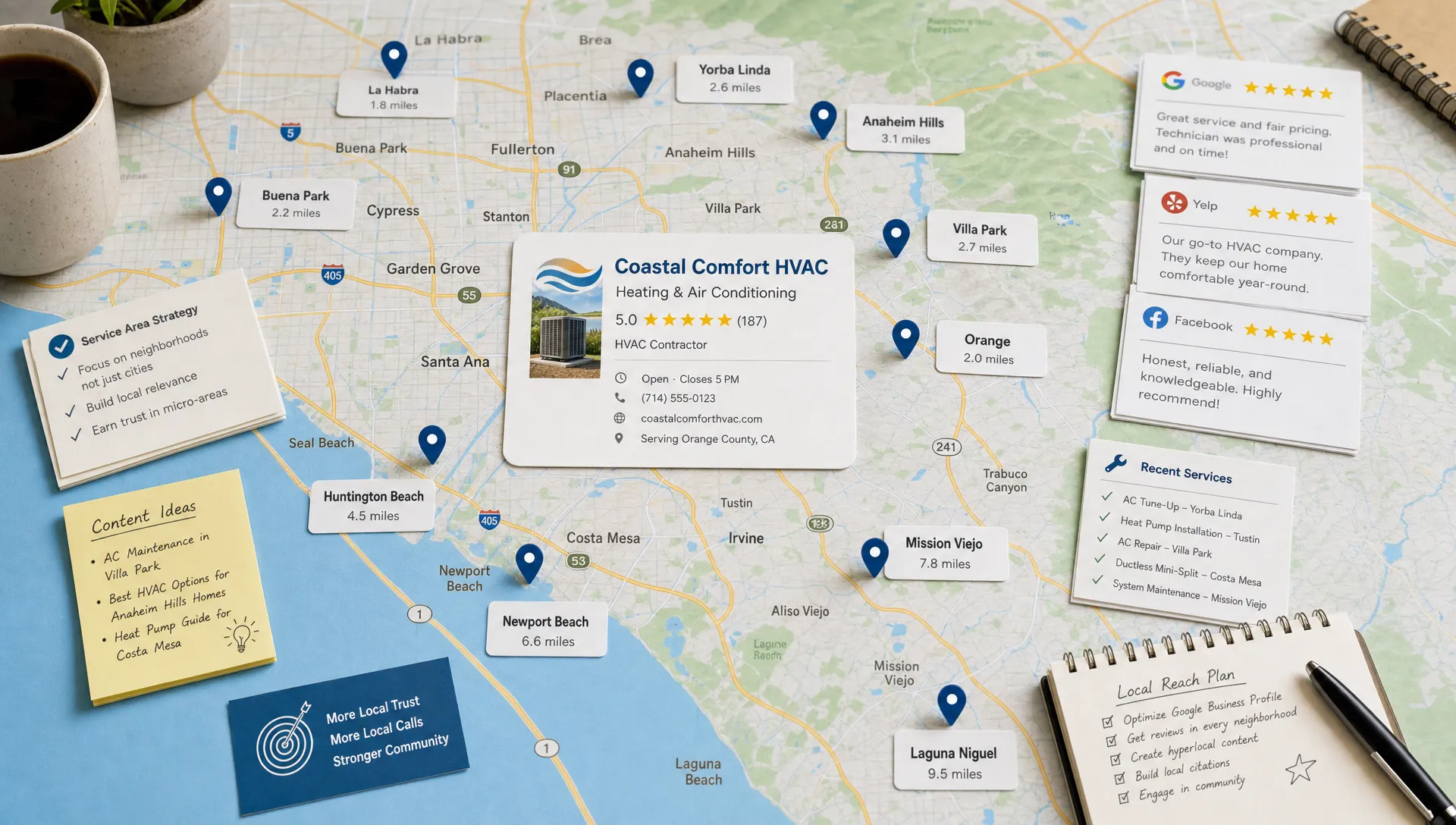
 Orange County is crowded with capable contractors. A homeowner in Irvine can compare five HVAC companies before lunch. A property manager in Newport Beach can ask Google, ChatGPT, or a voice assistant for a plumber without ever visiting a website. A remodeler in Laguna Beach may be judged by reviews, photos, and local proof before the first call happens. That is why local marketing for contractors has to be more precise than generic advertising. You are not trying to reach everyone in California. You are trying to become the obvious, trusted choice when someone nearby needs your exact service, in your exact service area, right now. For Orange County contractors, the best marketing ideas connect three things: local search visibility, neighborhood-level trust, and fast conversion into calls or estimate requests. Google’s local ranking guidance centers on relevance, distance, and prominence, and those same principles now influence how AI-driven search tools interpret which businesses deserve to be recommended.
June 18, 2026
The San Francisco Bay Area runs on booked meetings. From SoMa tech startups to Oakland professional services firms, growth depends on a full calendar. But most businesses waste more time chasing appointments than closing them.  The Bay Area's competitive market makes this worse. Prospects get dozens of outreach messages daily. Generic cold emails land in spam. Inbound alone rarely keeps a calendar full. You need a system — or an agency — that cuts through the noise. This guide covers the six best appointment booking agencies serving the San Francisco Bay Area. What are the best appointment booking agencies in the San Francisco area? The top options span two distinct models. Managed outreach services — like Kell Web Solutions — actively prospect and book qualified leads on your behalf. B2B appointment setting agencies use human SDRs and AI to book meetings for enterprise and growth-stage companies.
June 15, 2026
 A marketing firm can make a dashboard look busy. That is not the same as growing local revenue. For an Orange County contractor, revenue means booked HVAC jobs in Irvine, emergency plumbing calls in Huntington Beach, roof replacement estimates in Anaheim, and remodel consultations in Laguna Niguel. For a multi-location dental, medical, or legal practice, it means the right prospects choosing the right office within the right neighborhood catchment. That is why choosing between marketing firms in 2026 requires a different scorecard. Rankings still matter. Ads still matter. Websites still matter. But local buyers now move through Google Maps, AI Overviews, voice assistants, reviews, directory profiles, neighborhood content, and referral signals before they ever fill out a form. The right firm does not just “do marketing.” It builds a system that turns local intent into confident calls, consultations, and booked work. Below is a practical framework for choosing a marketing partner that is accountable to revenue, not vanity metrics. Start by defining what “local revenue growth” means Before you talk to agencies, define the business outcome you actually need. Too many local businesses start with a vague request like “we need SEO” or “we need more leads.” A stronger starting point is: “We need more qualified calls from homeowners in Newport Beach for high-margin HVAC replacement jobs,” or “We need more booked consultations for our Irvine and San Diego offices.” That distinction changes everything. A generic campaign might chase traffic from anywhere. A revenue-focused local campaign identifies the service lines, cities, neighborhoods, customer questions, and conversion paths that produce profitable work. Use a simple scorecard like this when evaluating proposals:
June 15, 2026
 A lower cost per lead can look good in a report and still hurt your business. If the phone rings with price shoppers outside your service area, renters who cannot approve the work, or patients and clients who do not match your intake criteria, the campaign is not efficient. It is simply cheaper noise. For California contractors and multi-location professional practices, the better goal is lowering cost per qualified lead . That means your digital advertising is not just generating clicks, calls, and forms. It is producing real opportunities: service calls, estimates, consultations, and appointments that fit your market, your margins, and your capacity. In Orange County, Los Angeles, San Diego, San Jose, Sacramento, and other competitive California markets, paid media costs can rise quickly because so many businesses are bidding on the same urgent local intent. The solution is not always to spend less. It is to make every dollar more selective, better tracked, and better supported by trust signals before the prospect ever calls. Start With the Metric That Actually Matters Cost per qualified lead is different from cost per lead. A generic lead is anyone who fills out a form, calls, chats, or books a slot. A qualified lead is someone who matches your service area, service type, urgency, budget range, and next-step criteria. The basic formula is simple: Cost per qualified lead = total ad spend ÷ number of qualified leads But the discipline behind the number is where most campaigns fail. If your ad platform counts every form fill as a conversion, it will optimize toward volume. If you teach the system which leads became booked estimates, consults, or revenue opportunities, it can optimize toward quality.
June 12, 2026
 Traffic is not the win. A ringing phone with the right person on the other end is the win. For California contractors and multi-location professional practices, website advertising has changed. Buying clicks is no longer enough, especially when AI answers, map results, Local Services Ads, and voice assistants can intercept the customer before they ever browse a traditional website. The businesses that grow are the ones that connect every visit to a clear next action: call, schedule, request an estimate, or start a qualified consultation. That means your website cannot function like a digital brochure. It has to work like a call-generation system, built around intent, trust, geography, and fast response. What website advertising should mean in 2026 Website advertising is often treated as traffic generation. A business runs Google Ads, posts on social media, optimizes a Google Business Profile, publishes a few service pages, and hopes the phone rings. That approach leaves too much to chance. A stronger definition is this: website advertising is the complete system that attracts the right local visitor, proves you are the right choice, and makes the next call feel obvious. For an HVAC company in Irvine, that may mean a visitor searching for same-day AC repair lands on a page that speaks directly to their city, urgency, equipment problem, and trust concerns. For a dental group in San Jose, it may mean a prospective patient comparing providers sees credentials, locations, accepted services, reviews, and a clear consultation path without having to dig. The difference between a visit and a qualified call usually comes down to four questions: Does the page match the visitor's exact problem? Does the visitor believe you serve their city or neighborhood? Does the page prove enough trust before asking for action? Does the call path remove friction and qualify the opportunity? When those pieces line up, traffic becomes revenue potential. When they do not, more advertising often just creates more waste. Why website visits fail to become qualified calls Most businesses do not have a traffic problem first. They have an intent and conversion problem. They attract visitors who are researching, browsing, outside the service area, comparing prices only, or uncertain whether the company handles their specific need. The website then makes the problem worse by giving every visitor the same page, the same generic message, and the same vague call to action.
June 12, 2026
 If you run a roofing company in Irvine, an HVAC business in Anaheim, a dental group in San Diego, or a law firm with offices across Orange County, internet advertising can feel both essential and frustrating. You can spend money, generate clicks, and still wonder why the phone is not ringing with the right prospects. The problem is rarely that advertising “doesn’t work.” The problem is that local businesses often buy visibility before they have built the strategy, tracking, trust signals, and follow-up systems needed to turn visibility into revenue. In 2026, the margin for error is smaller. Search results are more crowded. AI Overviews and voice assistants answer more questions before a user visits a website. Paid lead costs in competitive categories keep rising. For local contractors and multi-location professional practices, avoiding the wrong moves is just as important as choosing the right channels.