The 5 Best Lead Generation Companies in San Diego
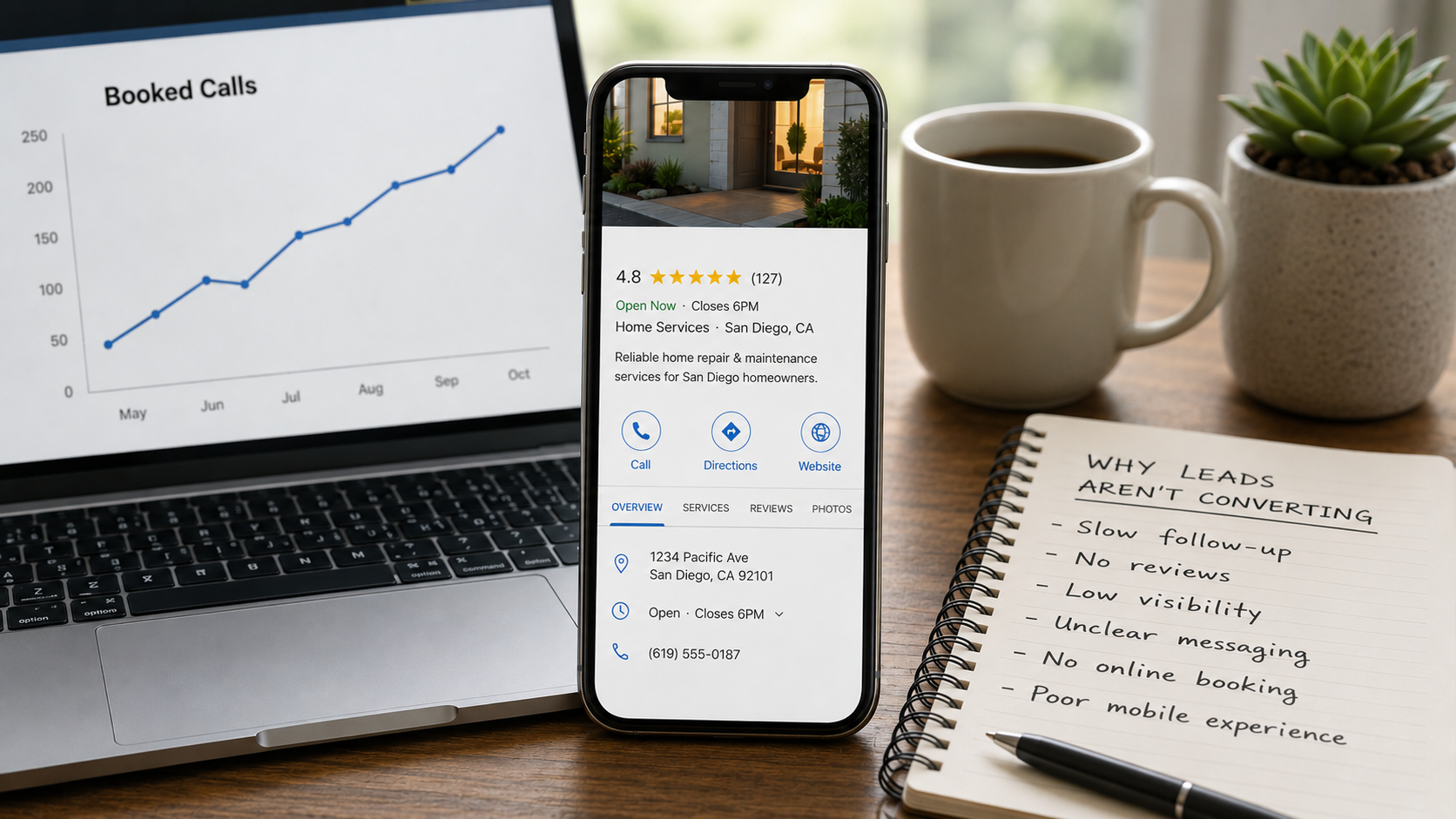
San Diego is home to more than 1.4 million residents and thousands of competing service businesses. HVAC companies, med spas, law firms, and contractors all chase the same local customers. Referrals and repeat business only go so far before the pipeline runs dry.
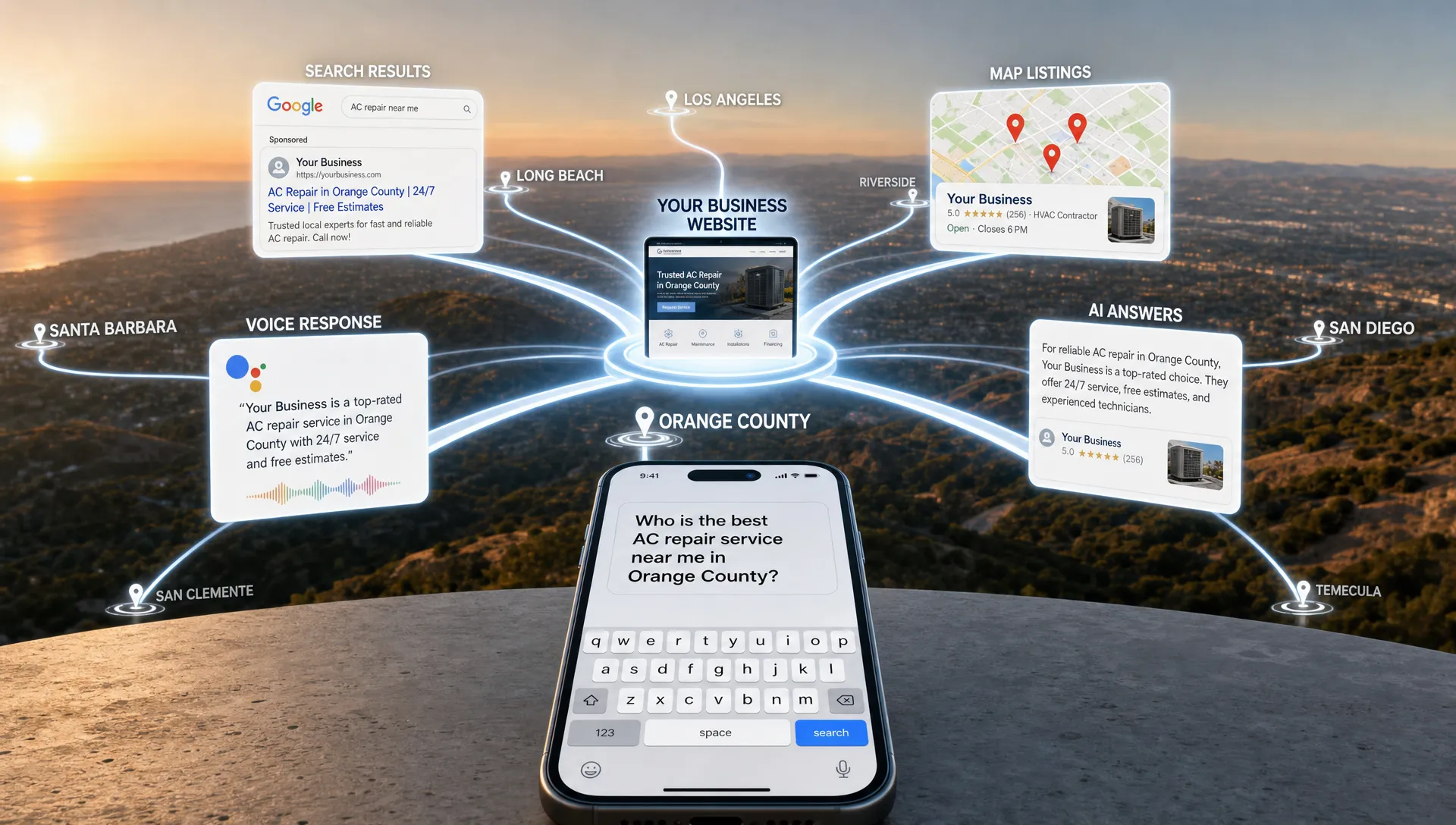
The way people find those businesses has changed fast. AI tools like ChatGPT now account for 45% of local recommendation searches, up from just 6% a year ago. A lead generation partner has to work across search, ads, and AI-driven discovery — not just Google's map pack.
The options split into two camps. Lead platforms sell you direct inquiries — pay per lead or per contact. Agencies build the organic authority that makes the phone ring without an ad budget behind every call.
Picking wrong is expensive either way. A paid platform with no follow-up system wastes spend on leads nobody calls back. An organic strategy with no local specificity can take months to show results.
This guide covers the best of both, with real pricing and trade-offs for each San Diego option.
What are the best lead generation companies in San Diego?
Five options stand out for San Diego businesses. Kell Web Solutions builds organic lead flow through AEO, local SEO, and AI-powered outreach. LocaliQ runs paid lead volume at scale for home services companies nationwide.
Power Digital brings San Diego-based growth marketing to consumer and lifestyle brands. Straight North specializes in B2B lead generation through SEO and paid search. Hibu bundles budget-friendly marketing packages for small, non-technical local businesses.
| Platform | Starting Price | Best For | Key Differentiator | Free Consultation |
|---|---|---|---|---|
| Kell Web Solutions | $500/mo (AEO) or $600/mo + $600 setup (Local SEO) | San Diego businesses wanting organic, long-term lead flow | AEO, Hyperlocal Authority Builder, and AI outreach in one system | Yes — free strategy call |
| LocaliQ | Custom, tied to ad spend | Home services companies wanting paid lead volume at scale | 512,000+ businesses served, ServiceTitan integration, Dash AI lead management | Not published |
| Power Digital | Custom | San Diego consumer and DTC brands wanting data-driven growth | Omega AI operating system for real-time campaign optimization | Yes — free marketing audit |
| Straight North | Custom | B2B and industrial companies wanting SEO-driven lead generation | 25+ years in business, 100% USA-based team, published case results | Not published |
| Hibu | Custom, low entry tier | Small businesses wanting one bundled, hands-off marketing package | Hibu One platform combines ads, SEO, listings, and site in one login | No |
1. Kell Web Solutions: San Diego's Organic Lead Generation Specialist
Disclosure: Kell Web Solutions is our own company. We think it earns a spot on this list, but we're not a neutral judge of that.
Kell Web Solutions is a boutique agency founded in 2001 by Gregg and Debbie Kell. The company is based in Laguna Beach and works across California's 45 largest cities, San Diego included. Its approach treats lead generation as an authority problem, not just an ad-spend problem.
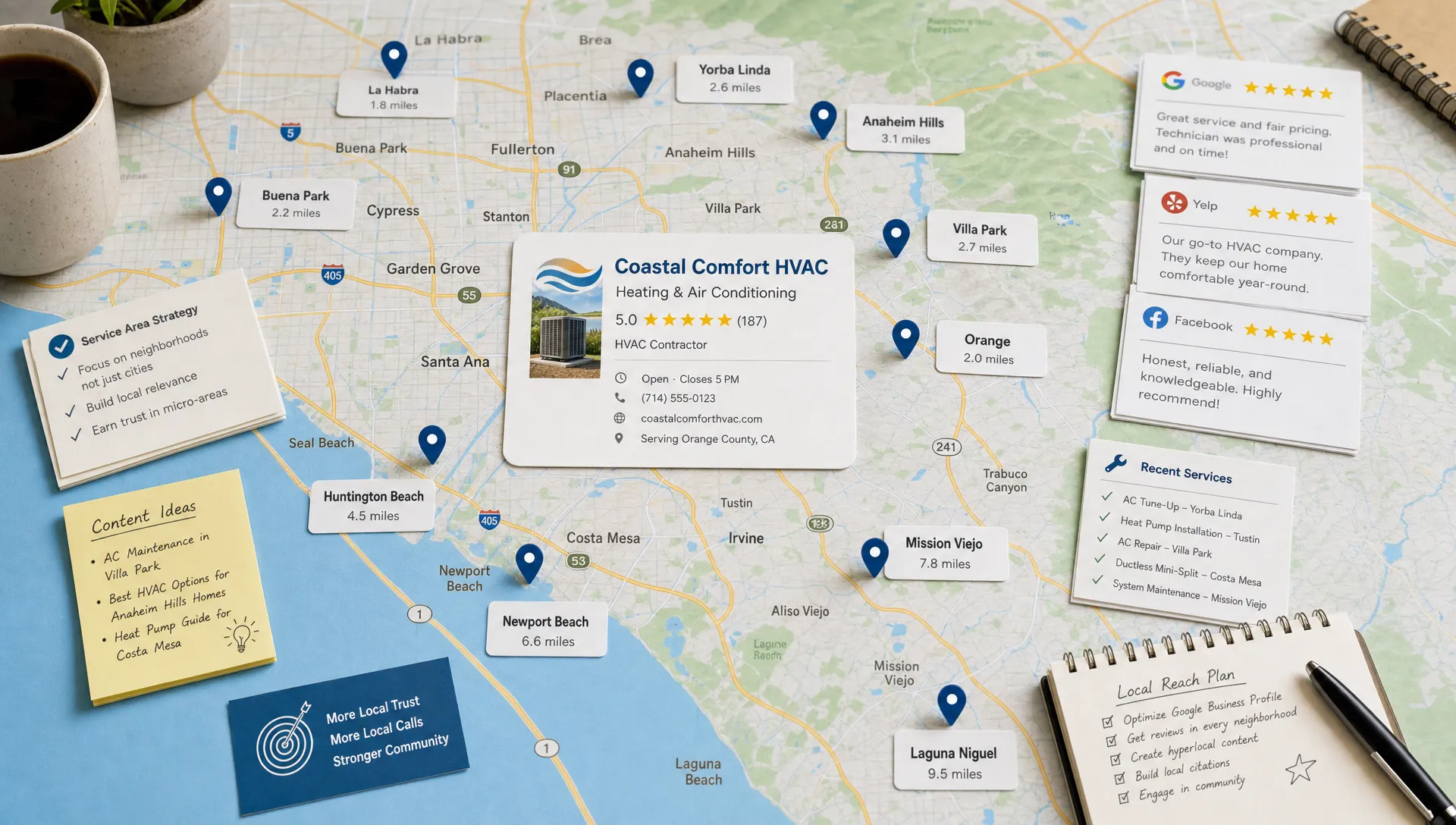
Instead of renting attention through ads, Kell builds assets that keep earning leads over time. That means Answer Engine Optimization for AI visibility, Local SEO for map pack rankings, and Hyperlocal Authority Builder's feeder-site network. On top of that sits Profit Accelerator, an AI outreach system for businesses that also want proactive pipeline building.
The pitch
Kell's core argument is that most San Diego businesses are optimizing for a search engine that's disappearing. Voice assistants and AI Overviews now answer commercial questions directly, often without sending a click to any website at all. Kell's AEO service restructures a business's digital presence so ChatGPT, Perplexity, and Google's AI results cite it by name.
The Hyperlocal Authority Builder adds geo-targeted feeder websites, monthly ViralWave blog content, and Review-Pops landing pages. Profit Accelerator runs a parallel track — AI-personalized outreach that books qualified conversations without manual prospecting. Together, the services cover both inbound authority and outbound pipeline.
What it costs
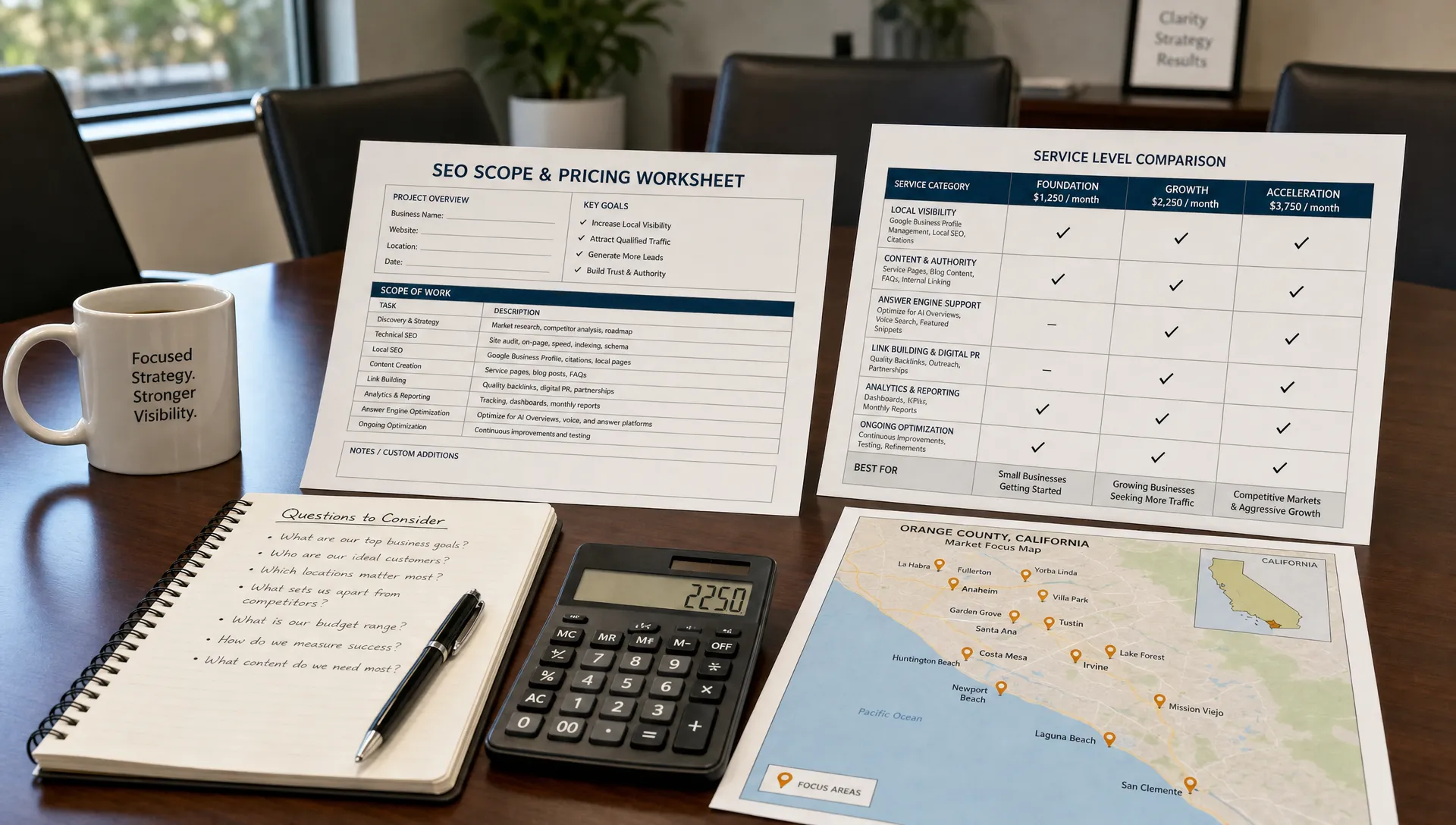
AEO starts at $500 setup and $500/month for the Essentials tier, scaling to $1,000 setup and $2,500/month for AEO Elite. Local SEO Mastery runs $600 setup and $600/month, covering one primary city plus up to three adjacent areas. The Hyperlocal Authority Builder starts at $500/month for one feeder site and a single monthly blog post.
Profit Accelerator's pricing isn't published — it's scoped during a strategy call based on outreach volume. Every service includes a free consultation before any commitment.
The trade-offs
Kell's boutique structure means founder-level access — a real differentiator against agencies that hand new clients to junior account managers. That same size is a limit for businesses wanting a massive in-house media-buying team or national paid-ad scale. Results also build over months, not days, since the strategy is organic authority rather than rented ad placements.
Who's buying it
Kell's core clients are home services contractors — HVAC, roofing, solar, plumbing, electrical — plus multi-location medical, dental, and legal practices. One HVAC client reports 15-plus years with the agency and hasn't paid for pay-per-click advertising in nearly eight years. That kind of long-term relationship is common in the client base, according to the company's own reviews.
2. LocaliQ: The Paid Lead Volume Machine for Home Services
LocaliQ is the rebranded, modernized version of ReachLocal, now owned by Gannett. It's built for businesses that want immediate, high-volume lead flow through paid channels rather than a slow-building organic strategy.
The pitch
LocaliQ buys placements across Google, Meta, TikTok, and Yelp at scale, backed by Premier and Elite partner status. Its "Dash" AI lead management tool consolidates calls, texts, chats, and form fills into a single inbox with automated follow-up. For home services businesses already running ServiceTitan for dispatching, LocaliQ's direct integration is a genuine convenience.
The company reports 512,000-plus businesses served and 283 million total leads generated across its platform. That scale gives LocaliQ a large data set to optimize ad targeting against, which smaller agencies can't easily replicate. Gannett's local media network also adds newspaper and digital news placements that a typical marketing agency can't offer.
What it costs
LocaliQ doesn't publish fixed pricing. Costs are tied to ad spend plus a management fee, which is standard for a media-buying-driven platform. Businesses should expect a sales conversation before getting a real number.
The trade-offs
LocaliQ's scale is also its weakness for owner-operators who want strategic attention. At 512,000-plus businesses served, individual accounts can feel like one of many. Results are also spend-dependent — the leads stop when the ad budget does, unlike an organic authority strategy that keeps compounding.
Who's buying it
LocaliQ's marketing leans heavily on home services imagery — plumbers, electricians, and HVAC techs are the default customer profile. The ServiceTitan integration makes it a natural fit for any San Diego contractor already standardized on that software. Multi-location retail and healthcare brands also show up in its case studies.
3. Power Digital: San Diego's Data-Driven Growth Marketing Agency
Power Digital is headquartered in San Diego, with additional offices in New York, Atlanta, and Medellín. Founded in 2012, it built its reputation serving fast-growing consumer and direct-to-consumer brands.
The pitch
Power Digital markets itself as "a technology company with an agency arm." Its proprietary Omega AI system monitors ad accounts and executes real-time optimizations, backed by an intelligence layer called Iris. The agency's stack spans paid media, SEO, content, and influencer marketing.
Client names include Crocs, ASICS, Alice + Olivia, and Aviator Nation — brands built on consumer demand rather than local search intent. That's a meaningfully different lead generation model than the map-pack, phone-call-driven approach most San Diego service businesses need.
Power Digital's team also runs incrementality analysis and marketing mix modeling. That means testing which channels actually drive revenue, not just crediting the last click. This measurement rigor is more common at bigger ad budgets than most local businesses run.
What it costs
Power Digital doesn't publish rate cards. The company offers a free marketing audit as an entry point. That gives prospective clients a no-cost look at gaps before committing to a retainer.
The trade-offs
Power Digital's DTC pedigree is a strength for consumer brands and a mismatch for home services or professional practices. A plumber or dentist chasing local phone calls isn't the client Power Digital is built around. Its multi-city footprint also means less hyperlocal, neighborhood-level focus than a boutique built specifically for one region.
Who's buying it
Power Digital's client roster skews toward funded consumer brands, e-commerce companies, and growth-stage startups. Local San Diego service businesses are a smaller slice of that base than national retail and lifestyle names. It's a strong fit for a company selling products online, less so for one filling a local calendar.
4. Straight North: B2B Lead Generation Through SEO and Paid Search
Straight North has run digital marketing campaigns for more than 25 years, with a 100% USA-based team. Its positioning is explicitly built around lead generation as the core deliverable, not a byproduct of brand awareness work.
The pitch
Straight North's stack includes national, local, and ecommerce SEO, paid search and social, plus its GoNorth! reporting platform. The agency's tagline, "Hire Your Last Agency," signals a long-term retention pitch rather than a project-based engagement. Published case studies cite a 160% jump in organic leads and 271% year-over-year lead growth for one SaaS client.
The agency also publishes a 4x return on search advertising spend for one client. That's a rare level of transparency for an agency that doesn't list pricing. Twenty-five years in business also means Straight North has weathered multiple algorithm shifts without pivoting its core lead-generation focus.
What it costs
Straight North doesn't list pricing publicly. Its CTAs point to "Talk to an Expert" conversations, not a published consultation offer. Expect a discovery call before pricing.
The trade-offs
Straight North's specialty leans B2B, industrial, and manufacturing — categories with longer sales cycles than a homeowner needing emergency repair. That focus fits professional services and B2B companies better than consumer-facing home services businesses. Its national client base also means less built-in familiarity with San Diego neighborhoods specifically.
Who's buying it
Straight North's case studies skew toward B2B, SaaS, and industrial clients rather than local home services. A San Diego manufacturer or professional services firm chasing B2B leads is a closer fit than a residential contractor. Its reporting platform also appeals to marketing teams that want transparent, self-serve data access.
5. Hibu: The Bundled Marketing Package for Small Local Businesses
Hibu traces back to the Yellow Pages era and has rebuilt itself as an all-in-one marketing platform called Hibu One. It's built for owners who want one login and one point of contact, not a stack of separate vendors.
The pitch
Hibu One combines paid ads, SEO, website design and hosting, listings management, review generation, and AI-assisted campaigns. The pitch is consolidation — one platform instead of juggling a web designer, an SEO vendor, and an ad-buying agency separately. It targets auto services, home services, medical practices, and franchises, among others.
Hibu's field sales model means most owners meet a local rep in person, not through a website form. That can be an advantage for owners who prefer a relationship over a self-serve dashboard. It's also why pricing isn't published — packages get built during that in-person conversation.
What it costs
Hibu doesn't publish rates and directs prospects to request a demo rather than a free consultation. Field sales representatives typically quote a custom package based on the services bundled in.
The trade-offs
Hibu's simplicity is the selling point and the limitation. Templated websites and standardized campaigns suit hands-off owners, but skip the hyperlocal targeting a boutique agency provides. Businesses that try Hibu and find the results generic often move to a more specialized partner.
Who's buying it
Hibu's ideal customer is a small, non-technical business owner who wants marketing handled without managing multiple vendors. Auto shops, home services companies, and local franchises make up a large share of its client base. It's less suited to businesses that want granular strategy input or a boutique, high-touch relationship.
Quick answers on choosing a lead generation partner
Why do San Diego businesses need a lead generation strategy instead of relying on referrals? Referral flow is unpredictable and doesn't scale with growth goals. A structured lead generation system — whether paid, organic, or both — creates a repeatable pipeline instead of hoping word-of-mouth holds steady.
How do I choose between a paid lead platform and an organic authority agency? It depends on timeline and budget. Paid platforms like LocaliQ deliver leads fast but stop the moment spend stops. Organic approaches like Kell's AEO and Local SEO take longer to build but keep generating leads without ongoing spend.
What's the real trade-off between cheap, bundled options and boutique agencies? Bundled platforms like Hibu are affordable and simple, but the strategy is templated. Boutique agencies cost more but bring deeper local knowledge and a strategy built around one business, not a standardized package.
Do any of these companies specialize in B2B versus consumer leads? Yes. Straight North leans B2B and industrial, while Power Digital leans consumer and DTC brands. Home services and local practices are better served by Kell, LocaliQ, or Hibu.
Is AI search visibility actually worth prioritizing yet? The data suggests yes. AI tools jumped from 6% to 45% usage for local recommendations in a single year, according to BrightLocal's latest survey. A lead generation strategy that ignores AI-driven discovery is already behind.
Can I switch lead generation providers without losing momentum? Organic strategies transfer poorly — content, citations, and authority built with one agency don't move cleanly to another. Paid platforms are easier to switch since the leads stop and restart with the ad spend, not the underlying assets.
How long does it take to see results from an organic lead generation strategy? Most agencies, Kell included, point to a three-to-six month runway before rankings and AI citations meaningfully shift. Feeder sites, content, and citation cleanup need time to be indexed and trusted before they start converting into calls.
Should a San Diego business use more than one of these companies at once? It's common to pair one, especially early on. A business might run LocaliQ or Hibu for immediate paid lead volume. Kell's AEO and Local SEO work builds toward leads that don't require ongoing ad spend.
So which one should you pick?
San Diego contractors and multi-location practices wanting durable, AI-ready authority fit Kell Web Solutions best. Businesses needing paid lead volume immediately, especially on ServiceTitan, should look at LocaliQ.
Funded consumer or DTC brands get more from Power Digital's data infrastructure than a local-focused agency. B2B and industrial companies chasing qualified leads through SEO fit Straight North's 25-year track record.
Businesses wanting one simple, bundled package without deep strategy input should consider Hibu.
Most San Diego businesses land somewhere between "needs leads now" and "needs leads that keep coming without an ad bill." That's the gap Kell Web Solutions built its model to close. Organic authority through AEO and local SEO pairs with AI outreach that fills gaps in the pipeline.
None of these five companies is a bad choice — they solve different problems at different price points. The real mistake is picking based on price alone. Look at how each one's model fits your sales cycle, budget, and how fast you need the phone to ring. Book a free strategy call to see what that would look like for your business.