September 4, 2026
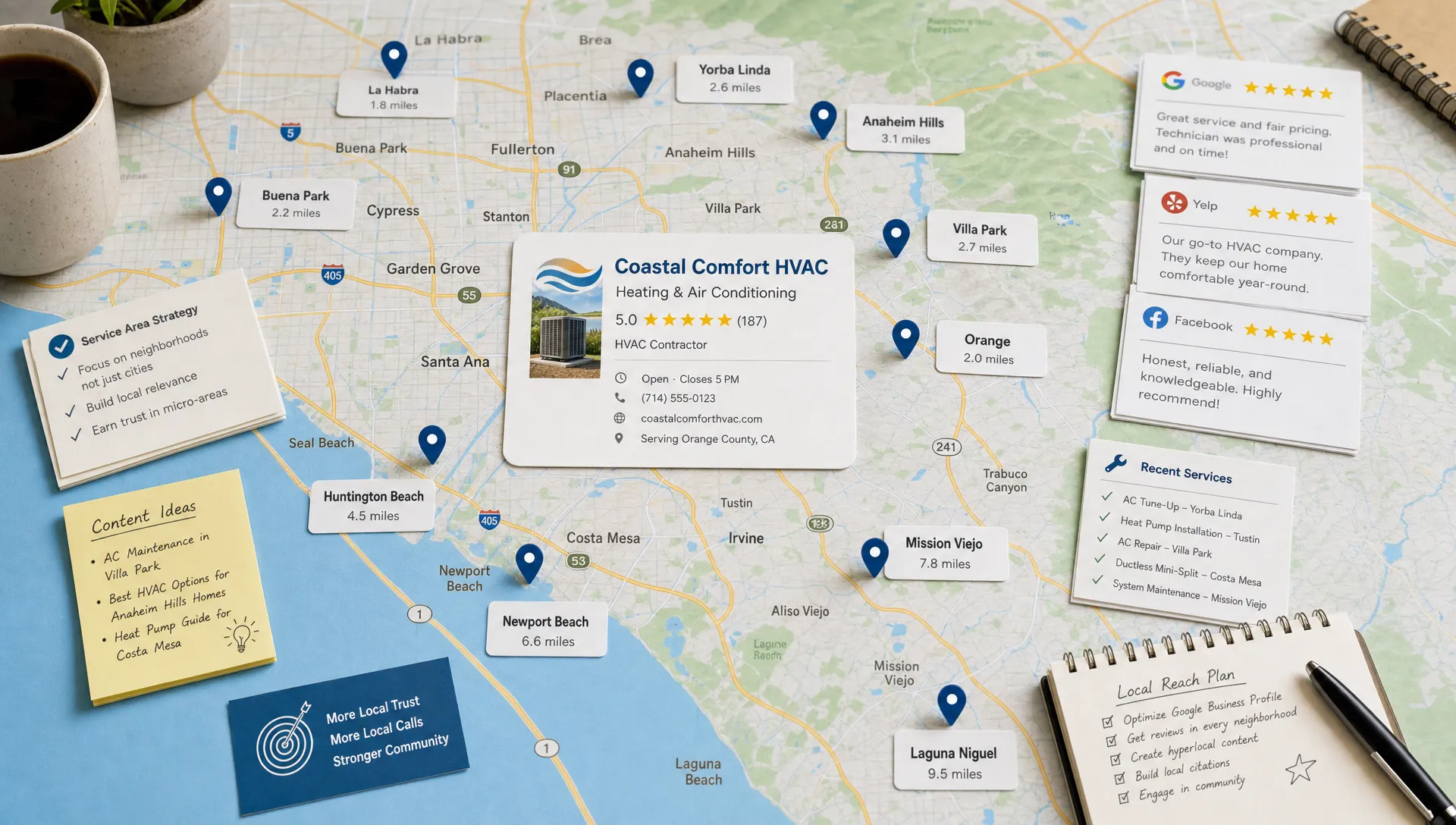
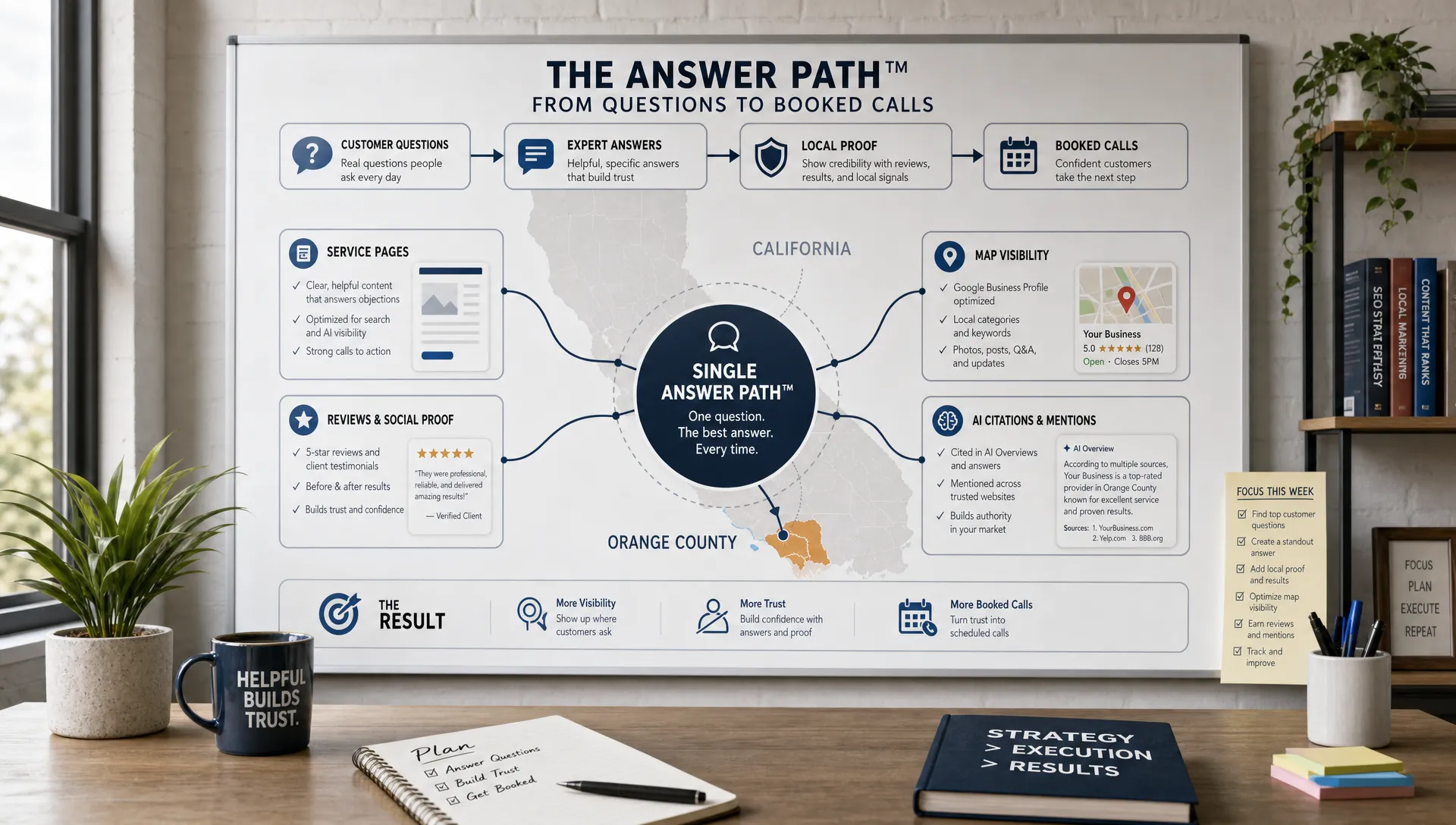
A full-service marketing agency can be useful when you need a team to do everything. But for many local service businesses, especially contractors and multi-location practices in California, the bigger problem is not a lack of activity. It is a lack of strategic direction. That is where SEO consultancy often beats full-service marketing. If your business already has a web designer, content writer, admin team, office manager, PPC vendor, or internal marketing coordinator, hiring another full-service agency may create more overlap than progress. A focused SEO consultant can step in, diagnose why visibility is not turning into calls, and give your team the strategy, priorities, and accountability needed to fix the system. For an HVAC company in Irvine, a roofing contractor in Anaheim, a plumber in Huntington Beach, or a dental group expanding across San Jose and Santa Clara, the question is no longer, “Who can post more content for us?” The better question is, “Who can show us exactly where our search visibility is breaking down and what to fix first?” What SEO consultancy really means SEO consultancy is strategic guidance for improving organic search visibility, local authority, website performance, and lead quality. Unlike a full-service agency that takes over execution, an SEO consultant typically audits, advises, prioritizes, and guides implementation. That may include reviewing your website architecture, Google Business Profile, service pages, city pages, content strategy, technical SEO, review signals, local citations, conversion paths, and emerging AI search visibility. A strong consultant does not just say, “Add more keywords.” They explain how your business is understood by Google, AI answer engines, local map systems, and real customers. For local businesses, this matters because search is no longer limited to ten blue links. Customers ask questions through Google, AI Overviews, voice assistants, map results, and comparison-style searches. Google’s own local ranking guidance emphasizes relevance, distance, and prominence as major factors in local visibility, which means your digital footprint must communicate who you are, where you serve, and why you are trusted. Full-service marketing can execute tactics. SEO consultancy decides which tactics actually deserve time, budget, and attention. When full-service marketing becomes too much Full-service marketing sounds attractive because it promises convenience. One vendor handles everything: website, SEO, ads, social media, email, content, branding, reporting, and maybe even creative. But convenience can become expensive if the strategy is generic. Local service brands often outgrow basic full-service packages when they start asking harder questions: Why are we getting impressions but fewer qualified calls? Why does our competitor show up in map results for neighborhoods we serve? Why do AI answers mention other companies but not us? Why do our service pages rank in one city but not the next? Why are we paying for content that does not generate appointments? These are not “more posting” problems. They are diagnosis problems. For example, a general contractor in Laguna Niguel may already have a decent website, regular blog content, and someone managing social media. But if the business is invisible for “kitchen remodeler near Monarch Beach” or “design-build contractor Laguna Beach,” adding more broad content may not help. The issue could be weak neighborhood relevance, poor internal linking, thin project proof, missing service-area signals, or inconsistent entity information across the web. A full-service team may keep producing deliverables because that is what the package includes. An SEO consultant asks whether those deliverables are solving the right problem. The clearest signs you need SEO consultancy instead The best time to hire an SEO consultant is when your marketing has motion but not clarity. You may not need a new agency. You may need an experienced strategist to inspect the system and tell your existing team what to change. Here are the strongest signs that consultancy is the better fit. You already have people who can execute If you have a web developer, office administrator, freelance writer, designer, or marketing assistant, you may not need a full-service agency to do the work. You need someone who can turn scattered effort into a coordinated search strategy. This is common among established Orange County contractors and professional practices. The business has grown enough to have marketing resources, but not enough to justify a full internal marketing department. A consultant gives the team a roadmap, then helps review implementation so the work stays aligned with revenue goals. Your rankings are not producing the right leads Traffic alone does not pay payroll. For HVAC, plumbing, roofing, remodeling, dentistry, and legal services, the real question is whether visibility produces qualified local conversations. A page may rank for a broad topic and still fail because it attracts homeowners outside your service area, bargain shoppers, DIY researchers, or people looking for jobs. SEO consultancy helps separate vanity visibility from revenue visibility. This is especially important in competitive California markets like Los Angeles, San Diego, Irvine, San Jose, Sacramento, Fresno, and Riverside, where broad rankings can hide weak neighborhood performance. Your agency reports activity but not decisions Monthly reports are not enough if they do not lead to better decisions. A dashboard showing clicks, impressions, rankings, and social posts may look professional, but it can still fail to answer the owner’s real concern: “What should we do next to win more profitable calls?” If your reports summarize the past without prioritizing the future, an SEO consultant can help create a practical scorecard. That scorecard should connect visibility to phone calls, form fills, booked appointments, estimate requests, close rates, and service-area performance. For more on separating vanity metrics from real business outcomes, Kell Web Solutions has a helpful guide on choosing marketing firms that actually grow local revenue . You are expanding into new service areas Expansion is where consultancy can create major savings. If a dental group wants to grow from one Orange County office into Irvine, Mission Viejo, and Newport Beach, or a plumbing company wants to expand from San Diego into Chula Vista and Oceanside, the business needs more than duplicate city pages. A consultant can help identify which locations deserve dedicated pages, where local proof is missing, how to avoid thin duplicate content, and what authority signals are needed before expecting results. This is not just SEO housekeeping. It is market-entry strategy. You are worried about AI search visibility Traditional SEO focused heavily on rankings. Today, businesses also need to think about whether answer engines can understand and cite them accurately. AI tools tend to reward clear entity signals, consistent information, structured content, strong proof, and trustworthy web presence. A full-service agency may still be working from an older keyword-and-content calendar model. SEO consultancy can help your business adapt to how customers now ask questions and how answer engines retrieve information. Kell Web Solutions addresses this shift through Answer Engine Optimization for businesses that need to be understood by AI-driven search platforms, especially in competitive local markets where being cited as a trusted answer can influence the next call. SEO consultancy vs full-service marketing: a practical comparison Neither model is automatically better. The right choice depends on your internal resources, growth stage, market complexity, and tolerance for wasted spend.