Breaking Barriers: Overcoming Challenges to AI Personalization Adoption

Gregg Kell • November 23, 2024

Unlock AI’s full potential to create personalized customer experiences and drive ROI.

A statue of liberty is standing on top of a building in the desert

The Power of AI Personalization in Marketing

Personalization is no longer a “nice-to-have” in marketing—it’s a necessity. Customers now expect tailored experiences, and businesses that deliver them gain a significant competitive edge.


Despite the clear benefits, many marketing leaders hesitate to adopt AI-native personalization due to barriers like organizational resistance, budget concerns, technical challenges, and data management issues.


To thrive in today’s competitive landscape, overcoming these obstacles is essential. Here’s how you can break through the barriers and unleash the transformative potential of AI personalization.


The Status Quo: Why Sticking to the Familiar Holds You Back

One of the biggest obstacles to AI personalization is the comfort of the status quo. Familiar methods may feel safe, but clinging to outdated processes can leave your business lagging behind competitors who embrace innovation.


1. Sticking to Basic AI Use Cases

Many companies limit AI to fundamental tasks like email automation or basic content generation. While these applications are effective, they barely scratch the surface of AI’s potential. Advanced AI can predict customer behaviors, personalize experiences in real time, and optimize entire customer journeys.


2. Misunderstanding AI Capabilities

A limited understanding of AI’s evolving capabilities can prevent businesses from exploring transformative use cases. Today’s AI goes far beyond automating repetitive tasks; it can analyze complex data, assess customer sentiment, and provide actionable insights to elevate marketing strategies.


3. Fear of the Unknown

AI’s complexity and “black box” reputation often intimidate decision-makers. This fear can discourage experimentation, even though testing new AI applications could lead to breakthroughs in customer engagement.


4. Resistance to Change

Adopting AI personalization requires shifts in processes, retraining teams, and rethinking strategies—changes that some organizations resist. However, staying in your comfort zone limits growth and stifles innovation.


Breaking Free from the Status Quo

  • To overcome these challenges, start with education and experimentation.
  • Stay informed about the latest AI advancements and how they’re transforming customer experiences.
  • Launch pilot programs to test new AI applications on a small scale before committing to larger investments.
  • Foster a culture of curiosity by engaging stakeholders and encouraging openness to change.

Breaking free from the status quo positions your brand as a leader in delivering personalized, impactful experiences that set you apart from the competition.


Budget Concerns: The Cost Barrier to AI Personalization

Another common barrier is the perception that AI personalization is too expensive. However, the reality is that AI tools are becoming more accessible, scalable, and cost-effective.


1. The Cost Perception Problem

AI personalization is often misunderstood as an expensive, exclusive solution. In truth, modern AI platforms can be tailored to fit various budgets, allowing businesses of all sizes to benefit from its capabilities.


2. Fear of Uncertain ROI

Investing in AI can feel risky, especially in uncertain economic times. However, thoughtful implementation of AI personalization often leads to significant ROI, including:

  • Increased customer loyalty
  • Higher conversion rates
  • Reduced customer acquisition costs
  • Overcoming Budget Barriers
  • To address cost concerns, take a strategic and phased approach:
  • Educate your team about the real costs and potential returns of AI personalization.
  • Break the investment into manageable phases, starting with small pilot projects to demonstrate quick wins.
  • Highlight the long-term savings from streamlined processes and optimized marketing spend.


When viewed as a long-term investment rather than a short-term expense, AI personalization becomes an opportunity to drive growth and efficiency.


Transform Your Customer Experience with AI

The journey to AI personalization may have its challenges, but the rewards are worth the effort. By addressing barriers like resistance to change and budget concerns, your business can unlock the full potential of AI to deliver truly personalized customer experiences.


Ready to take the first step?

At Kell Web Solutions, we specialize in helping businesses implement AI-driven personalization strategies that maximize ROI and customer satisfaction. From pilot projects to full-scale deployments, we’re here to guide you every step of the way.


📞 Contact us at 909.362.3131 to schedule a consultation and explore how AI personalization can transform your marketing strategy.

👉 Don’t let barriers hold you back. Let’s build a personalized future for your customers, together.
June 18, 2026
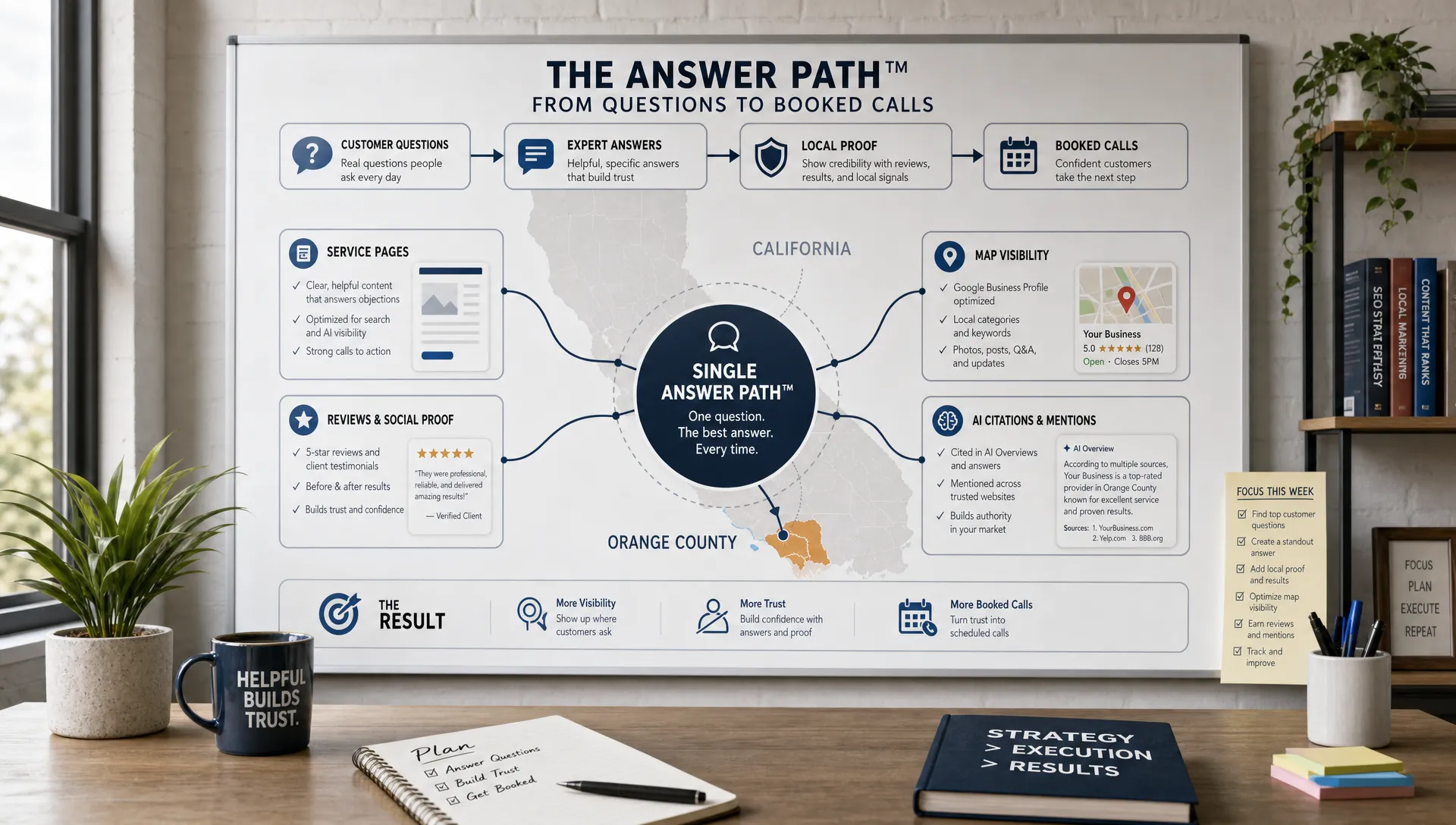
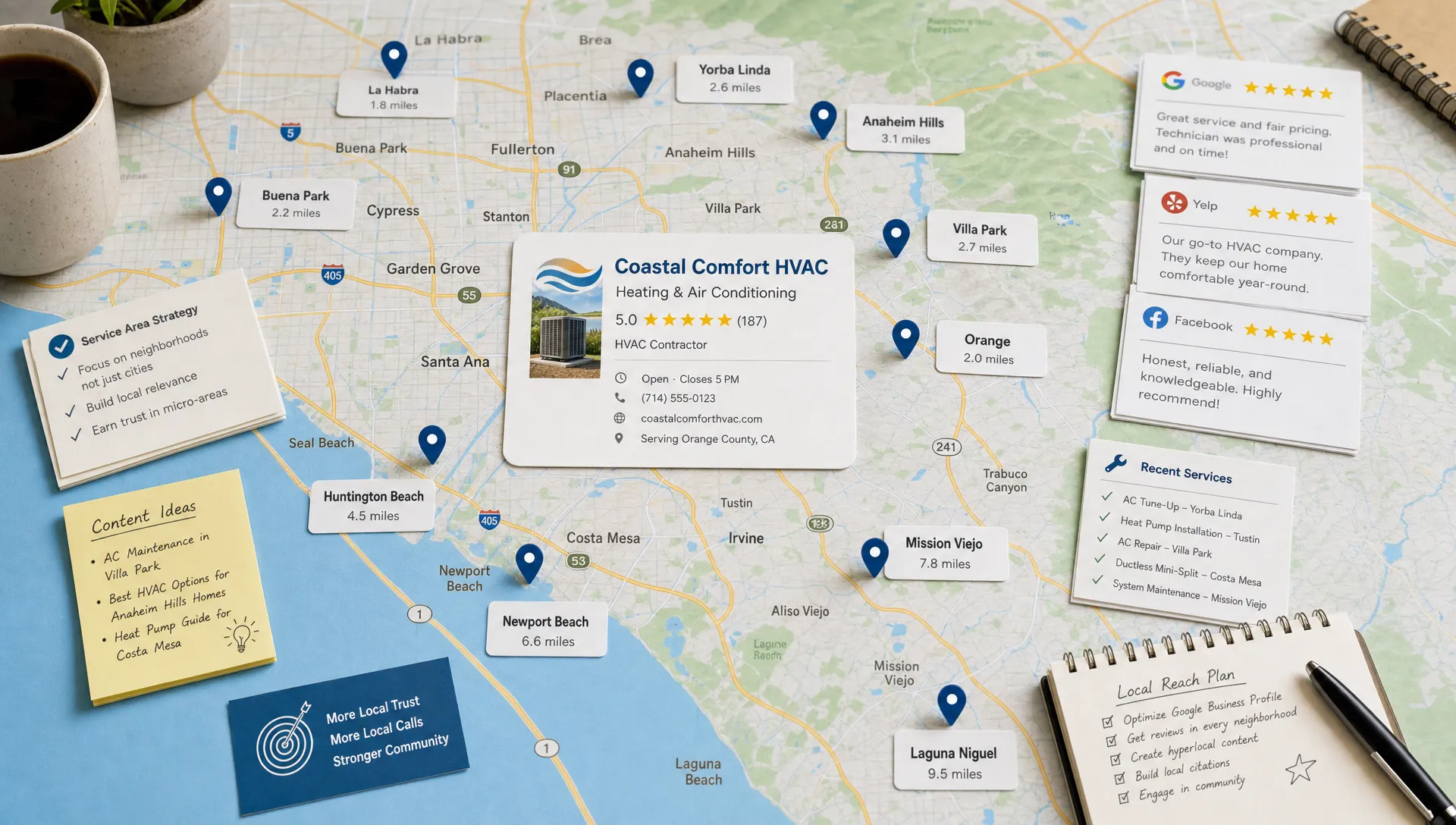
 Orange County is crowded with capable contractors. A homeowner in Irvine can compare five HVAC companies before lunch. A property manager in Newport Beach can ask Google, ChatGPT, or a voice assistant for a plumber without ever visiting a website. A remodeler in Laguna Beach may be judged by reviews, photos, and local proof before the first call happens. That is why local marketing for contractors has to be more precise than generic advertising. You are not trying to reach everyone in California. You are trying to become the obvious, trusted choice when someone nearby needs your exact service, in your exact service area, right now. For Orange County contractors, the best marketing ideas connect three things: local search visibility, neighborhood-level trust, and fast conversion into calls or estimate requests. Google’s local ranking guidance centers on relevance, distance, and prominence, and those same principles now influence how AI-driven search tools interpret which businesses deserve to be recommended.
June 18, 2026
The San Francisco Bay Area runs on booked meetings. From SoMa tech startups to Oakland professional services firms, growth depends on a full calendar. But most businesses waste more time chasing appointments than closing them.  The Bay Area's competitive market makes this worse. Prospects get dozens of outreach messages daily. Generic cold emails land in spam. Inbound alone rarely keeps a calendar full. You need a system — or an agency — that cuts through the noise. This guide covers the six best appointment booking agencies serving the San Francisco Bay Area. What are the best appointment booking agencies in the San Francisco area? The top options span two distinct models. Managed outreach services — like Kell Web Solutions — actively prospect and book qualified leads on your behalf. B2B appointment setting agencies use human SDRs and AI to book meetings for enterprise and growth-stage companies.
June 15, 2026
 A marketing firm can make a dashboard look busy. That is not the same as growing local revenue. For an Orange County contractor, revenue means booked HVAC jobs in Irvine, emergency plumbing calls in Huntington Beach, roof replacement estimates in Anaheim, and remodel consultations in Laguna Niguel. For a multi-location dental, medical, or legal practice, it means the right prospects choosing the right office within the right neighborhood catchment. That is why choosing between marketing firms in 2026 requires a different scorecard. Rankings still matter. Ads still matter. Websites still matter. But local buyers now move through Google Maps, AI Overviews, voice assistants, reviews, directory profiles, neighborhood content, and referral signals before they ever fill out a form. The right firm does not just “do marketing.” It builds a system that turns local intent into confident calls, consultations, and booked work. Below is a practical framework for choosing a marketing partner that is accountable to revenue, not vanity metrics. Start by defining what “local revenue growth” means Before you talk to agencies, define the business outcome you actually need. Too many local businesses start with a vague request like “we need SEO” or “we need more leads.” A stronger starting point is: “We need more qualified calls from homeowners in Newport Beach for high-margin HVAC replacement jobs,” or “We need more booked consultations for our Irvine and San Diego offices.” That distinction changes everything. A generic campaign might chase traffic from anywhere. A revenue-focused local campaign identifies the service lines, cities, neighborhoods, customer questions, and conversion paths that produce profitable work. Use a simple scorecard like this when evaluating proposals:
June 15, 2026
 A lower cost per lead can look good in a report and still hurt your business. If the phone rings with price shoppers outside your service area, renters who cannot approve the work, or patients and clients who do not match your intake criteria, the campaign is not efficient. It is simply cheaper noise. For California contractors and multi-location professional practices, the better goal is lowering cost per qualified lead . That means your digital advertising is not just generating clicks, calls, and forms. It is producing real opportunities: service calls, estimates, consultations, and appointments that fit your market, your margins, and your capacity. In Orange County, Los Angeles, San Diego, San Jose, Sacramento, and other competitive California markets, paid media costs can rise quickly because so many businesses are bidding on the same urgent local intent. The solution is not always to spend less. It is to make every dollar more selective, better tracked, and better supported by trust signals before the prospect ever calls. Start With the Metric That Actually Matters Cost per qualified lead is different from cost per lead. A generic lead is anyone who fills out a form, calls, chats, or books a slot. A qualified lead is someone who matches your service area, service type, urgency, budget range, and next-step criteria. The basic formula is simple: Cost per qualified lead = total ad spend ÷ number of qualified leads But the discipline behind the number is where most campaigns fail. If your ad platform counts every form fill as a conversion, it will optimize toward volume. If you teach the system which leads became booked estimates, consults, or revenue opportunities, it can optimize toward quality.
June 12, 2026
 Traffic is not the win. A ringing phone with the right person on the other end is the win. For California contractors and multi-location professional practices, website advertising has changed. Buying clicks is no longer enough, especially when AI answers, map results, Local Services Ads, and voice assistants can intercept the customer before they ever browse a traditional website. The businesses that grow are the ones that connect every visit to a clear next action: call, schedule, request an estimate, or start a qualified consultation. That means your website cannot function like a digital brochure. It has to work like a call-generation system, built around intent, trust, geography, and fast response. What website advertising should mean in 2026 Website advertising is often treated as traffic generation. A business runs Google Ads, posts on social media, optimizes a Google Business Profile, publishes a few service pages, and hopes the phone rings. That approach leaves too much to chance. A stronger definition is this: website advertising is the complete system that attracts the right local visitor, proves you are the right choice, and makes the next call feel obvious. For an HVAC company in Irvine, that may mean a visitor searching for same-day AC repair lands on a page that speaks directly to their city, urgency, equipment problem, and trust concerns. For a dental group in San Jose, it may mean a prospective patient comparing providers sees credentials, locations, accepted services, reviews, and a clear consultation path without having to dig. The difference between a visit and a qualified call usually comes down to four questions: Does the page match the visitor's exact problem? Does the visitor believe you serve their city or neighborhood? Does the page prove enough trust before asking for action? Does the call path remove friction and qualify the opportunity? When those pieces line up, traffic becomes revenue potential. When they do not, more advertising often just creates more waste. Why website visits fail to become qualified calls Most businesses do not have a traffic problem first. They have an intent and conversion problem. They attract visitors who are researching, browsing, outside the service area, comparing prices only, or uncertain whether the company handles their specific need. The website then makes the problem worse by giving every visitor the same page, the same generic message, and the same vague call to action.
June 12, 2026
 If you run a roofing company in Irvine, an HVAC business in Anaheim, a dental group in San Diego, or a law firm with offices across Orange County, internet advertising can feel both essential and frustrating. You can spend money, generate clicks, and still wonder why the phone is not ringing with the right prospects. The problem is rarely that advertising “doesn’t work.” The problem is that local businesses often buy visibility before they have built the strategy, tracking, trust signals, and follow-up systems needed to turn visibility into revenue. In 2026, the margin for error is smaller. Search results are more crowded. AI Overviews and voice assistants answer more questions before a user visits a website. Paid lead costs in competitive categories keep rising. For local contractors and multi-location professional practices, avoiding the wrong moves is just as important as choosing the right channels.